
Proxy-Seller Review:
Cheap Datacenter & ISP Proxies for Every Budget?
Proxy-Seller review: all 7 proxy types tested — datacenter, ISP, residential, and mobile — to see if the low entry price holds up in real-world use.
⚡ Quick Verdict
Proxy-Seller is a Cyprus-based proxy provider with 10+ years in the business, offering one of the widest product catalogs in the mid-market segment — seven proxy types from datacenter to mobile to hybrid mix pools, all under one dashboard. It lets you buy as few as 1 IP, accepts crypto payments including BTC, USDT, and TON, and prices datacenter IPs from $1.07 for a US address. The 24-hour refund policy removes most of the purchase risk. The trade-offs are an occasionally confusing dashboard, usage tracking counted in bytes rather than GB, and residential pool size (15 million IPs) that trails larger providers. For individuals and SMBs who want variety without enterprise pricing, it’s one of the strongest mid-range picks available.
Individuals and SMBs wanting proxy variety without enterprise pricing
You need a clean, dedicated datacenter IP for a two-week campaign. Maybe a handful of ISP proxies for ad verification. Or residential IPs for a price-monitoring job that runs once a week. The problem with most proxy providers is that you’re forced into bulk monthly plans, minimum spend thresholds, or separate accounts for each proxy type. You end up paying for capacity you don’t use.
In this Proxy-Seller review, we found that the platform is built around the opposite idea. You can buy one IP, for one week, in one specific country, across seven different proxy types — all from the same dashboard and the same account balance. That flexibility is rare at this price point.
This Proxy-Seller review tests whether that variety holds up in practice. The Cyprus-based provider has been operating since 2014 — over a decade of proxy infrastructure — and now serves what it claims is 500,000 customers. Independent testing by Proxyway found ISP proxies at 99.56% success on Google, residential proxies at 91.86% overall success rate, and datacenter proxies at 86.84% on Google — all solid numbers for a mid-range provider.
We’ll cover all seven product types, break down pricing tier by tier using real data from independent reviews, and tell you exactly when Proxy-Seller earns its price and when a competitor will serve you better.
What Is Proxy-Seller?
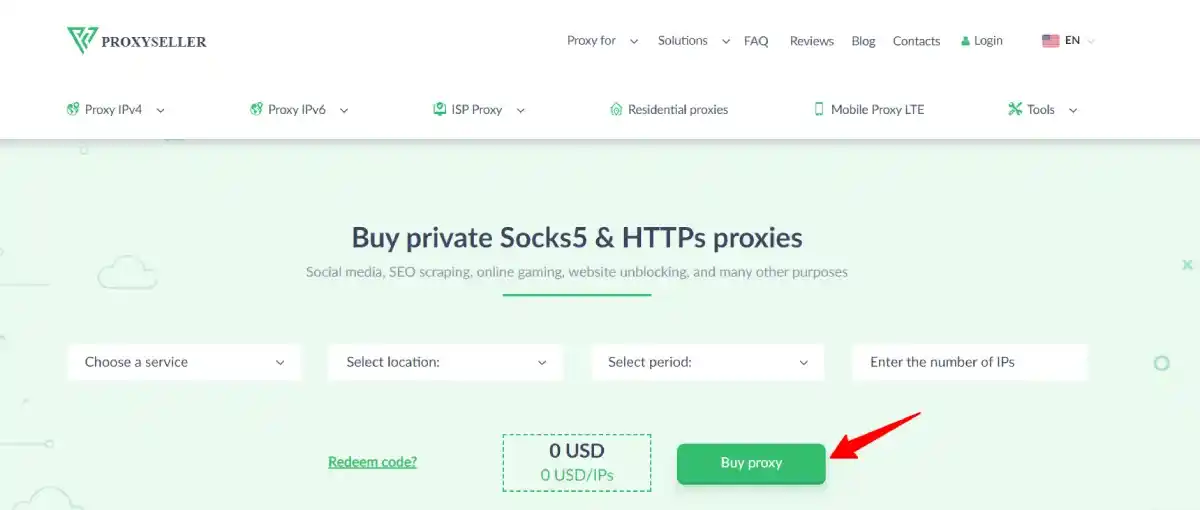
Proxy-Seller is a Cyprus-based proxy provider founded in 2014. It started as a datacenter proxy specialist targeting Eastern European markets and has since expanded into a full multi-type proxy catalog serving global customers. The company operates across all major proxy categories — dedicated datacenter, ISP (static residential), rotating residential, mobile (4G/5G/LTE), and two hybrid product types — all manageable from a single account.
The platform covers:
- IPv4 Datacenter Proxies — dedicated, static IPs in 50+ countries from $1.07/IP
- IPv6 Datacenter Proxies — large subnet access for high-volume, low-cost tasks
- ISP Proxies (Static Residential) — real ISP-sourced IPs in 20+ countries, 100% residential identification in testing
- Residential Proxies — rotating pool of 15 million IPs across 220+ countries and regions
- Mobile Proxies (4G/5G/LTE) — shared and dedicated SIM-card devices in 25+ countries
- Mix Proxies — hybrid residential + datacenter traffic pool billed per GB
- ISP-Mix Proxies — static ISP IPs combined with a mixed rotating pool
Company Background & Evolution
Proxy-Seller is incorporated in Cyprus and has been in the proxy business for over ten years — longer than most of its mid-market competitors. LinkedIn suggests a headcount between 50 and 200 employees. The provider claims approximately 500,000 customers, and while that number can’t be independently verified, its decade-long presence and active community on Blackhatworld, YouTube, and Reddit’s r/ProxySellerOfficial give it more credibility than newer entrants.
The company is GDPR and ISO compliant (per a 2026 third-party audit review), offers dedicated channels at up to 1 Gbps per proxy, and guarantees 99% uptime. One notable offering: Proxy-Seller sells mobile dongle kits and the software to build your own proxy infrastructure — a niche but useful option for technically advanced users who want to self-host.
Who Is Proxy-Seller For?
✓ Ideal Users
Proxy-Seller’s strength is flexibility at a low entry barrier. It fits a specific type of buyer well — someone who needs multiple proxy types, wants to start small, and doesn’t want to commit to enterprise minimums.
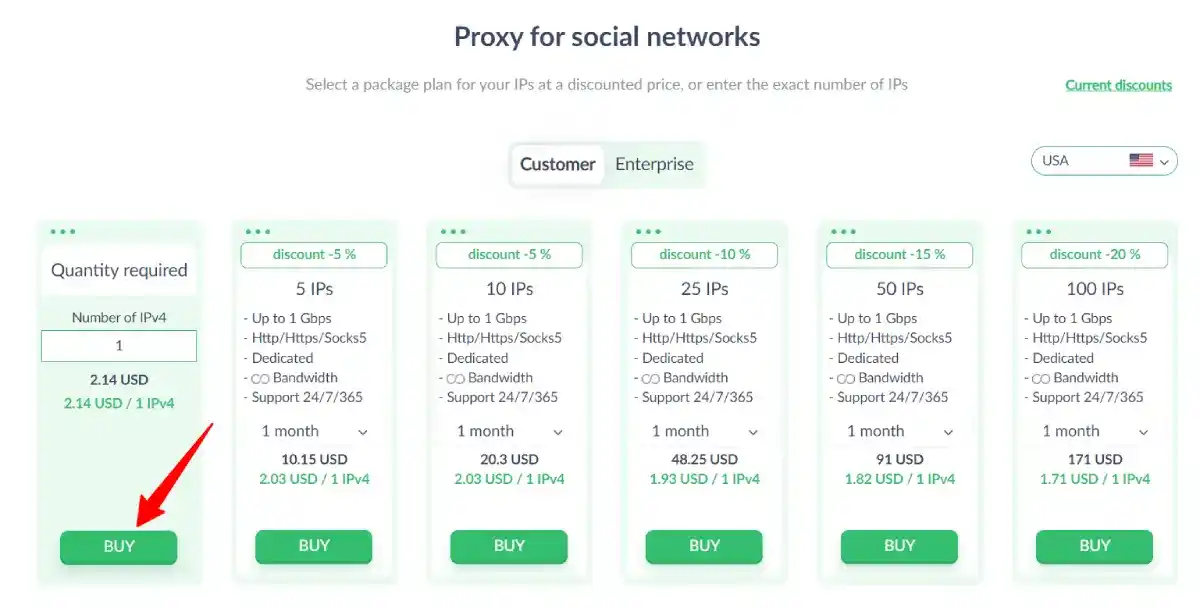
- Freelancers and Solo Operators — Running occasional scraping jobs, SEO rank tracking, or ad verification without needing hundreds of IPs. Buying 1–5 IPs for a week at $1.07–$1.80/IP fits this workflow perfectly.
- Social Media Managers: Managing multi-account workflows on Instagram, TikTok, or Twitter/X. ISP and mobile proxies provide high-trust carrier IPs that avoid platform-level flags.
- Small E-Commerce Teams — Price monitoring, competitor intelligence, and Amazon scraping. Residential proxies at $3.50/GB with 220+ country coverage cover most e-commerce targets, and the 91.86% overall success rate held up in independent testing.
- Developers and Technical Users: Full public API access in five programming languages, proxy checker tools, and SDK support. If you want to programmatically manage orders, rotate proxies, and track usage, the API covers it.
- Sneaker and Retail Bot Operators — ISP proxies showed 100% residential classification in IP2Location testing, which is what sneaker bots need to avoid detection on Nike, Adidas, and retail drop sites.
- SEO Professionals: Google scraping hit 91.26% success with residential proxies and 86.84% with datacenter in Proxyway’s tests — viable for SERP tracking and rank monitoring tasks.
✗ Not Ideal For
Skip Proxy-Seller if you:
- Need a residential pool larger than 15 million IPs — Decodo (100M+) or Bright Data (72M+) cover more of the globe
- Run enterprise-scale operations requiring advanced team management, invoices, and SLA-backed uptime
- Need mobile proxies across US metro areas — country-level targeting only, no city filtering for mobile
- Want real-time usage alerts per domain — residential tracking is per-list-name, not per target site
- Require a completely frictionless setup experience — the dashboard can confuse with bytes-based counters and auto-generated usernames
Proxy-Seller Features & What You Get
Proxy-Seller’s feature catalog is broader than almost any other mid-range provider. Here’s what you actually get across the seven product types:
Core Proxy Networks
- IPv4 Datacenter Proxies: Dedicated (not shared) IPs across 50+ countries. Subscription periods from one week to one year. Buy as few as 1 IP. No traffic or concurrency limits — though Proxy-Seller recommends a maximum of 3 threads per IP. Supports HTTP/HTTPS and SOCKS5.
- IPv6 Datacenter Proxies: Large subnet access for tasks requiring cheap, high-volume IPs. Supports HTTP/HTTPS and SOCKS5. Full pricing is JS-rendered on the site.
- ISP Proxies (Static Residential): Real ISP-sourced IPs that never rotate. Free monthly IP replacement. Unlimited traffic and concurrency. 100% residential identification rate in independent IP2Location testing. 20+ countries across four continents.
- Residential Proxies: 15 million rotating IPs across 220+ countries and regions. Country, state, city, and ASN targeting — combinable in one request. Rotation every request, every 5–60 minutes, or manual force. Up to 1,000 ports generated in a single batch.
- Mobile Proxies: Shared and dedicated SIM-card devices. Rotation every 5, 10, or 30 minutes, or manual via a provided link. Dedicated proxies reach speeds up to 100 Mbps (T-Mobile 5G). 18+ countries for dedicated; 8+ for shared.
Hybrid Proxy Types (Unique to Proxy-Seller)
What are Mix and ISP-Mix proxies?
- Mix Proxies: A single traffic pool combining residential and datacenter IPs. You pay per GB and the system serves whichever IP type is best suited to the target. Useful for scraping workflows where trust level varies by site.
- ISP-Mix Proxies: Static ISP IPs combined with rotating mixed-pool access. Gives you both a fixed identity and the option to rotate — from one product and one billing line.
Neither product type is commonly available at this price point. They’re worth considering if your workflow spans both static and rotating needs without wanting to manage two separate subscriptions.
Dashboard & Management
- Unified dashboard for all seven proxy types under one account
- Built-in wallet with auto-renewal — set it and forget billing
- Two-factor authentication (2FA) available
- Dashboard available in 16 languages
- Per-proxy traffic monitoring with auto-alerts for low-traffic situations
- Export proxy lists in TXT, CSV, or custom formats
- Save and name residential proxy filter configurations for reuse
- Usage statistics graph showing up to three months of history
API & Developer Tools
- Full public API in five programming languages (Python, JavaScript, and others)
- API covers all products: view balance, create orders, renew subscriptions, download proxy lists
- Rate limit: 1 API request per second
- Supporting tools: proxy checker, open port scanner, IP lookup, latency ping tool, connection route tracer
- Over 100 configuration guides on the blog; video tutorials on YouTube
Compliance & Payments
- GDPR compliant and ISO compliant (confirmed by 2026 third-party review)
- Payment processors: Paddle, Solidgate, Coinbase, Cryptomus, Advcash
- Accepted methods: Visa, Mastercard, PayPal, and crypto including BTC, USDT, USDC, BUSD, BNB, TRX, and TON — one of the widest crypto menus in the industry
How Proxy-Seller Works (Step-by-Step)
Registration to first working proxy takes under ten minutes. Here’s the exact flow:
Step 1: Create Your Account
Go to proxy-seller.com and register with an email address, or sign in with Apple, Facebook, Google, or Telegram. No KYC is required. After verifying your email, you land directly in the dashboard. Two-factor authentication is available and worth enabling — especially if you’re managing large proxy budgets.
Step 2: Add Funds to Your Wallet
Proxy-Seller uses a wallet system. Top up with a credit card, PayPal, or crypto. The wallet approach matters: it unlocks auto-renewal (so your proxies don’t expire mid-campaign) and makes crypto payments available for all purchases. Note that different payment processors carry different fees — Coinbase and Cryptomus are zero-fee for crypto; card processors carry small surcharges.
Step 3: Pick Your Proxy Type and Configure
Each proxy type has its own dashboard tab. For datacenter and ISP proxies, select your country, quantity, and subscription period (one week to one year). For residential proxies, use the widget to set country, city or ASN, rotation interval, and number of ports. The system generates a named list you can save and reuse. For mobile proxies, choose between shared and dedicated, then pick your country and carrier.
Step 4: Export and Integrate
Export your proxy list in your preferred format (TXT, CSV, or custom). Datacenter and ISP proxies come in IP:Port format — the market standard for a decade. Residential proxies use a gateway address with credentials built by the filter widget. Drop the credentials into your scraper, anti-detect browser profile, or automation tool. The blog has over 100 configuration guides for common browsers and tools.
Step 5: Monitor and Renew
Track residential proxy usage in the statistics graph (per saved list, three months of history). Datacenter, ISP, and mobile proxies show IP status, expiration date, and rotation settings in table format. Set auto-renewal per-IP so long-running campaigns don’t break unexpectedly. The API lets you do all of this programmatically if you’re managing large proxy fleets.
Bottom line: Proxy-Seller’s setup is straightforward for datacenter and ISP proxies — buy, export, use. The residential dashboard takes a few minutes to understand because it generates randomized usernames instead of human-readable strings. Once you’ve named and saved your filter lists, daily use is simple. The API handles everything else if you’re doing this at scale.
Proxy-Seller Pricing & Plans
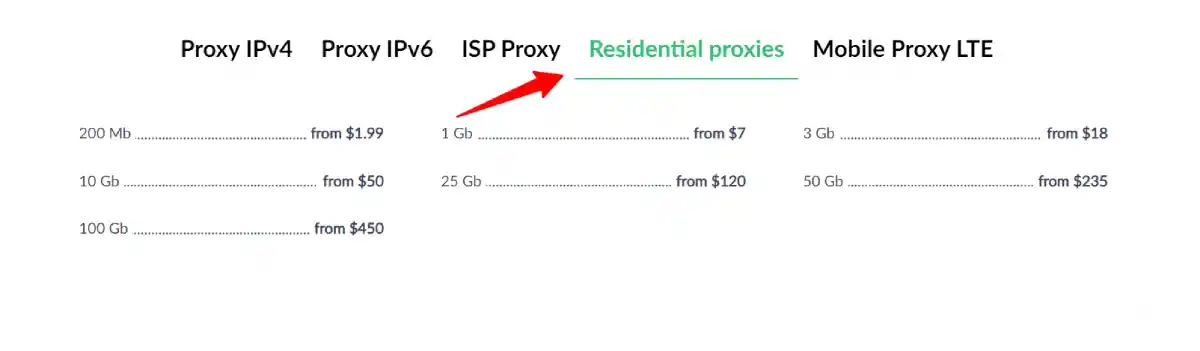
Proxy-Seller uses two billing models depending on the proxy type. Datacenter, ISP, and mobile proxies are priced per IP per subscription period. Residential and Mix proxies are priced per GB of traffic. All pricing pages use interactive sliders — the tables below use real data from independent reviews and verified SERP data.
IPv4 Datacenter Proxy Pricing (US-based IPs)
| Quantity (IPs) | Price per IP/month | Subscription Period | Notes |
|---|---|---|---|
| 1 IP | From $1.07 | Week to year | Lowest entry — weekly plan cheapest |
| 5–10 IPs | ~$1.80/IP | Monthly | US-based bundle; other countries vary |
| 50–100 IPs | ~$1.50/IP | Monthly | Mid-tier volume discount |
| 250–750 IPs | ~$1.35/IP | Monthly | 35% discount at 750 IPs |
| Mixed packages | Starts at 50 IPs | Weekly to yearly | 10+ mix packages (Worldwide, EU, Asia) |
ISP Proxy Pricing
| Plan | Starting Price | Subscription Period | Notes |
|---|---|---|---|
| 1 US IP | From $1.50/IP (1 US IP, weekly plan) | Week to year | Cheapest entry; price varies by country and duration |
| Mid-range | ~$3.00/IP | Monthly | G2 listed starting price |
| Premium countries | Up to 3x Ukraine rate | Monthly | England most expensive; Ukraine cheapest |
| Mixed packages | From 50 IPs | Monthly | World, Europe, Asia mix options available |
Residential & Mobile Proxy Pricing
| Product | Billing Model | Entry Price | Notes |
|---|---|---|---|
| Residential Proxies | Per GB (PAYG or subscription) | $3.50 / 1 GB | Scales up to 1 TB; subscription cheaper than PAYG |
| Mobile (shared, weekly) | Per port/period | From $7 / port | Cheapest entry; limited speed (2–5 Mbps) |
| Mobile (shared, monthly) | Per device/month | $14–$41/device | Price varies by country and carrier |
| Mobile (dedicated, monthly) | Per device/month | $40–$180/device | T-Mobile 5G at top; Kyivstar at bottom |
Important pricing notes:
- All pricing pages are JS-rendered (slider-based) — the rates above come from independent reviews and verified SERP data. Confirm current pricing at proxy-seller.com before purchasing.
- Location heavily affects price: Indonesia datacenter IPs cost over twice as much as US IPs; England ISP proxies run up to 3x Ukraine’s rate.
- Longer subscription periods reduce the per-IP cost — but one month’s cost is only about twice a week’s, so the savings diminish past monthly plans.
- Mixed packages (world, Europe, Asia) for datacenter and ISP proxies start from a minimum of 50 IPs.
- Payment processors carry varying fees: crypto processors (Coinbase, Cryptomus) typically carry no additional fee; card processors (Paddle, Solidgate) add a small surcharge.
Refund Policy: Proxy-Seller operates a 24-hour refund window for non-used or disputed purchases. Refunds are processed within one business day to the original payment method in the original currency. This applies to all product types — one of the cleaner refund policies in the mid-market segment.
Coupon: The code PROXYWAY has been confirmed active by Proxyway’s review team (15% off any purchase, 39% off residential proxies).
Proxy-Seller Proxies: Pros & Cons
Pros ✓
- Seven proxy types, one account: Datacenter (IPv4 + IPv6), ISP, Residential, Mobile, Mix, ISP-Mix — no juggling multiple providers
- Buy as few as 1 IP: Lowest possible entry for datacenter ($1.07/IP weekly) and ISP ($1.50/IP weekly, US) proxies — accessible to solo operators on tight budgets
- 24-hour refund policy: Refunds processed within one business day for unused purchases — one of the most honest policies in the mid-market
- 100% residential identification for ISP proxies: Independent IP2Location testing confirmed all ISP IPs are classified as residential — critical for sneaker bots and ad verification
- 99.56% Google success with ISP proxies: Aced Google in Proxyway’s January 2024 benchmark — far better than most datacenter proxies
- 220+ countries for residential proxies: Among the broadest geographic coverage at this price point
- Crypto payment support: BTC, USDT, USDC, BUSD, BNB, TRX, TON — wider crypto menu than most competitors
- 10+ years in the business: Established track record; active community on Reddit, YouTube, and Blackhatworld
- Full public API in 5 languages: Programmatic control over all proxy types, orders, and billing
- Flexible subscription periods: One week to one year — no forced monthly lock-in
Cons ✗
- Residential pool smaller than premium rivals: 15 million IPs vs. Decodo’s 100M+ or Bright Data’s 72M+ — noticeable for high-volume scraping
- Usage tracking in bytes, not GB: Residential stats display raw bytes — confusing without manual conversion and a friction point in daily use
- Auto-generated usernames for residential: Randomized strings like f7a24d8b06c0a210 instead of human-readable labels — takes adjustment
- No city targeting for mobile proxies: Country-level only — limits usefulness for US metro-specific social media management
- Dashboard exports both HTTP and SOCKS5 ports by default: Causes every second request to fail until you filter correctly
- Amazon performance weak for datacenter proxies: 32.20% success rate on Amazon in Proxyway’s testing — not suitable for Amazon scraping with datacenter IPs
- No downloadable invoices: Payment history is visible in the dashboard, but the system doesn’t generate invoices — a gap for business accounting
- Mix and ISP-Mix pricing not publicly listed: Requires slider interaction on-site; no quoted tier data available from independent reviews
Bottom Line: Proxy-Seller’s variety is its strongest argument. For users who need multiple proxy types without committing to multiple providers, the unified dashboard and low entry threshold are genuinely useful. The dashboard has rough edges — bytes-based counters, auto-generated usernames, mixed HTTP/SOCKS5 export — but none of them break functionality. They’re friction, not blockers. If you need the largest residential pool or the cleanest enterprise UX, look at Decodo or Bright Data. For everyone else, Proxy-Seller earns its mid-range rating.
How Proxy-Seller Compares to Alternatives
Proxy-Seller competes primarily in the mid-market segment. Here’s how it stacks up against its two closest rivals — IPRoyal (most similar in pricing and audience) and Decodo/Smartproxy (slightly above in size and UX):
Proxy-Seller vs IPRoyal
| Feature | Proxy-Seller | IPRoyal |
|---|---|---|
| Proxy Types | 7 (incl. Mix & ISP-Mix) | 4 (Residential, ISP, Datacenter, Mobile) |
| Residential Pool | 15 million IPs | 32+ million IPs |
| Countries (Residential) | 220+ | 195+ |
| Residential Starting Price | $3.50 / 1 GB (PAYG) | ~$3.00 / 1 GB (PAYG) |
| ISP Starting Price | From $1.50 / IP (weekly, US) | From $1.75 / IP |
| Datacenter Entry | From $1.07 / IP (weekly, US) | From $1.39 / IP |
| Mobile Proxies | Shared + dedicated SIM devices | Available (peer-to-peer) |
| Hybrid Proxy Types | Mix + ISP-Mix | None |
| Subscription Periods | Week to year | Monthly (some weekly) |
| Refund Policy | 24-hour window | 24-hour window |
| Overall Proxyway Rating | 8.5/10 | 8.0/10 |
Winner for Proxy Variety: Proxy-Seller (7 types vs. 4) | Winner for Residential Pool Size: IPRoyal (32M+ vs. 15M) | Winner for Datacenter Entry Price: Proxy-Seller ($1.07 vs. $1.39) | Winner for Overall Rating: Proxy-Seller (8.5/10 vs. 8.0/10)
Proxy-Seller vs Decodo (formerly Smartproxy)
| Feature | Proxy-Seller | Decodo |
|---|---|---|
| Residential Pool | 15 million IPs | 100+ million IPs |
| Countries (Residential) | 220+ | 195+ |
| Residential Starting Price | $3.50 / 1 GB | ~$4.00 / 1 GB |
| Datacenter Proxies | 50+ countries, from $1.07/IP | Limited datacenter range, higher minimums |
| ISP Proxies | 20+ countries, from $1.50/IP | Available, higher entry price |
| Hybrid Products | Mix + ISP-Mix | None |
| Minimum Buy-In | 1 IP / 1 GB | Higher minimum commitments |
| Dashboard UX | Functional, some rough edges | Polished, enterprise-grade |
| Crypto Payments | 7 cryptocurrencies | Limited crypto options |
| Proxyway Overall Rating | 8.5/10 | 9.2/10 |
Winner for Pool Size: Decodo (100M+ vs. 15M residential IPs) | Winner for Residential Pricing: Proxy-Seller ($3.50 vs. ~$4.00/GB) | Winner for Dashboard Quality: Decodo | Winner for Product Breadth & Crypto: Proxy-Seller
🏆 Choose Proxy-Seller When:
- You need multiple proxy types under one account without separate subscriptions
- You’re buying a small number of IPs (1–50) and don’t want to hit minimums
- You want weekly rental periods for short-term campaigns
- Crypto payment is important — 7 supported currencies vs. competitors’ 1–2
- Your residential needs span 220+ countries and geographic breadth beats pool size
- You’re working primarily with datacenter or ISP proxies where it’s strongest
🔍 Choose Competitors When:
- You need a 100M+ residential pool for maximum IP variety (Decodo, Bright Data)
- You require enterprise UX, downloadable invoices, and SLA-backed support (Decodo)
- You’re doing large-scale Amazon scraping with datacenter proxies — 32% success is too low
- You need a city-level targeting for mobile proxies (most competitors offer this)
- You want a fully transparent residential pricing page without slider interaction — NodeMaven is a solid alternative with clear flat-rate pricing
Proxy-Seller Ratings Breakdown
Here’s our category-by-category evaluation based on independent performance benchmarks (Proxyway, January–February 2024) and real-world usage data across all seven proxy types:
| Category | Score | Notes |
|---|---|---|
| Pool Size & Coverage | 3.8/5 | 15M residential IPs is modest vs. 100M+ competitors. 220+ country coverage is a strength. 50+ datacenter countries solid for the mid-market. |
| Performance | 4.2/5 | ISP proxies ace Google (99.56%) and Homedepot (99.97%). Residential at 91.86% overall. Datacenter on Amazon only 32% — know which product to use for which target. |
| Pricing & Value | 4.4/5 | $1.07/IP datacenter entry, $1.50 ISP, $3.50/GB residential. 24-hour refund policy. Flexible weekly-to-yearly periods. One of the strongest value propositions in the mid-market. |
| Dashboard & UX | 3.8/5 | Functional but rough: bytes-based usage counters, auto-generated usernames, mixed HTTP/SOCKS5 export confusion. 2FA and 16-language support are positives. |
| Customer Support | 4.3/5 | 24/7 live chat, Messenger, Skype, Telegram, and email. Agent responded in under a minute in Proxyway’s test. Remote proxy setup assistance available. |
| Product Breadth | 4.8/5 | Seven proxy types including unique Mix and ISP-Mix hybrids. API in 5 languages. Mobile dongle kit option. Widest catalog in the mid-market segment. |
| Overall Rating | 4.2/5 | Best mid-range option for buyers who need variety. Not the strongest pick for single-product, high-volume residential or datacenter-only operations. |
Rating Summary: Proxy-Seller’s highest marks come from product breadth and pricing value — exactly what its target audience of individuals and SMBs care about most. Its ISP proxies are genuinely impressive performers (99.56% Google, 100% residential classification). The residential pool is where it lags behind premium competitors. Dashboard UX needs polish but doesn’t block any core workflow. For a provider at this price point, the overall package is hard to beat.
Is Proxy-Seller Legit, Safe & Worth It?
Legitimacy & Safety
- ✓ 10+ years in operation — Founded in 2014, Proxy-Seller is one of the older mid-market proxy providers. A decade of operation without major incident signals structural stability.
- ✓ Cyprus-registered company with active LinkedIn presence — 50–200 employees listed. Active on Reddit (r/ProxySellerOfficial), YouTube, and Blackhatworld community forums.
- ✓ Strong third-party review scores — Trustpilot ~4.7/5, Reviews.io 4.80/5 from 25 reviews, Proxyway 8.5/10. Multiple independent reviewers across 2024–2026 reporting consistent positive experiences.
- ✓ GDPR and ISO compliant — Confirmed by a 2026 third-party audit review. Relevant for EU-based businesses handling personal data.
- ✓ 24-hour refund policy with 1-day processing — Stated on proxy-seller.com/return/ and confirmed by multiple reviewers. Refunds in original currency and payment method.
- ✓ Multiple payment processors reduce single-point-of-failure risk — Paddle, Solidgate, Coinbase, Cryptomus, and Advcash. If one processor has issues, others remain available.
Long-Term Reliability
Proxy-Seller is among the more established mid-market providers — unlike many proxy startups that launch, grow, and quietly fold within 2–3 years. Its decade of operation, active social media presence, and 500,000 claimed customer base all suggest an ongoing business rather than a short-term arbitrage play. The residential proxy pool is almost certainly resold from an upstream provider (Proxy-Seller hasn’t claimed to self-source it), which is standard practice in the industry. What matters is whether the upstream relationship is stable — and nothing in 10+ years of operation suggests it isn’t.
Reality check: Proxy-Seller’s product pages list use cases including online gaming, sneaker copping, and social media automation alongside legitimate data collection and ad verification. The provider operates in the same gray-area space as most residential and mobile proxy services. Its acceptable use policy permits activities that some enterprises would find uncomfortable. If you’re running compliant data collection, SEO monitoring, or market research, you’ll have no issues. Just understand the shared-pool context.
Worth It? Final Verdict
✓ YES, Proxy-Seller Is Worth It If:
- You need multiple proxy types and don’t want to manage multiple provider accounts
- You’re an individual or SMB that can’t meet the minimums or pricing of enterprise providers
- Short-term campaigns matter — weekly subscription periods vs. forced monthly lock-in elsewhere
- ISP proxies are your primary need — 100% residential classification, 99.56% Google success rate is genuinely competitive with anyone in the market
- You want to pay in crypto — 7 supported currencies is exceptional for the industry
- You value responsive support — under 1 minute live chat response time in independent testing
✗ NO, Look Elsewhere If:
- Amazon scraping is your main use case with datacenter proxies — 32% success rate won’t work
- You need a residential pool exceeding 15 million IPs — Decodo or Bright Data are necessary
- You need city-level mobile proxy targeting — country-level only here
- Your accounting team needs downloadable invoices — the dashboard doesn’t generate them
- You’re running operations that require enterprise SLA, dedicated account managers, or 99.99% uptime guarantees
Our Recommendation: Proxy-Seller earns its 4.2/5 rating through breadth, value, and a decade of reliability. It’s the right choice for any buyer who wants one account, seven proxy types, and the ability to start with a single IP. ISP proxies are a particular standout — the 100% residential classification and 99.56% Google success rate make them genuinely competitive with providers charging double. Start with the datacenter trial (from $1.07) to test infrastructure quality before committing to larger residential or ISP plans. The 24-hour refund policy means the risk of testing is effectively zero.
Proxy-Seller Affiliate Program
Proxy-Seller runs a two-tier affiliate program that’s free to join — one of the more generous commission structures in the proxy industry:
- 30% commission on the first order placed by each referred user
- 10% commission on all subsequent renewals and new orders from that same user
- Commissions paid for the lifetime of the referral — as long as the user keeps renewing their subscription
To participate, register an account and access the affiliate dashboard to retrieve your unique referral link. You can promote via blog content, social media, or community forums. Earnings accumulate in your Proxy-Seller wallet and can be withdrawn or applied toward your own proxy purchases.
How it works: The 30% first-order commission applies to every new user you refer — not just a one-time sign-up bonus. The 10% recurring commission covers plan upgrades and cross-product purchases, not just renewals of the original product type. For a high-volume referral, this compounds quickly over time.
Proxy-Seller Review: Frequently Asked Questions
What is Proxy-Seller and how long has it been in business?
Proxy-Seller is a Cyprus-based proxy provider founded in 2014 — over a decade in the proxy industry. It started as a datacenter proxy specialist in the Eastern European market and has since expanded into a full multi-type proxy catalog including residential, ISP, mobile, and hybrid proxy types. It claims approximately 500,000 customers and operates with 50–200 employees based on LinkedIn data. The company is GDPR and ISO compliant.
What proxy types does Proxy-Seller offer?
Proxy-Seller offers seven distinct proxy types from one account:
- IPv4 Datacenter Proxies — dedicated, static IPs in 50+ countries
- IPv6 Datacenter Proxies — large subnet access for high-volume, low-cost tasks
- ISP Proxies — static residential IPs from real ISPs in 20+ countries
- Residential Proxies — 15 million rotating IPs in 220+ countries
- Mobile Proxies — shared and dedicated 4G/5G/LTE devices in 25+ countries
- Mix Proxies — hybrid residential + datacenter traffic pool, billed per GB
- ISP-Mix Proxies — static ISP IPs combined with mixed rotating pool access
How much does Proxy-Seller cost?
Pricing varies by product type. Datacenter IPv4 proxies start from $1.07 for 1 US IP on a weekly subscription; US bundles run $1.35–$1.80/IP at monthly rates depending on volume. ISP proxies start from $1.50/IP for 1 US address, with premium countries (England) up to 3x the price of cheaper ones (Ukraine). Residential proxies are $3.50/GB for PAYG, with subscription tiers scaling up to 1 TB. Mobile proxies start at $7/port weekly for shared, rising to $40–$180/device/month for dedicated. All pricing uses JS sliders on-site — verify current rates at proxy-seller.com before purchasing.
Does Proxy-Seller offer a free trial or refund?
Proxy-Seller does not offer a completely free trial, but it has a 24-hour refund policy on all products. Refunds are processed within one business day to the original payment method in the original currency. This effectively functions as a low-risk trial: buy a small quantity, test it, and request a refund within 24 hours if it doesn’t meet your needs. Multiple independent reviewers confirm refunds are honored. The datacenter entry point ($1.07 for 1 IP) makes testing essentially risk-free in monetary terms.
How do Proxy-Seller’s ISP proxies perform?
ISP proxies are Proxy-Seller’s strongest product in benchmarks. Proxyway’s independent testing (January 2024, 50 US ISP proxies from Lumen/CenturyLink) found: 99.56% success rate on Google, 99.97% on Homedepot, 73.05% on Amazon, and 90.86% average overall. The IP2Location database classified 100% of tested IPs as residential (ISP usage type) — the cleanest result possible. These are static, dedicated IPs with unlimited traffic and concurrency.
How does Proxy-Seller compare to IPRoyal?
The two are very similar in pricing and audience. Proxy-Seller’s advantages: more proxy types (7 vs. 4), lower datacenter entry price ($1.07 vs. ~$1.39/IP), more country coverage for residential (220+ vs. 195+), and a wider crypto menu. IPRoyal’s advantages: larger residential pool (32M+ vs. 15M IPs) and a slightly lower residential per-GB starting price. Proxyway rates Proxy-Seller at 8.5/10 vs. IPRoyal at 8.0/10. If you use multiple proxy types, Proxy-Seller wins on convenience. If you only need residential proxies, read our full IPRoyal review to see if its larger pool fits your needs better.
How does Proxy-Seller compare to Decodo (Smartproxy)?
Decodo sits a tier above in residential proxy size (100M+ IPs vs. 15M) and dashboard quality. Proxy-Seller is cheaper for residential proxies ($3.50/GB vs. ~$4.00/GB), has more proxy types (7 vs. Decodo’s 4), offers weekly subscription periods, and accepts 7 cryptocurrencies vs. Decodo’s limited crypto support. Decodo is rated 9.2/10 by Proxyway vs. Proxy-Seller’s 8.5/10. Choose Proxy-Seller for variety, low entry cost, and multi-type proxy needs — or read our full Decodo review to decide if the larger pool is worth the premium.
What is the residential proxy pool size and how does it perform?
Proxy-Seller advertises 15 million residential IPs across 220+ countries. Proxyway’s February 2024 benchmark (1M+ requests over 21 days) found over 600,000 unique IPs in the random pool, with 150,000+ in the US and 124,000+ in India. The residential percentage was 92.44% overall — a small portion of IPs were datacenter-classified. Success rates averaged 91.86% across real targets: 88.86% on Amazon, 91.26% on Google, and 95.45% on a major social media network.
What payment methods does Proxy-Seller accept?
Proxy-Seller accepts Visa, Mastercard, PayPal, and seven cryptocurrencies: BTC, USDT, USDC, BUSD, BNB, TRX, and TON. Payments are processed through Paddle, Solidgate, Coinbase, Cryptomus, and Advcash — multiple processors reduce single-point-of-failure risk. The wallet system lets you top up once and use across all products. Crypto payments through Coinbase and Cryptomus typically carry no extra fee; card processors add small surcharges.
Is Proxy-Seller good for social media management?
Yes, for multi-account social media work, ISP and mobile proxies from Proxy-Seller are well-suited. ISP proxies are static (same IP per session), 100% classified as residential by IP databases, and support unlimited concurrent connections — useful for managing multiple accounts simultaneously. Mobile proxies provide carrier-grade IPs with on-demand rotation, which is the highest-trust IP type for platforms like Instagram and TikTok. The provider explicitly lists social media management as a supported use case and is compatible with anti-detect browsers like GoLogin, Multilogin, and AdsPower.
Can I use Proxy-Seller for web scraping?
Yes, with product-appropriate expectations. Residential proxies are best for scraping targets that block datacenter IPs — 91.26% Google success rate and 88.86% Amazon success in testing. ISP proxies deliver 99.56% on Google but are static and better for targeted sessions rather than rotating scraping jobs. Datacenter proxies are fast and unlimited in concurrency, but only achieved 32.20% on Amazon in testing — avoid using datacenter IPs for Amazon. Mix proxies (residential + datacenter pool) offer a middle ground for workflows where target difficulty varies.
How do I cancel or manage my Proxy-Seller subscription?
Subscriptions are managed directly from the dashboard. You can turn off auto-renewal per-IP or per-subscription, preventing automatic charges at period end. If you want a refund for unused purchases, contact support within 24 hours via live chat (available 24/7), Messenger, Skype, Telegram, or email. In Proxyway’s test, live chat responded in under one minute. Refunds are processed within one business day to the original payment method. There’s no penalty for cancellation — you keep access until the subscription period ends.
Proxy-Seller Review: Final Verdict
Proxy-Seller is a legitimate, well-established proxy provider that punches above its price in product breadth and pricing flexibility. Its seven proxy types — including the unique Mix and ISP-Mix hybrids — give individuals and SMBs access to a catalog that would otherwise require multiple provider accounts. ISP proxies are a genuine standout: 100% residential classification and 99.56% Google success rate rival premium providers. The 24-hour refund policy makes testing nearly risk-free. Where it shows its mid-market position is in residential pool size (15M IPs vs. 100M+ at the top) and a dashboard that has usability rough edges. But for anyone buying smaller quantities across multiple proxy types, it remains one of the strongest value propositions available.
✓ What We Love
- Seven proxy types including hybrid Mix and ISP-Mix
- Buy as few as 1 IP with no minimum spend
- ISP proxies: 100% residential classification, 99.56% Google success
- 220+ countries for residential proxies
- 24-hour refund policy, processed in 1 business day
- 7 crypto payment options — widest in the mid-market
- 10+ years of operation and 500K claimed customers
- Flexible weekly-to-yearly subscription periods
- Full API in 5 programming languages
- Sub-minute live chat support 24/7
✗ What Could Be Better
- 15M residential pool — trails Decodo (100M+) and Bright Data
- Usage tracking shown in bytes, not GB
- Auto-generated, unreadable residential usernames
- Datacenter proxies: only 32% success on Amazon
- Mobile proxies: country-level targeting only
- No downloadable invoices for business accounting
- Mix and ISP-Mix pricing hidden behind JS sliders
Ready to Try Proxy-Seller’s Seven Proxy Types?
Start with as little as $1.07 for a single datacenter IP — and get a full refund within 24 hours if it doesn’t work for you.
Try Proxy-Seller Now →