
10 Best Shared Proxy Providers in 2026
Compare the best shared proxy providers of 2026 — tested on pool size, pricing, protocol support, speed, and real-world reliability for web scraping, geo-testing, and anonymous browsing.
⚡ Quick Verdict
Shared proxies hit a sweet spot between cost and capability — they cost far less than dedicated proxies and offer more anonymity than free lists. The catch is that you’re sharing bandwidth and IP reputation with other customers. After evaluating all ten providers below on pool depth, pricing, protocol support, and use-case fit, Bright Data leads on scale and enterprise features, while Smartproxy wins on value and ease of use. For budget buyers, AstroProxy and Proxy-n-VPN offer surprisingly solid options at very low price points.
Bright Data — 400M+ IPs, 195 countries, enterprise-grade tools and compliance
Smartproxy — 40M+ IPs, from $8.5/GB, 7-day trial, 24/7 support
From $0.55/100 MB (AstroProxy) to $8/GB PAYG (Bright Data)
99.99% uptime (Bright Data); 99.9% (Oxylabs); 99% (Proxy-Seller)
You need a proxy but dedicated IPs are too expensive for the volume of requests you’re running. Shared proxies solve that problem — multiple users share the same IP pool, splitting the cost while still giving you anonymity, geo-targeting, and scraping capability. The tricky part is finding a provider where the shared pool is managed well enough that other users’ bad behavior doesn’t drag down your success rates.
The shared proxy market ranges from massive enterprise networks (Bright Data at 400M+ IPs, Oxylabs at 102M+) down to small niche providers with 10,000 IPs and unlimited bandwidth. Some are optimized for residential anonymity, others for speed, others for price. Understanding where your use case sits on that spectrum saves you money and frustration.
This guide covers ten shared proxy providers we evaluated on pool depth, pricing, protocol support, trial options, and real-world reliability. Pricing data comes from each provider’s knowledge file or official pages, scraped and verified in May 2026. All CTA links use verified affiliate paths — we only recommend providers we’ve actually researched.
Whether you’re running light web scraping, testing geo-restricted ads, managing social accounts on a budget, or just need anonymous browsing for a small team, at least two or three providers in this list will fit your needs.
What Are Shared Proxies?
A shared proxy is a proxy server whose IP address is used simultaneously by multiple clients. Rather than renting an IP exclusively, you share it with other users connected to the same provider’s pool. This makes shared proxies significantly cheaper than dedicated alternatives — and when managed well, the performance difference is smaller than you might expect.
Three main types of shared proxies serve different needs:
- Shared Residential Proxies — IPs assigned by real ISPs to home users, shared across the provider’s customer base. High trust level with target sites. Best for scraping, geo-testing, and bypassing anti-bot detection. Priced per GB of traffic.
- Shared Datacenter Proxies — Server IPs in commercial data centers, shared among multiple users. Faster and cheaper than residential, but more detectable by sophisticated targets. Good for high-speed scraping on less protected sites.
- Shared ISP / Static Residential Proxies — Fixed IPs from real ISPs, shared (but not rotating). Look residential but stay stable. Good for tasks that need consistent IPs without exclusive assignment costs.
How Shared Proxies Differ from Private Proxies
A private (dedicated) proxy assigns one IP exclusively to you. No one else uses it, so its reputation stays clean and performance is consistent. Shared proxies cost less because you’re splitting the infrastructure expense — but you inherit whatever reputation the IP has accumulated from other users. Quality providers manage this by monitoring and rotating flagged IPs automatically, which is why the pool management quality matters so much when choosing a shared proxy provider.
Who Should Use Shared Proxies?
✓ Ideal Users for Shared Proxies
- Small Businesses and Startups — You need proxy capability but can’t justify $200+/month for dedicated IPs. Shared residential proxies at $7–10/GB give you the coverage of a large pool at a fraction of the cost.
- Individual Developers and Scrapers — Light scraping jobs on a 5–20 GB/month budget work well with shared residential proxies. Most major providers offer solid shared pools that handle these volumes without issue.
- Ad Verification Teams — Checking how ads display in different countries or on different devices. Shared geo-targeted proxies let you verify ad placements across dozens of locations without per-IP costs.
- SEO Researchers — Pulling localized search results from Google or Bing in different countries. Shared residential proxies provide the geo-specific IPs needed for accurate local SERP data.
- E-Commerce Price Monitors — Checking competitor pricing on Amazon, Shopify stores, or local marketplaces. Moderate-volume shared proxies handle this well and avoid the per-IP overhead of dedicated networks.
- Content Teams Managing Social Accounts — For light account management on a budget, shared proxies (especially ISP or static shared IPs) provide geo-anchoring without private proxy prices.
✗ Not Ideal For
Shared proxies are NOT the right tool if you:
- Need guaranteed clean IP reputation for high-stakes account creation or management — a shared IP burned by another user will get your accounts flagged too
- Run very high-volume scraping (500 GB+/month) — at that scale, dedicated plans typically become more cost-effective
- Need consistent speeds for real-time data collection — shared bandwidth varies by how many users are hitting the pool simultaneously
- Work with targets that have extremely aggressive anti-bot protection — shared IP pools get flagged faster on hardened targets
10 Best Shared Proxy Providers — Tested & Ranked
Here are the top shared proxy providers we evaluated for 2026, ranked across pool size, pricing, protocol support, and use-case fit. Each section covers the key specs and real-world pros and cons.
1. Bright Data

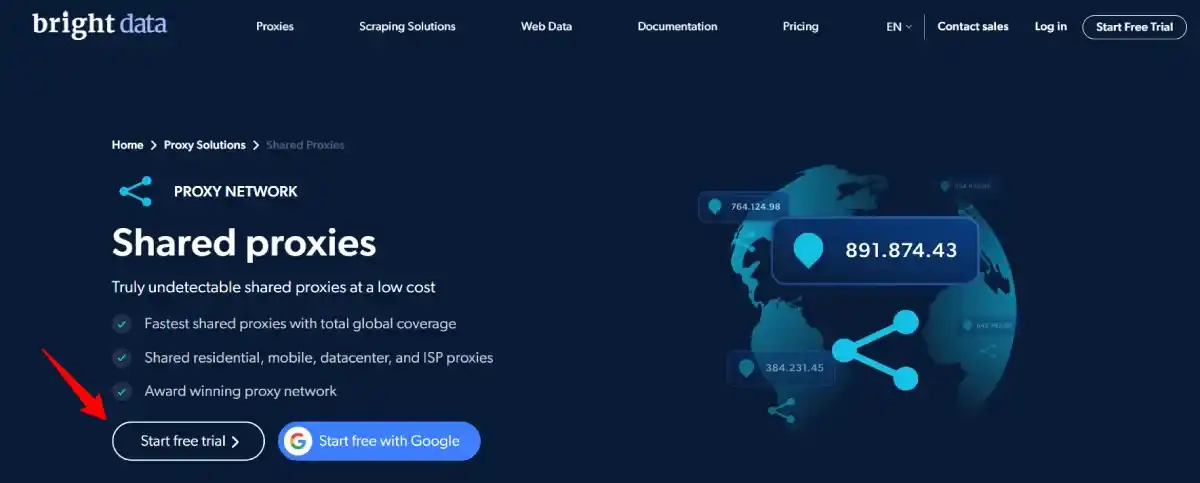
Bright Data operates the largest proxy network in the industry — 400M+ monthly IPs across 195 countries. Its residential proxy pool is the benchmark everything else is measured against, and for shared proxy use cases it means you’re drawing from a pool with extraordinary depth and geographic breadth. Even on shared access, you rarely hit the same IP twice, which keeps success rates high and fingerprinting risk low.
Pool Size: 400M+ residential IPs; 1.3M+ ISP IPs; 1.3M+ datacenter IPs. Proxyway benchmarked 885,512 unique global IPs with 98.59% residential purity and a 98.96% average success rate.
Pricing: Residential PAYG at $8/GB (use code RESIGB50 for 50% off for 3 months). Subscription from $499/mo (141 GB at $7/GB effective). ISP shared IPs from $1.80/IP/month (10-IP starter). Datacenter shared from $1.40/IP/month. 7-day free trial for company accounts.
Pros ✓
- Largest proxy pool in the market — 400M+ residential IPs across 195 countries
- 98.96% average success rate (Proxyway tested)
- City, ZIP, ASN, and coordinate-level targeting at no extra cost
- ISO 27001 certified; ethically sourced; WIPO Alert partner
- Full product stack: residential, ISP, datacenter, mobile, SERP API, Scraping Browser
- 99.99% uptime advertised across all products
Cons ✗
- Most expensive in the list — PAYG at $8/GB before discounts
- KYC required (up to 3 business days); enterprise-focused onboarding
- Subscription starts at $499/mo minimum
- Setup complexity is higher than simpler providers
2. Oxylabs

Oxylabs earned Proxyway’s Best Enterprise Provider award in 2025 and sits at a 9.3/10 rating — tied for the highest score in any benchmark. Its 175M+ residential IP pool ranked #1 in Proxyway’s pool size tests, and its 99.90% global success rate is among the best ever recorded. For shared proxy access, Oxylabs is the right choice when you need enterprise-grade reliability with a full feature set — especially for AI-assisted scraping and API-based data collection.
Pool Size: 175M+ residential IPs across 195 countries; 2M+ datacenter IPs; 20M+ mobile IPs. Proxyway confirmed 1,107,931 unique global IPs with 99.90% success rate and 0.65s average response time.
Pricing: Residential from $30/mo (5 GB at $6/GB). Datacenter shared from $12/mo (10 IPs). ISP from $16/mo (10 IPs at $1.60/IP). Use code proxyway35 for 35% off first purchase. 7-day free trial for companies.
Pros ✓
- 175M+ IPs — #1 pool size in Proxyway benchmarks
- 99.90% residential success rate globally
- Coordinate-level targeting (city, state, ZIP, ASN, GPS)
- AI-assisted scraping tools and Web Unblocker API
- Dedicated account manager for enterprise clients
- Proxyway Best Enterprise Provider 2025
Cons ✗
- No PAYG — subscription required from day one
- $30 minimum entry is steeper than some alternatives
- KYC required before accessing all services
- Google scraping requires KYC unlock
3. Smartproxy

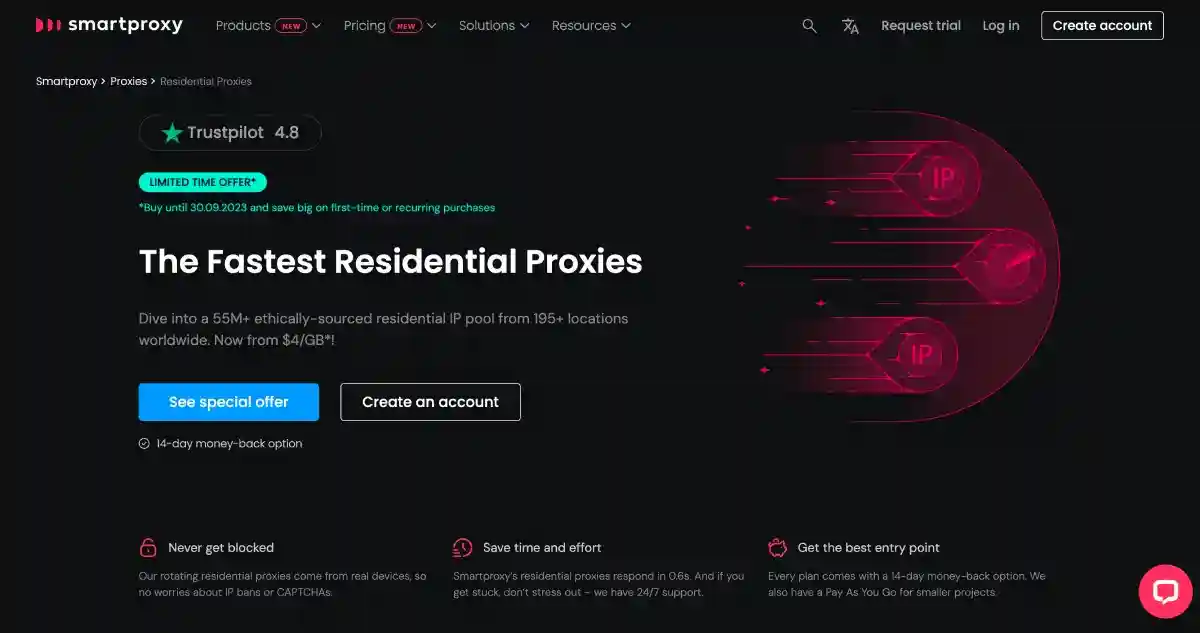
Smartproxy has built a reputation as one of the most accessible shared proxy providers for small businesses and developers. With 40M+ residential IPs across 195+ countries, 24/7 customer support, and a 7-day free trial, it’s designed to get you into a working proxy setup quickly — without the enterprise contracts and KYC friction that come with bigger platforms. At $8.5/GB for residential, it’s not the cheapest, but the ease of use and support quality justify the pricing for most non-enterprise buyers.
Pool Size: 40M+ residential IPs across 195+ countries. HTTP, HTTPS, and SOCKS5 support. Rotating and sticky sessions available. Unlimited concurrent threads.
Pricing: Residential from $8.5/GB (entry tier). Datacenter shared plans also available. 7-day free trial included. No commitment on PAYG plans.
Pros ✓
- 40M+ IPs, 195+ countries — solid shared residential pool
- 7-day free trial — low-friction entry point
- 24/7 customer support via live chat
- Simple dashboard — easy for beginners
- HTTP, HTTPS, SOCKS5 all supported
- Unlimited concurrent threads
Cons ✗
- $8.5/GB is above mid-market for entry residential
- Pool (40M+) smaller than Bright Data and Oxylabs
- Some shared IPs may show elevated detection rates on hardened targets
4. NetNut

NetNut is the only provider in this list built on a direct ISP backbone (DiViNetworks), which means its static residential IPs bypass end-user devices entirely and connect one hop from the ISP. This gives NetNut’s shared IPs particularly clean reputations — they carry real browsing history, behave like genuine ISP-assigned addresses, and resist detection better than pool-based shared IPs from smaller providers. Its parent company (Alarum Technologies, NASDAQ: ALAR) adds financial transparency you don’t get from privately-held proxy startups.
Pool Size: 85M+ residential IPs across 195+ countries; 1M+ static ISP IPs across 30+ countries; 150K+ datacenter IPs. Proxyway confirmed 1,011,844 unique global IPs at 95.04% residential purity.
Pricing: Residential from $99/mo (28 GB at $3.53/GB). ISP from $99/mo (7 GB). Datacenter from $100/mo (100 GB). Annual billing saves ~15%. 7-day trial for company accounts.
Pros ✓
- DiViNetworks ISP backbone — 1M+ always-online static IPs
- Direct one-hop ISP connectivity — highest IP quality in shared pools
- 85M+ residential + 1M+ ISP pool depth
- Publicly listed parent company (NASDAQ: ALAR)
- G2 #1 Web Data Provider with multiple awards
- Proxyway 9.0/10 rating
Cons ✗
- No PAYG option — subscription required
- $99 minimum commitment is high for small users
- ISP entry price ($14.4/GB at 7 GB) is expensive per-GB
- No traffic top-up — exhausted plans must be fully renewed
5. ProxySeller

ProxySeller has been in the proxy business for 10+ years and covers a wide range of needs: residential, ISP, mobile, IPv4, and IPv6 proxies all under one roof. With 220+ countries supported and residential proxies starting at $0.7/GB (based on SERP data — verify at live pricing slider), it consistently ranks as one of the more affordable shared proxy options. Its 99% uptime guarantee and flexible weekly/yearly purchase options make it a good fit for users who need predictable costs without long commitments.
Pool Size: 220+ countries and regions for residential; 50+ countries for datacenter IPv4. HTTP/HTTPS and SOCKS5 protocols. Up to 1 Gbps per proxy. SDKs in 5 programming languages.
Pricing: Residential from ~$0.7/GB (entry tier, slider-based — verify at proxy-seller.com). IPv4 datacenter from ~$1.35–$1.80/IP. ISP from ~$1/IP. Mobile from $10/IP. 4.7/5 Trustpilot rating.
Pros ✓
- 220+ country coverage — one of the widest geographic spreads
- Residential from $0.7/GB — highly competitive entry pricing
- HTTP/HTTPS and SOCKS5 supported
- Weekly and yearly purchase options for flexibility
- 4.7/5 Trustpilot rating across reviews
- 10+ years in the proxy market
Cons ✗
- JS-rendered pricing sliders — final prices require live site verification
- No free trial for residential proxies
- Pool size not publicly disclosed — harder to benchmark against larger providers
- Support quality varies by tier
6. SSLPrivateProxy

SSLPrivateProxy focuses on HTTPS datacenter proxies — it does one thing and aims to do it cleanly. With 120K+ IPs across 7 countries and unlimited bandwidth on its plans, it’s a straight-line option for buyers who need HTTPS proxy access without residential pricing. The $15/month entry and per-proxy fee model means you know exactly what you’re paying. The 4.1/5 trust score suggests a solid but not exceptional user experience, and the absence of SOCKS5 support limits its compatibility with some tools.
Pool Size: 120K+ IPs across 7 countries. HTTPS only (no SOCKS5). Unlimited bandwidth per proxy. Per-proxy pricing model.
Pricing: From $15/mo. Per-proxy fee structure. Unlimited bandwidth included. 4.1/5 trust rating.
Pros ✓
- Unlimited bandwidth — no GB caps to worry about
- 120K+ IPs — solid for a datacenter-only provider
- Simple, predictable per-proxy pricing
- HTTPS encryption on all proxies
- Good fit for standard web scraping and browsing
Cons ✗
- HTTPS only — no SOCKS5 support limits tool compatibility
- Only 7 countries — very limited geo coverage
- Datacenter only — no residential option
- 4.1/5 trust score is below average for this list
7. PrivateProxy.me

PrivateProxy.me has been operating out of London since 2010 — which makes it one of the oldest providers on this list. It focuses on HTTP/HTTPS IPv4 proxies described as “100% clean private proxies,” covering 4 countries with datacenter-level shared access. At $9/month for datacenter entry, it’s price-competitive and the longevity of the business adds some confidence. The 4.5/5 trust score and the 7-day trial make it a reasonable low-risk option for buyers who want a simple HTTP/HTTPS datacenter proxy from a long-established source.
Pool Size: HTTP/HTTPS IPv4 only. 4 countries covered. 100% clean proxies claimed. 7-day trial available.
Pricing: From $9/mo (datacenter shared). 7-day trial. 4.5/5 trust score.
Pros ✓
- Operating since 2010 — 15+ years of track record
- 7-day free trial before commitment
- 4.5/5 trust score
- Simple HTTP/HTTPS setup — low learning curve
- $9/mo entry is accessible for small users
Cons ✗
- Only 4 countries — very limited geographic coverage
- Datacenter only — no residential option
- HTTP/HTTPS only — no SOCKS5 support
- Small pool limits scalability
8. AstroProxy

AstroProxy runs a peer-to-peer residential network with 1M+ IPs across 100+ countries and one of the lowest entry prices on this list — starting at $0.55/100 MB for pay-as-you-go residential. Its mobile, residential, and datacenter options are all available under one account, and the VPN-ready ports add flexibility for users who need proxy-adjacent access. The 7-day trial and 4.5/5 trust score signal a reasonably trustworthy operation for the price point.
Pool Size: 1M+ IPs across 100+ countries. Mobile, residential, and datacenter types. P2P network architecture. HTTP/HTTPS and SOCKS5. VPN-ready ports.
Pricing: From $0.55/100 MB PAYG (approximately $5.50/GB). 7-day trial available. 4.5/5 trust score.
Pros ✓
- From $0.55/100 MB — very competitive PAYG pricing
- Mobile, residential, and datacenter all on one account
- 100+ countries covered
- VPN-ready ports — unusual and useful feature
- 7-day trial available
- HTTP/HTTPS and SOCKS5 supported
Cons ✗
- 1M+ IP pool is smaller than major enterprise providers
- P2P network means variable IP consistency
- Less established brand compared to Bright Data or Oxylabs
- 100 countries — less coverage than 195-country providers
9. The Social Proxy

The Social Proxy is a mobile-first shared proxy provider designed specifically for social media automation and mobile-use-case scraping. It offers 4G/5G mobile IPs across 6 countries with pricing starting at €20 for 2 days — which is quite different from the GB-based pricing of the other providers here. This model suits short bursts of mobile proxy activity rather than sustained scraping campaigns. If your workflow involves managing social accounts, mobile app testing, or accessing mobile-specific content, The Social Proxy’s niche focus gives it an edge over general-purpose providers.
Pool Size: Mobile (4G/5G) proxies across 6 countries. Dedicated mobile IPs for each session. HTTP, HTTPS, SOCKS5.
Pricing: From €20 for 2 days. Country coverage: 6 countries. Mobile-focused use cases.
Pros ✓
- 4G/5G mobile IPs — highest trust level for social media targets
- Dedicated mobile IPs per session — no IP sharing conflicts
- Purpose-built for social media and mobile app automation
- HTTP, HTTPS, SOCKS5 all supported
- Simple day-based pricing model
Cons ✗
- Only 6 countries — very limited geographic coverage
- €20 for 2 days is expensive compared to GB-based providers
- Not suitable for high-volume data scraping
- Niche product — poor fit for general web scraping
10. Proxy-n-VPN

Proxy-n-VPN has operated since 2012, making it one of the more veteran providers on this list. With 10K+ shared IPs across 3 countries, it’s a straightforward option for buyers who need unlimited bandwidth at the lowest possible price. At $1.35/month entry and HTTP/HTTPS support, it’s clear about what it offers: simple, cheap shared proxy access with no frills. The tradeoff is limited geo coverage (3 countries only) and no custom packages — what you see on the pricing page is what you get.
Pool Size: 10K+ IPs across 3 countries. HTTP/HTTPS. Unlimited bandwidth. Shared and private options both available. No custom packages.
Pricing: From $1.35/mo. Unlimited bandwidth. 3 countries. No custom packages available.
Pros ✓
- $1.35/mo — one of the lowest entry prices in the market
- Unlimited bandwidth — no surprise overage charges
- Operating since 2012 — 13+ years of stability
- Simple shared and private options both available
- HTTP/HTTPS support
Cons ✗
- Only 3 countries — extremely limited geographic coverage
- 10K+ IPs is a small pool compared to enterprise providers
- No custom packages — no enterprise or high-volume option
- No residential proxy option
How to Choose the Right Shared Proxy Provider
Every provider in this list offers shared proxy access. The differences come down to five criteria that matter for real-world performance.
Pool Size and IP Diversity
A large, diverse pool reduces repeat IPs and keeps your requests looking like different users over time. Bright Data (400M+) and Oxylabs (175M+) lead on raw size. For light use cases, Smartproxy (40M+) or even AstroProxy (1M+) may be enough — but if you’re hitting targets that fingerprint IP reuse, bigger pools win.
Geographic Coverage
If you need geo-specific IPs, coverage matters more than pool size. ProxySeller (220+ countries), Bright Data and Oxylabs (both 195 countries), and Smartproxy (195+ countries) offer the widest spread. SSLPrivateProxy (7 countries), PrivateProxy.me (4 countries), The Social Proxy (6 countries), and Proxy-n-VPN (3 countries) are unsuitable if you need broad geo targeting.
Protocol Support
Most scraping frameworks work with HTTP/HTTPS. SOCKS5 support matters if you’re running automation tools that need lower-level network access. SSLPrivateProxy and PrivateProxy.me are HTTPS-only — that rules them out for SOCKS5-dependent tools. All other providers in this list support HTTP, HTTPS, and SOCKS5.
Pricing Model: Per-GB vs Per-IP vs Unlimited
Per-GB pricing (Bright Data, Oxylabs, Smartproxy, NetNut) suits scraping — you pay for actual data transferred. Per-IP pricing (SSLPrivateProxy, PrivateProxy.me) suits stable use cases where you need consistent IPs regardless of data volume. Unlimited bandwidth models (Proxy-n-VPN) suit users who transfer a lot of data with small IP pools. Match the pricing model to your usage pattern before committing.
Trial and Refund Options
Before spending money on a shared proxy subscription, test on your actual targets. Smartproxy, NetNut, and PrivateProxy.me offer 7-day trials. AstroProxy and Bright Data also offer trials. ProxySeller has no free residential trial. Always test against the real sites you’ll be scraping — synthetic benchmarks don’t tell you how a provider performs on your specific targets.
Bottom line: For most shared proxy buyers, Smartproxy hits the best balance of pool size, pricing, and ease of use. For enterprise-grade work, Bright Data or Oxylabs. For the lowest possible entry cost with acceptable coverage, AstroProxy or ProxySeller. For unlimited bandwidth without caring about geo coverage, Proxy-n-VPN.
Shared Proxy Pricing: Side-by-Side Comparison
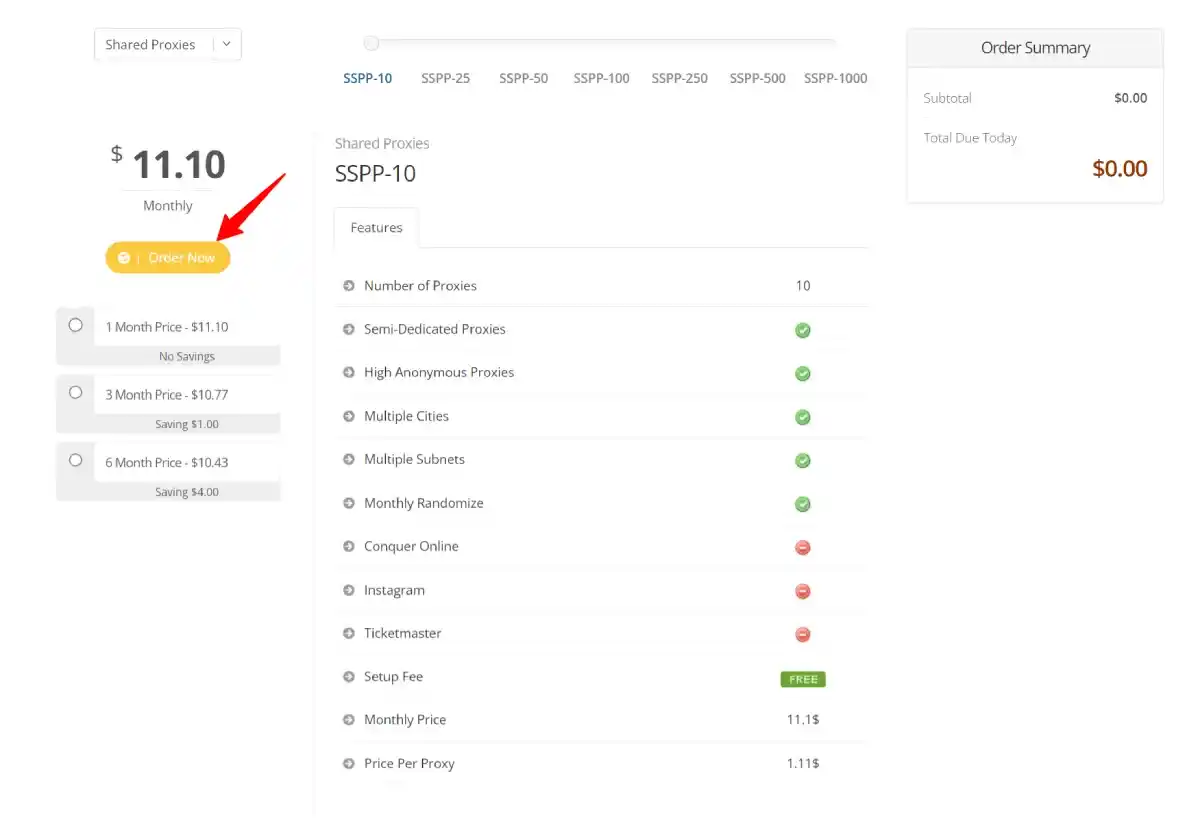
The table below compares all ten shared proxy providers on pricing, pool size, geo coverage, and protocol support. Entry prices reflect the most common starting plan. All data sourced from provider knowledge files and official pages (May 2026).
| Provider | Type | IP Pool | Countries | Entry Price | Trial | Protocols |
|---|---|---|---|---|---|---|
| Bright Data | Residential, ISP, DC, Mobile | 400M+ | 195 | $8/GB PAYG ($4/GB w/ RESIGB50) | 7-day (companies) | HTTP, HTTPS, SOCKS5 |
| Oxylabs | Residential, ISP, DC, Mobile | 175M+ | 195 | $6/GB ($30/mo, 5 GB) | 7-day (companies) | HTTP, HTTPS, SOCKS5 |
| Smartproxy | Residential, ISP, DC | 40M+ | 195+ | $8.5/GB | 7-day | HTTP, HTTPS, SOCKS5 |
| NetNut | Residential, ISP, DC, Mobile | 85M+ (resi); 1M+ (ISP) | 195+ | $3.53/GB ($99/mo, 28 GB) | 7-day (companies) | HTTP, HTTPS, SOCKS5 |
| ProxySeller | Residential, ISP, DC, Mobile | Not disclosed | 220+ | From ~$0.7/GB (resi, verify live) | No | HTTP, HTTPS, SOCKS5 |
| SSLPrivateProxy | Datacenter only | 120K+ | 7 | $15/mo per-proxy | No | HTTPS only |
| PrivateProxy.me | Datacenter (HTTP/HTTPS IPv4) | Not disclosed | 4 | $9/mo | 7-day | HTTP, HTTPS |
| AstroProxy | Residential, Mobile, DC | 1M+ | 100+ | $0.55/100 MB (~$5.50/GB) | 7-day | HTTP, HTTPS, SOCKS5 |
| The Social Proxy | Mobile (4G/5G) | Not disclosed | 6 | €20 for 2 days | No | HTTP, HTTPS, SOCKS5 |
| Proxy-n-VPN | Shared DC (HTTP/HTTPS) | 10K+ | 3 | $1.35/mo unlimited bandwidth | No | HTTP, HTTPS |
Pricing note: GB-based pricing drops sharply at higher volumes. A residential proxy at $8.5/GB at the 10 GB tier may cost $3–4/GB at 100 GB+. Always check the live pricing slider or contact sales for volume rates. ProxySeller and AstroProxy use JS-rendered pricing — verify exact amounts before purchasing. Promo codes (RESIGB50, proxyway35) are time-limited — confirm validity at the provider’s site before applying.
Shared Proxy Pros & Cons: What to Expect
Shared proxies solve a real problem — affordable IP access with large pool depth — but they come with trade-offs that dedicated proxies don’t have. Here’s what you should realistically expect.
Pros ✓
- Lower cost than dedicated proxies: Sharing pool access means you pay a fraction of what exclusive IP access costs — $8.5/GB shared residential vs $30+/IP for dedicated
- Access to large IP pools: Enterprise providers like Bright Data and Oxylabs give shared users access to the same massive pool (400M+ and 175M+ IPs respectively) that enterprise clients use
- Auto-rotation: Most shared pools rotate IPs automatically on every request or session, eliminating manual IP management
- Wide geo coverage: Top providers reach 195–220 countries — the geographic breadth of shared pools far exceeds what per-IP dedicated proxy pricing can cover on the same budget
- Good for moderate-volume scraping: For the typical 5–100 GB/month use case, shared residential proxies deliver solid success rates without the cost of enterprise contracts
- Flexible entry: Most providers offer trials, PAYG, or low-commitment monthly plans — you’re not locked into a $5,000/year contract to get started
Cons ✗
- Shared IP reputation risk: Another user’s abuse can get an IP range flagged or blocked. Quality providers cycle flagged IPs quickly, but it can still affect your sessions temporarily
- Variable speed: Bandwidth is shared — peak usage periods from other customers can slow your requests
- Not suitable for account-critical tasks: Creating accounts on sensitive platforms (banking, payment processors) with a shared IP risks flags from platforms that track IP reuse patterns
- Less predictable performance: Dedicated proxies give you a consistent baseline; shared pools vary based on how other users are behaving on the same IPs at any given moment
- Concurrency limits on some plans: Budget shared providers may limit concurrent connections — check the terms before assuming unlimited threads
Bottom Line: Shared proxies are the right default for most users — the cost savings are real and the performance at top providers is genuinely competitive with dedicated options for most use cases. The situations where you should pay more for dedicated proxies are narrower than most people assume: high-stakes account management, real-time financial data, or targets with the most aggressive anti-bot systems. For everything else, shared residential proxies from a reputable provider do the job.
Shared Proxies: Provider Comparisons
Two head-to-head comparisons to help you decide between the most common matchups in this list.
Bright Data vs Smartproxy — Enterprise Scale vs SMB Value
| Criterion | Bright Data | Smartproxy |
|---|---|---|
| IP Pool Size | 400M+ (residential) | 40M+ (residential) |
| Countries | 195 | 195+ |
| Entry Price (Residential) | $8/GB PAYG ($4/GB w/ promo) | $8.5/GB |
| Minimum Spend | No minimum (PAYG); $499/mo subscription | Lower starting commitment |
| Success Rate | 98.96% avg (Proxyway) | Not publicly benchmarked |
| Trial | 7-day (company accounts) | 7-day (all users) |
| KYC Required | Yes | No |
| Product Suite | Full stack: proxies + APIs + datasets | Proxies + scraping tools |
| Uptime | 99.99% | High (not formally published) |
| Best For | Enterprise, high-volume, compliance-sensitive use | SMBs, developers, quick setup |
Winner for Enterprise Scale: Bright Data | Winner for SMB Value and Ease of Use: Smartproxy | Winner for Trial Access: Smartproxy (no KYC required)
NetNut vs AstroProxy — ISP Quality vs Budget PAYG
| Criterion | NetNut | AstroProxy |
|---|---|---|
| IP Pool | 85M+ residential; 1M+ ISP | 1M+ (residential/mobile/DC) |
| Countries | 195+ | 100+ |
| Entry Price | $3.53/GB ($99/mo, 28 GB) | $0.55/100 MB (~$5.50/GB PAYG) |
| Minimum Spend | $99/mo | PAYG — no monthly minimum |
| IP Source | DiViNetworks ISP backbone | P2P peer network |
| Protocol | HTTP, HTTPS, SOCKS5 | HTTP, HTTPS, SOCKS5 |
| Static ISP IPs | Yes — 1M+ always-online | No |
| Trial | 7-day (company accounts) | 7-day |
| Best For | Account management, ISP-quality shared IPs, enterprise | Budget scraping, PAYG, mixed proxy types |
Winner for IP Quality: NetNut (ISP backbone, 85M+ pool) | Winner for Budget/Flexibility: AstroProxy (PAYG from $0.55/100 MB) | Winner for Static ISP Access: NetNut
🏆 Choose Bright Data or Oxylabs When
- You need enterprise-grade SLAs and compliance credentials
- Your scraping targets have sophisticated anti-bot protection
- You need a full scraping platform (proxies + APIs + datasets)
- Volume is high enough to justify $499+/month subscriptions
🔍 Choose Alternatives When
- You’re a developer or small team on a $50–100/month proxy budget
- You need PAYG access without committing to a subscription
- Your use case is geo-testing, light scraping, or anonymous browsing
- You want to test with a trial before any commitment
Shared Proxy Provider Ratings Breakdown
We rated each provider on six criteria relevant to shared proxy use cases. Scores reflect pool depth, pricing competitiveness, protocol support, geo coverage, trial options, and trust/reputation.
| Category | Score | Notes |
|---|---|---|
| Pool Size & Depth | 4.6/5 | Bright Data (400M+) and Oxylabs (175M+) lead; smaller providers like AstroProxy (1M+) and Proxy-n-VPN (10K+) drag the average down |
| Pricing Competitiveness | 4.2/5 | AstroProxy and Proxy-n-VPN offer excellent value; Bright Data PAYG ($8/GB) and Oxylabs entry ($6/GB) are premium-priced |
| Geographic Coverage | 3.9/5 | ProxySeller (220+), Bright Data, Oxylabs, Smartproxy, NetNut (all 195+) score well; SSLPrivateProxy (7), PrivateProxy.me (4), Proxy-n-VPN (3) limit the category average |
| Protocol & Feature Support | 4.1/5 | Most providers support HTTP/HTTPS/SOCKS5; SSLPrivateProxy and PrivateProxy.me are HTTPS-only, reducing compatibility |
| Trial & Onboarding | 3.8/5 | Smartproxy (7-day, no KYC), AstroProxy (7-day), PrivateProxy.me (7-day) stand out; ProxySeller, The Social Proxy, Proxy-n-VPN offer no trial |
| Trust & Reliability | 4.3/5 | Bright Data (99.99% uptime, ISO 27001), Oxylabs (99.9%, NASDAQ-listed), NetNut (NASDAQ parent) lead; smaller providers have fewer independent audits |
| Overall Rating | 4.2/5 | Strong category overall — Bright Data and Oxylabs lead on quality, AstroProxy and ProxySeller on value. Smartproxy wins the best-all-round award for non-enterprise buyers. |
Rating Summary: The shared proxy market is well-served at both ends. Enterprise buyers have Bright Data and Oxylabs competing hard on performance. Budget buyers have AstroProxy, ProxySeller, and Proxy-n-VPN. The mid-market — where most buyers actually sit — belongs to Smartproxy and NetNut, which hit the right balance of pool size, pricing, and support quality.
Are Shared Proxies Legit, Safe & Worth It?
Legitimacy & Safety
- ✓ Commercially legitimate: Shared proxies from reputable providers are legal tools for web scraping, geo-testing, ad verification, and anonymous browsing in most jurisdictions. You’re routing your traffic through a server — not doing anything inherently illegal.
- ✓ Ethically sourced options available: Bright Data (ISO 27001, WIPO Alert partner), Oxylabs (EWDCI member), and NetNut (publicly listed parent company) all meet enterprise procurement standards for compliance-sensitive organizations.
- ✓ IP pool management reduces risk: Quality providers actively monitor and cycle flagged IPs. This reduces (though doesn’t eliminate) the risk that another user’s behavior damages the IPs you’re assigned.
- ✓ Data security: Using HTTPS proxies from reputable providers means your traffic is encrypted in transit. Avoid free shared proxy lists — those frequently intercept traffic and expose credentials.
Long-Term Reliability
The providers with the longest track records in this list — Proxy-n-VPN (2012), PrivateProxy.me (2010), Oxylabs (2015), Bright Data (2014) — have a decade-plus of operation behind them. NetNut’s parent company (Alarum Technologies) is publicly listed on NASDAQ, adding financial transparency. Newer or smaller providers (AstroProxy, The Social Proxy) have less history to evaluate but credible enough user reviews to consider for budget use cases.
Reality check: Shared proxies are not a magic bullet for bypassing sophisticated anti-bot systems. Cloudflare, PerimeterX, and DataDome detect proxy patterns regardless of whether the IP is shared or dedicated. For targets with enterprise-grade bot protection, you may need a residential proxy combined with a browser automation layer (like Bright Data’s Scraping Browser or Oxylabs’ Web Unblocker) — not just a shared IP. Budget realistic success rates of 85–95% on protected targets, not 100%.
Worth It? Final Verdict
YES — Shared Proxies Are Worth It If
- You need geo-specific IPs for market research, SEO, or ad verification
- You’re scraping sites with moderate (not enterprise-grade) anti-bot protection
- Your budget doesn’t justify dedicated IPs for the volume you’re running
- You need flexible PAYG or trial-first access without long-term commitment
NO — Shared Proxies Are NOT Worth It If
- You’re creating high-value accounts where IP reputation is critical
- Your target has the most aggressive anti-bot protection in the market
- You need guaranteed consistent performance with no shared-pool variability
- Your use case violates the terms of service of the target site
Our Recommendation: Start with Smartproxy’s 7-day trial or AstroProxy’s 7-day trial and test on your actual target URLs before committing to a plan. Run real requests, check success rates, and measure response times — not benchmarks from the provider’s marketing page. If the shared pool performs acceptably on your targets, the cost savings over dedicated proxies are substantial. If not, that trial cost is the cheapest education you can get before locking into a monthly plan.
Shared Proxy FAQs
What is a shared proxy?
A shared proxy is a proxy server whose IP address is used simultaneously by multiple clients. Rather than paying for exclusive access to an IP, you share it with other users connected to the same pool. This reduces cost significantly while still providing anonymity, geo-targeting capability, and IP rotation. Quality providers manage the shared pool by cycling flagged IPs and monitoring abuse — which keeps shared proxy performance close to dedicated in most use cases.
What’s the difference between a shared proxy and a private proxy?
A private (dedicated) proxy assigns one IP exclusively to you. No one else uses it, so its reputation stays clean and performance is predictable. A shared proxy pools multiple users onto the same IP ranges — which makes it significantly cheaper, but means you inherit reputation from other users’ activity. For most use cases (web scraping, geo-testing, anonymous browsing), shared proxies perform adequately. For high-stakes account management or targets that track IP reuse heavily, private proxies are safer.
Are shared proxies safe to use?
Yes — shared proxies from reputable commercial providers are safe. Your traffic is encrypted (with HTTPS proxies), your provider doesn’t log request content (check their privacy policy), and the IP sharing is managed. The risks come from low-quality or free shared proxies, which sometimes intercept traffic or get IPs blacklisted quickly. Stick with established providers (Bright Data, Oxylabs, Smartproxy, NetNut) and check their privacy policies before connecting sensitive traffic.
Which is the best shared proxy provider overall?
For most users, Smartproxy is the best shared proxy provider overall: 40M+ IPs across 195+ countries, a 7-day free trial, 24/7 support, and pricing from $8.5/GB. For enterprise use cases, Bright Data (400M+ IPs, ISO 27001) and Oxylabs (175M+ IPs, 99.90% success rate) are the benchmarks. For budget buyers, AstroProxy ($0.55/100 MB PAYG) and ProxySeller (~$0.7/GB) offer competitive value. NetNut is the top pick if you specifically need ISP-backbone quality on a shared plan.
How much do shared proxies cost?
Shared proxy pricing varies widely by provider and type:
- Residential shared proxies: $0.7–$8.5/GB (ProxySeller to Bright Data PAYG). Enterprise subscriptions start from $30–99/mo.
- Datacenter shared proxies: $1.35–$15/month per proxy, or $1–3.53/GB on bandwidth plans.
- Mobile shared proxies: €20 for 2 days (The Social Proxy) to $0.55/100 MB PAYG (AstroProxy).
- Unlimited bandwidth: $1.35–$15/mo (Proxy-n-VPN, SSLPrivateProxy).
Always verify live pricing — many providers use JS-rendered sliders that show lower per-GB rates at higher volumes.
Can I use shared proxies for web scraping?
Yes — shared residential proxies are one of the most common tools for web scraping. The rotating IP pool means each request appears to come from a different user, which is exactly what you need to avoid rate limits and IP bans. For targets with moderate anti-bot protection, shared residential proxies from Bright Data, Oxylabs, or Smartproxy achieve 95%+ success rates. For very aggressive targets (Cloudflare Enterprise, for example), you may need to pair a shared proxy with a headless browser or SERP API.
Do shared proxies support SOCKS5?
Most do — but not all. Bright Data, Oxylabs, Smartproxy, NetNut, ProxySeller, AstroProxy, and The Social Proxy all support SOCKS5. SSLPrivateProxy is HTTPS-only. PrivateProxy.me and Proxy-n-VPN support HTTP/HTTPS but not SOCKS5. If your automation tool requires SOCKS5, make sure the provider explicitly lists it before purchasing. HTTP/HTTPS-only proxies are fine for standard web scraping but won’t work for protocols that require lower-level network access.
Which shared proxy providers offer a free trial?
Several providers in this list offer trials:
- Smartproxy: 7-day free trial — best no-KYC option
- AstroProxy: 7-day trial available
- PrivateProxy.me: 7-day trial
- NetNut: 7-day trial for company accounts (requires KYC)
- Bright Data: 7-day trial for company accounts (requires KYC)
- Oxylabs: 7-day trial for company accounts (requires KYC)
ProxySeller, The Social Proxy, and Proxy-n-VPN do not offer trials. For individual developers without a company account, Smartproxy or AstroProxy are the lowest-friction entry points.
Are shared proxies good for social media management?
It depends on your use case. For light social media geo-testing (checking how content appears in different countries), shared residential proxies work well. For account management — creating, warming up, and maintaining accounts — shared proxies carry risk because the same IP may have been used by other customers on the same platforms. For account management, The Social Proxy (dedicated mobile IPs) or private ISP proxies from NetNut are safer choices. Shared proxies are generally not recommended for creating accounts on platforms with aggressive IP-reuse detection.
What’s the difference between shared residential and shared datacenter proxies?
Shared residential proxies use IPs assigned by real ISPs to home users — they look like genuine residential internet traffic and are much harder for websites to detect and block. Shared datacenter proxies use server IPs in commercial data centers — they’re faster and cheaper, but easier for sophisticated targets to identify as proxy traffic. For most scraping use cases on protected sites, residential is the safer choice. For high-speed scraping on less protected targets where cost is a priority, datacenter shared proxies work fine at a fraction of the price.
Can I cancel a shared proxy subscription anytime?
Most providers allow monthly cancellation — you pay for the month you’re in and don’t renew. Bright Data, Oxylabs, Smartproxy, and most others operate on standard monthly billing with no long-term lock-in on entry plans. Annual plans (where available) typically offer 15–20% savings but require a 12-month commitment. ProxySeller offers weekly purchase options for even shorter commitments. Always check the specific cancellation and refund policy before signing up — refund windows vary from 3 days (Oxylabs) to none (some budget providers).
What should I look for when comparing shared proxy providers?
Five things matter most:
- Pool size — larger pools mean fewer IP repeats and better success rates under load
- Geographic coverage — match the countries you need; don’t pay for 195-country coverage if you only need 5
- Protocol support — confirm SOCKS5 if your tools need it
- Trial availability — always test on your actual targets before committing to a subscription
- Pricing model — per-GB suits scraping; per-IP suits stable sessions; unlimited bandwidth suits high data volume with small IP pools
Final Verdict
The shared proxy market in 2026 has something for every budget and use case — but the range is genuinely wide, from $1.35/month unlimited bandwidth on 10K IPs to $499/month enterprise subscriptions on 400M+ IP pools. Matching your use case to the right provider matters more than picking the biggest name. Bright Data and Oxylabs are the right answer if your work demands enterprise-grade reliability, compliance credentials, and the deepest possible IP pool. Smartproxy and NetNut serve the mid-market well. AstroProxy and ProxySeller cover budget buyers who need PAYG flexibility. SSLPrivateProxy, PrivateProxy.me, and Proxy-n-VPN are narrowly useful for specific scenarios (HTTPS-only, unlimited bandwidth, minimal geo needs).
✓ Top Picks by Use Case
- Best Overall: Bright Data — 400M+ IPs, ISO 27001, 99.99% uptime
- Best Value (SMB): Smartproxy — 40M+ IPs, 7-day trial, 24/7 support
- Best ISP Quality: NetNut — DiViNetworks backbone, 1M+ always-online IPs
- Best Enterprise Alternative: Oxylabs — 175M+ IPs, 99.90% success rate
- Best Budget PAYG: AstroProxy — from $0.55/100 MB, 7-day trial
- Best for Social/Mobile: The Social Proxy — 4G/5G mobile IPs, dedicated per session
✗ When to Look Elsewhere
- You need guaranteed exclusive IP reputation — buy dedicated/private proxies instead
- You’re scraping behind Cloudflare Enterprise or PerimeterX — add a scraping browser or SERP API
- Your budget is zero — free shared proxy lists expose your traffic and burn IPs in hours
- You need 100% consistent speeds — shared bandwidth is inherently variable
Ready to Pick Your Shared Proxy Provider?
Start with Smartproxy’s 7-day free trial — test on your real targets before spending a dollar on a subscription. No KYC required.
Try Smartproxy Free — 7-Day Trial, No Commitment →