
10 Best Private Proxy Providers in 2026
Compare the best private proxy providers of 2026 — tested on dedicated IP reliability, speed, pool depth, and real per-GB pricing across web scraping, sneaker copping, and brand protection use cases.
⚡ Quick Verdict
Finding a true private proxy — one where you’re the only user on that IP — is harder than it sounds. Most “dedicated” listings still recycle IPs between accounts or rotate residential IPs you can never fully control. After evaluating all ten providers below on IP exclusivity, speed, uptime, and real-world pricing for scraping, account management, and sneaker copping, Bright Data leads on raw scale and compliance, while Smartproxy (now Decodo) wins for value. IPRoyal sits in the sweet spot for solo operators who need PAYG pricing without a monthly commitment. Your best pick depends on how many IPs you need, whether datacenter or residential matters, and what you’ll pay per GB.
Web scraping, sneaker copping, account management, brand protection
From $1.40/IP/mo (datacenter) to $8/GB (residential PAYG)
Bright Data 0.26s DC / Smartproxy 0.63s residential avg
You buy a “dedicated” proxy, load it into your bot, and within two hours you’re getting rate-limited. The IP is already flagged — not because your scraper is doing anything wrong, but because the same IP was sold to three other customers before you. That’s the dirty secret of proxy marketplaces: the word “private” rarely means what you think it does.
A true private proxy — also called a dedicated proxy — assigns you one IP address that no other paying user touches during your subscription period. That exclusivity is what makes the difference for tasks where IP reputation matters: sneaker copping, account creation, high-frequency price scraping, and ad verification. Shared proxies can work, but you’re gambling on the behavior of strangers every day.
The market has also matured. Providers used to offer only datacenter IPs as dedicated proxies, because residential IPs rotate through real devices and can’t be “owned” exclusively. That’s still true — but ISP proxies now fill the gap. They’re datacenter-hosted IPs that carry real ISP assignments, and many providers sell them as dedicated, static IPs you get for your own exclusive use. That category is worth understanding before you commit to any plan.
This guide covers ten providers we evaluated specifically on IP exclusivity, speed, uptime guarantees, and real-world pricing for private proxy use cases. Pricing figures come from each provider’s brand knowledge file, updated May 2026.
What Are Private Proxies?

A private proxy — also called a dedicated proxy — is a proxy server with an IP address reserved exclusively for one paying customer at a time. No one else uses that IP while you’re subscribed. That exclusivity is the entire point: it protects the IP’s reputation from other users’ behavior, gives you stable session identity, and ensures speed isn’t shared.
Three IP types get sold as “private” or “dedicated” proxies, and they serve different needs:
- Dedicated Datacenter Proxies — Server IPs hosted in commercial data centers, assigned to you alone. Very fast (sub-0.3s response times are common), cheap per IP, and good for targets with no advanced anti-bot protection. The catch: they’re detectable as datacenter origin by platforms like Cloudflare, Amazon, and Nike.
- Dedicated ISP Proxies (Static Residential) — IPs issued by real ISPs (Comcast, BT, Deutsche Telekom, etc.) but hosted on datacenter hardware. You get the trust score of a residential IP with the uptime and speed of a datacenter. These are the closest thing to a “private residential proxy.” Providers like Bright Data and Decodo sell dedicated ISP IPs per-IP/month.
- Rotating Residential Proxies (Not Truly Private) — Residential IPs sourced from real home devices. These rotate and cannot be exclusively assigned to you — the same device might serve multiple customers at different times. Some providers market them as “private” when they mean “high-quality,” but they are not dedicated in the true sense.
Why IP Exclusivity Matters
Shared proxies work until one other user does something that gets the IP flagged — triggers a CAPTCHA farm, hits a rate limit, or gets caught on an anti-fraud list. You inherit that reputation with no warning. A private proxy isolates your work from everyone else. For sneaker bots, social media account warmup, or any task where one ban ruins the effort, that isolation is worth the price premium.
Who Needs a Private Proxy?
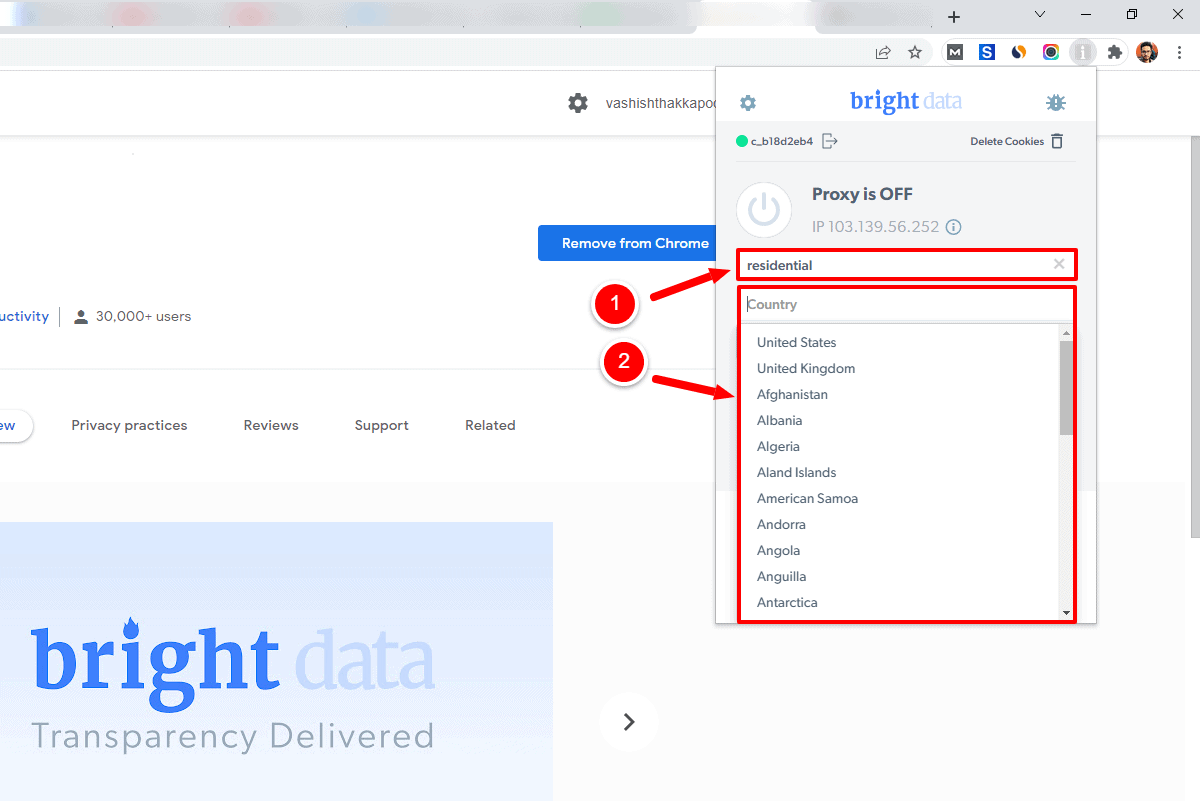
✓ Ideal Users for Private Proxies
- Sneaker Botters — Nike SNKRS, Foot Locker, and similar sites fingerprint IPs aggressively. A dedicated IP that hasn’t touched a bot farm before is the difference between getting a checkout and getting a ban. Fresh datacenter IPs or dedicated ISP IPs are standard in the sneaker community.
- Web Scrapers Running Long Sessions — If your scraper needs to maintain a session across multiple pages or hours, a rotating shared proxy that switches IPs mid-session breaks the session. A static private proxy holds the same IP for as long as you need it.
- Social Media Account Managers — Instagram, Twitter/X, LinkedIn, and TikTok flag accounts that switch IPs constantly or share IPs with known bot farms. One dedicated IP per account is the standard practice for safe multi-account management.
- Ad Verification Teams — Agencies and brands use private proxies to check how their ads appear in specific geos without triggering ad platform bot filters. IP consistency across tests makes the data reliable.
- Brand Protection Analysts — Monitoring counterfeit listings on platforms like Amazon, Alibaba, or Taobao requires consistent access from trusted IPs. A flagged shared IP gets blocked quickly on these platforms.
- Load Testers — Running load tests against your own infrastructure from a dedicated IP (or pool of dedicated IPs) gives clean, attributable traffic data without shared-IP noise.
✗ Not Ideal For
Private proxies are NOT the right tool if you:
- Need large-scale residential coverage for heavily-guarded targets — rotating residential pools are better
- Want the absolute cheapest per-GB rate — shared proxies cost less per unit
- Need hundreds of unique IPs rotating per request — residential rotating pools handle that; dedicated IPs are for stability
- Are looking for anonymity for personal browsing — a VPN is simpler and cheaper for that
10 Best Private Proxy Providers — Tested & Ranked
Here are our top picks for the best private proxy providers in 2026, evaluated on IP exclusivity, speed, uptime, geo-coverage, and pricing. Each entry covers what’s actually included, the real per-IP or per-GB rate, and the honest trade-offs.
1. Bright Data

Bright Data is the largest proxy network in the world and the benchmark for any serious private proxy comparison. Its dedicated ISP proxy offering gives you exclusive, static IPs sourced from real ISPs — assigned to you alone for the duration of your subscription. With 1.3M+ ISP IPs across ~50 countries, 99.9% advertised uptime, and ISO 27001 certification, it’s the only choice for enterprise teams that need auditability alongside scale. The 99.99% network uptime and sub-0.3s datacenter response times are Proxyway-verified, not just marketing copy.
Dedicated IP Options: Bright Data offers three dedicated proxy tiers. Dedicated Datacenter IPs start at $3.50/IP/month (10 IPs, $35 total); at scale, 1,000 IPs drop to $2.50/IP ($2,500/mo). Dedicated ISP IPs start at $3.50/IP/month for 10 IPs (shared ISP pool starts at $1.80/IP/month). PAYG datacenter available at $0.60/GB. Residential PAYG at $8/GB with promo code RESIGB50 cutting that to $4/GB for 3 months.
Pros ✓
- 1.3M+ dedicated ISP IPs — largest static residential pool tested
- Dedicated and shared ISP options with exclusive assignment
- 99.99% uptime across all products (Proxyway verified)
- ISO 27001 certified, GDPR-compliant, ethically sourced
- Full product stack: DC, ISP, residential, mobile, scraping browser
- 400M+ residential IPs for hybrid private + rotating workflows
Cons ✗
- Most expensive in this list — dedicated ISP starts at $35 for 10 IPs
- KYC required (up to 3 business days; freelancers may need video call)
- Subscription plans start at $499/month minimum
Proxyway Rating: 9.3/10 — Most Innovative Provider 2023, Best Platform for Proxies 2024.
2. Oxylabs

Oxylabs earned Proxyway’s Best Enterprise Provider award in 2025 and ties for the highest rating at 9.3/10. Its dedicated datacenter proxies are among the most scalable in the market — the company claims 2M+ datacenter IPs from ~8,000 subnets, with a tested 99.95% success rate and 0.25s average response time in the US. For private proxy use at enterprise scale, Oxylabs adds features that matter: coordinate-level geo-targeting (not just city), dedicated account managers, and insurance on its proxy products — a unique differentiator in the industry. ISP proxies start at $16/month for 10 IPs ($1.60/IP).
Dedicated IP Options: Dedicated Datacenter Proxies from $6.75/month (3 IPs, $2.25/IP). Shared Datacenter from $12/month (10 IPs, $1.20/IP). ISP Proxies from $16/month (10 IPs, $1.60/IP). No PAYG — subscription only. Promo code proxyway35 gives 35% off first purchase.
Pros ✓
- 2M+ datacenter IPs from ~8,000 subnets — world’s largest DC claim
- 99.95% datacenter success rate (Proxyway tested, US gateway)
- Coordinate-level geo-targeting for ISP and residential proxies
- Proxy insurance — unique product guarantee in the industry
- No concurrent session limits on any product tier
- Support in English, Russian, and Chinese
Cons ✗
- No PAYG option — subscription required for all products
- KYC required before using services
- ISP proxy country coverage limited compared to Bright Data
Proxyway Rating: 9.3/10 — Best Enterprise Provider 2025.
3. IPRoyal

IPRoyal is the strongest choice in this list for solo operators and small teams who need dedicated datacenter or ISP proxies on a flexible, pay-as-you-go basis. Its datacenter proxies start at $1.39/proxy on a 90-day plan and its ISP (static residential) pool has grown to 500K+ unique IPs across 31+ countries — a significant pool for a mid-market provider. The platform’s PAYG residential pricing means you only pay for what you use, with traffic that never expires. Proxyway benchmarks confirm a 99.56% residential success rate globally, among the top performers in its tier.
Dedicated IP Options: Datacenter Proxies from $1.39/IP (90-day plan); ISP Proxies from $1.75/IP/month (US, UK, DE, and 30+ more countries); 500K+ static ISP IPs available. Residential PAYG starts at $7.35/GB (1 GB); subscription rates from $7/GB (1 GB) down to lower at high volumes. Promo code PROXYWAY30 gives 30% off.
Pros ✓
- Cheapest entry-level dedicated datacenter proxies — from $1.39/IP
- PAYG residential with traffic that never expires
- 500K+ ISP IPs across 31+ countries
- 99.56% residential success rate (Proxyway April 2025)
- Unlimited concurrent connections on all products
- Live chat support available 24/7
Cons ✗
- Residential pool (32M+) is smaller than Bright Data or Oxylabs
- ISP success rate (94.75% US, Proxyway) is below average for the category
- Domain whitelist/blacklist requires $200 minimum spend to unlock
Proxyway Rating: 8.5/10 (4.3/5 stars).
4. Nimble
Nimble positions itself as a premium private proxy solution for enterprises that need a guaranteed 100% success rate on difficult targets. Its plans include city and state-level targeting and a dedicated infrastructure designed for high-volume data collection. Nimble is not a budget option — plans start at $300/month for the Essential tier and go to $4,000/month at the Enterprise level. But for teams running data pipelines that can’t afford failures, that success rate guarantee is what separates Nimble from standard proxy providers. It’s particularly strong for e-commerce intelligence, travel data aggregation, and financial data collection.
Dedicated IP Options: Nimble offers managed proxy plans with dedicated infrastructure: Essential at $300/month, Advanced at $700/month, Professional at $1,100/month, Enterprise at $4,000/month. All plans include city and state-level targeting. Success rate: 100% (advertised SLA). HTTPS and HTTP protocol support.
Pros ✓
- 100% success rate SLA — rare in the proxy industry
- City and state-level targeting on all plans
- Dedicated infrastructure — not a shared pool
- Strong for e-commerce, travel, and financial data pipelines
- Managed service reduces integration complexity
Cons ✗
- Entry price of $300/month is high for individuals
- No PAYG — subscription only
- Less suitable for small-scale or occasional use
5. Smartproxy (now Decodo)

Smartproxy rebranded to Decodo in April 2025, but its proxy infrastructure is unchanged — and it’s still one of the best-value providers in the entire market. Proxyway named it Best Value Provider for five consecutive years and its April 2025 benchmarks confirmed 99.86% residential success rate and the fastest residential response times globally. For private proxy use, its dedicated ISP proxy offering is the standout: you get fixed, static IPs at $0.27/IP/month (shared tier) or dedicated via pay-per-IP. The 3-day free trial with 100 MB lets you test ISP or residential performance before committing. 40M+ residential IPs across 195+ locations with Pay As You Go available at $4/GB.
Dedicated IP Options: ISP Proxies (shared, pay/IP): from $0.27/IP/month. ISP Proxies (dedicated, pay/IP): prices available in dashboard. Residential subscription from $3.75/GB (3 GB plan); PAYG at $4/GB. Datacenter from $0.02/IP/month (rotating shared). 14-day money-back guarantee on first purchase.
Pros ✓
- Best Value award from Proxyway for 5 consecutive years
- 99.86% residential success rate (Proxyway April 2025)
- Fastest residential proxies globally (Proxyway benchmark)
- ISP proxies from $0.27/IP — excellent value for static IPs
- 3-day free trial with 100 MB — no credit card needed
- No concurrent thread limits on any plan
Cons ✗
- PAYG and monthly subscription cannot be used simultaneously
- Dedicated ISP pricing requires dashboard verification
- No sub-users on entry plans
Proxyway Rating: 9.3/10 (4.7/5 stars) — Best Value Provider 5 consecutive years.
6. MarsProxies

MarsProxies is a boutique provider that stands out for its ISP proxy speed — 10Gbps per ISP proxy is its headline number, which is genuinely extreme for a residential-backed IP. It focuses on US and EU locations and offers three distinct product lines at competitive prices: Ultra Residential at €3/GB, ISP Proxies at €2/proxy, and Obsidian Datacenter at €1.40/proxy. If you need dedicated ISP proxies specifically for sneaker drops, gaming platforms, or any application where milliseconds matter, MarsProxies’ infrastructure is purpose-built for exactly that. The trade-off is a smaller geographic footprint compared to the large enterprise providers.
Dedicated IP Options: ISP Proxies at €2/proxy per month (10Gbps speed, US and EU); Obsidian Datacenter Proxies at €1.40/proxy per month; Ultra Residential at €3/GB (rotating). All products available with dedicated assignment.
Pros ✓
- 10Gbps ISP proxy speed — among the fastest in the market
- ISP proxies at €2/proxy — strong value for a dedicated ISP IP
- Datacenter proxies at €1.40/proxy — competitive entry pricing
- Purpose-built for speed-sensitive use cases (sneakers, gaming)
- US and EU location coverage included
Cons ✗
- Limited geographic footprint — primarily US and EU
- Smaller provider — less transparency on pool depth vs. enterprise players
- Euro-denominated pricing adds conversion friction for US buyers
7. Infatica

Infatica is a Singapore-based mid-market provider with a 35M+ residential pool, 150K+ static ISP IPs, and four ISO certifications (ISO 27001, ISO 22301, ISO 27701, ISO 20000-1) — which is more compliance documentation than most providers twice its size. Its dedicated datacenter offering includes both shared (from $0.60/GB) and dedicated (200K+ IPs) pools, and its residential pricing starts at $4/GB PAYG with a 7-day trial for just $4. The Proxyway benchmark puts Infatica’s US success rate at 99.35% for residential, which is strong for its price tier. For teams that need a compliant, mid-market private proxy option without Bright Data’s price tag, Infatica is a serious contender.
Dedicated IP Options: Static ISP IPs (150K+ pool) — pricing on request; Dedicated Datacenter IPs (200K+ pool) — pricing on request; Shared Datacenter from $0.60/GB PAYG; Residential PAYG at $4/GB; monthly plans from $96 (25 GB at $3.84/GB). Annual plans include 20% discount. 7-day trial for $4.
Pros ✓
- Four ISO certifications — strongest compliance in its tier
- 35M+ residential IPs; 150K+ static ISP IPs; 200K+ dedicated DC IPs
- 99.35% US residential success rate (Proxyway benchmark)
- $4 residential trial — lowest-cost entry point in this list
- SOCKS5 and HTTP/HTTPS support with unlimited concurrent sessions
- 20% annual discount available
Cons ✗
- Residential success rate varies by region — Brazil drops to 91.54%
- Smaller company (25–50 employees) vs. enterprise providers
- Traffic plans do not support top-ups — auto-renews instead
Proxyway Rating: 8.7/10 (G2: 4.8/5).
8. NetNut

NetNut runs its static residential (ISP) network through DiViNetworks, a subsidiary that sources IPs directly from ISPs — not from end-user devices. That matters for private proxy users because the IPs have real browsing history, direct ISP connectivity (one-hop, no middle device), and can run in parallel with actual residential users. The result: ISP proxies that are harder to detect and block than most. NetNut’s 1M+ static ISP pool is the largest ISP pool confirmed by Proxyway in independent testing, and its parent company (Alarum Technologies, NASDAQ: ALAR) adds financial transparency that private buyers appreciate. Plans start at $99/month with no PAYG option.
Dedicated IP Options: Static Residential (ISP) from $99/month (7 GB, $14.40/GB entry; scales down significantly at higher volumes). Rotating Residential from $99/month (28 GB at $3.53/GB). Datacenter from $100/month (100 GB at $1/GB). 7-day free trial for business customers.
Pros ✓
- 1M+ ISP IPs via DiViNetworks — largest ISP pool in Proxyway tests
- Direct one-hop ISP connectivity — no end-user device in chain
- Public company (NASDAQ: ALAR) — financial transparency
- G2 #1 Web Data Provider with multiple quality badges
- 85M+ rotating residential IPs across 195+ countries
- 7-day free trial available for company customers
Cons ✗
- No PAYG — subscription only for all products
- ISP entry price ($99/7 GB = $14.40/GB) is expensive at low volume
- No top-up — exhausted plans must be fully renewed
Proxyway Rating: 9.0/10 (4.5/5 stars).
9. LiveProxies

LiveProxies operates on a unique model: its B2C product uses IP-count-based plans (not pure GB-billing), and its B2B enterprise tier is a purpose-built private proxy network for SEO, AdTech, and Market Research firms. The B2B pool is a curated network of 10M+ unique IPs specifically optimized for B2B data traffic — which means better performance on LinkedIn, business intelligence platforms, and ad verification targets than generic residential pools. Proxyway benchmarks confirm 95.85% B2B success rate globally and 307,569 unique US IPs in a 14-day test window. B2C plans start from $70 for 200 IPs and 4 GB over 30 days; B2B enterprise starts at $2,000/month for 1 TB.
Dedicated IP Options: B2C Rotating Residential: 200 IPs from $70/30 days (4 GB data); 500 IPs up to $530/90 days. B2B Enterprise: from $2,000/month (1 TB at $2.00/GB); scales to $0.50/GB for large volumes. 14-day average IP uptime on B2C plans. No PAYG — subscription periods of 30, 45, 60, or 90 days.
Pros ✓
- B2B network purpose-built for SEO, AdTech, and Market Research
- 10M+ unique IPs with 95.85% B2B success rate (Proxyway tested)
- IP-count-based plans give predictable capacity, not just bandwidth
- Unused traffic rolls over to standby plans automatically
- Trustpilot 4.3/5 across 829 reviews
- Enterprise custom pricing can reach $0.50/GB at scale
Cons ✗
- B2B enterprise minimum is $2,000/month — not for small teams
- No PAYG; static residential currently “permanently unavailable”
- B2C pool is limited to US, UK, Canada by default
Proxyway Rating: 8.1/10 (4.0/5 stars).
10. Shifter

Shifter — formerly Microleaves — operates one of the older residential proxy networks at 31M+ IPs, and its backconnect proxy model offers an unusual kind of “private” access: dedicated backconnect proxies where you control the IP refresh schedule. Rather than a fixed static IP, you get a dedicated proxy endpoint that rotates through the Shifter pool on your chosen schedule (5 minutes to 1 hour refresh intervals). This makes Shifter practical for tasks that need both session control and IP freshness — unlike a pure static dedicated IP. Plans start at $250/month for 10 backconnect proxies. Uptime is 99.99% advertised with a 3-day refund and 7-day trial available.
Dedicated IP Options: Backconnect Proxies from $250/month (10 proxies); IP refresh rate from 5 minutes to 1 hour (user-controlled). 31M+ IP pool. HTTP/HTTPS and SOCKS5 support. 99.99% uptime guarantee. 3-day refund policy; 7-day trial available.
Pros ✓
- User-controlled IP refresh (5 min to 1 hour) — unique scheduling feature
- 31M+ residential IP pool behind backconnect proxies
- 99.99% uptime guarantee — among the strongest SLAs in this list
- 3-day refund policy plus 7-day trial for testing
- HTTP/HTTPS and SOCKS5 protocol support
Cons ✗
- Not a true static dedicated IP — IP changes on refresh schedule
- $250/month minimum for just 10 proxies is steep for solo users
- Smaller product ecosystem than enterprise competitors
How to Choose the Right Private Proxy Provider
The right private proxy provider depends on your use case, not just the price per IP. Here are the five questions worth answering before you sign up for anything.
Step 1: Datacenter, ISP, or Residential?
Datacenter dedicated IPs are fastest and cheapest but detectable as server origin on hardened targets. ISP dedicated IPs cost more but pass as residential on most anti-bot systems. Rotating residential pools can’t be truly “dedicated” — don’t let providers sell you on that framing unless they explicitly mean static ISP IPs.
Step 2: How Many IPs Do You Need?
For account management, one IP per account is the rule. For load testing, you need as many IPs as you have concurrent connections. For scraping, the question is whether you’re doing session-based work (use static IPs) or bulk anonymous requests (rotating residential may be better).
Step 3: Do You Need Geo-Targeting?
Some dedicated datacenter pools are US-only. If you need ISP proxies in Germany, Japan, or Brazil, check country coverage before comparing pricing. Bright Data covers ~50 countries for ISP; Decodo’s ISP pool is more limited. Oxylabs offers coordinate-level targeting if city-level isn’t precise enough.
Step 4: PAYG or Subscription?
If you have predictable, continuous usage, monthly subscriptions are cheaper per GB. If you have bursty or one-off scraping jobs, PAYG (like IPRoyal’s never-expiring residential traffic) prevents you from paying for unused bandwidth. Most providers don’t let you use both billing models simultaneously on the same account.
Step 5: What’s Your Success Rate Requirement?
For financial, travel, or e-commerce data pipelines where failed requests cost money, pay for a provider with a verified success rate (Bright Data: 98.96%, Oxylabs: 99.90%, Decodo: 99.86%). For less sensitive workloads, Infatica (99.35% US) or IPRoyal (99.56% global) are solid at lower price points.
Bottom line: If you need dedicated datacenter IPs on a budget, IPRoyal or MarsProxies. If you need dedicated ISP proxies with the best success rate, Bright Data or Decodo. If you need enterprise scale with SLA guarantees, Oxylabs or Nimble. If you need a static ISP pool via direct ISP backbone, NetNut.
Private Proxy Pricing: Side-by-Side Comparison
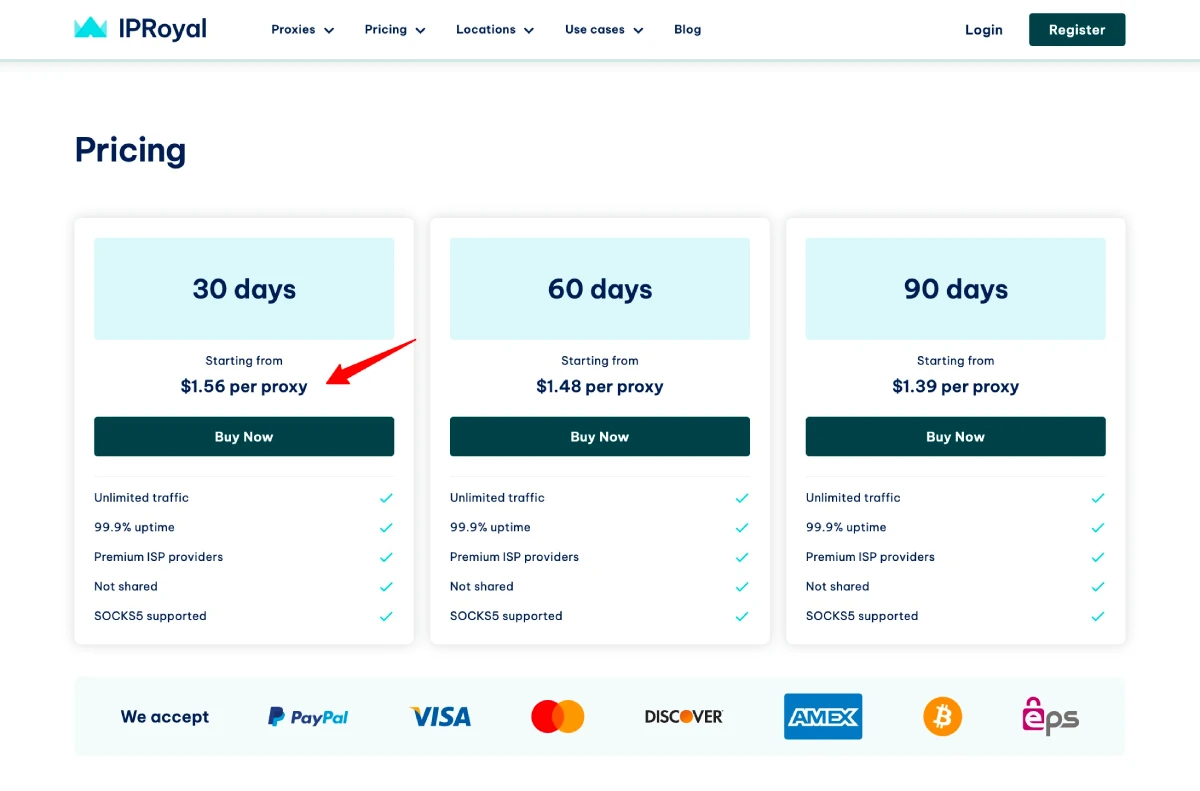
Private proxy pricing varies significantly based on IP type, plan tier, and billing model. Datacenter dedicated IPs are the cheapest per-IP but require multiple IPs to get meaningful coverage. ISP dedicated IPs cost more but carry residential trust scores. Here’s how the ten providers compare on their most relevant dedicated proxy pricing:
| Provider | Dedicated DC (per IP/mo) | Dedicated ISP (per IP/mo) | Residential PAYG (per GB) | Trial / Refund |
|---|---|---|---|---|
| Bright Data | $2.50–$3.50/IP | $2.50–$3.50/IP | $8/GB (promo: $4/GB) | 7-day free trial |
| Oxylabs | $2.25/IP (3 IPs) | $1.60/IP (10 IPs) | $6/GB (starter) | 7-day free trial; 3-day refund |
| IPRoyal | $1.39/IP (90-day) | $1.75/IP | $7.35/GB PAYG (1 GB) | 24-hr refund (DC/ISP) |
| Nimble | N/A (managed plans) | N/A (managed plans) | From $300/mo (Essential) | Contact sales |
| Smartproxy (Decodo) | From $0.02/IP | From $0.27/IP | $4/GB PAYG | 3-day / 100 MB; 14-day MBG |
| MarsProxies | €1.40/IP (Obsidian) | €2.00/IP | €3/GB (Ultra Residential) | — |
| Infatica | Custom (200K+ pool) | Custom (150K+ pool) | $4/GB PAYG | 7-day trial for $4 |
| NetNut | $1/GB ($100/mo, 100 GB) | $14.40/GB ($99/mo, 7 GB) | $3.53/GB ($99/mo, 28 GB) | 7-day free trial (biz) |
| LiveProxies | N/A | N/A (unavailable) | $17.50/GB (200 IPs, 4 GB) | No free trial |
| Shifter | N/A (backconnect) | N/A | $25/proxy ($250/mo, 10 proxies) | 7-day trial; 3-day refund |
Watch out for these pricing traps:
- ISP proxies that are “dedicated” in name but share a subnet with other customers — always ask if the IP is exclusive to your account
- Residential plans marketed as “private” but actually rotating through shared devices
- Auto-renewal when traffic exhausts (Infatica does this if payment is saved — set spending limits)
- NetNut’s ISP entry price looks reasonable at $99/month until you realize that’s only 7 GB — $14.40/GB is steep at low volume
Key pricing notes:
- Bright Data promo code RESIGB50 gives 50% off residential for 3 months ($4/GB instead of $8/GB)
- Oxylabs promo code proxyway35 gives 35% off first purchase
- IPRoyal promo code PROXYWAY30 gives 30% off
- Decodo promo code DECODO5 gives 5% off self-service plans
- Infatica annual plans save 20% across all bandwidth tiers
Private Proxy Pros & Cons
Pros ✓
- Exclusive IP — no other user can damage your IP’s reputation
- Stable sessions for account management and long-duration scraping
- Higher success rates on anti-bot platforms vs. shared proxies
- Predictable performance — dedicated bandwidth means no shared congestion
- Works well for sneaker drops, social media accounts, and ad verification
- ISP proxies combine residential trust with datacenter uptime
Cons ✗
- Higher cost per IP than shared proxies — sometimes 3–5x more
- Datacenter dedicated IPs still detectable by Cloudflare, Amazon, Google
- True dedicated residential IPs don’t exist — rotating devices can’t be exclusive
- Entry pricing locks you into minimum IP counts (often 10 IPs)
- If the dedicated IP gets burned, you need a replacement — check provider’s replace policy
Bottom Line: Private proxies make the most sense when IP reputation is directly tied to your task’s success — account management, sneaker bots, and ad verification are the clearest examples. For bulk, anonymous scraping of non-hardened targets, rotating shared proxies are usually more cost-effective. The right choice depends on what you’re scraping and how much a ban costs you.
Private Proxy Provider Comparisons
Two matchups that buyers ask about most: Bright Data vs. Oxylabs on enterprise private proxies, and Decodo (Smartproxy) vs. IPRoyal on value-tier dedicated IPs.
| Feature | Bright Data | Oxylabs |
|---|---|---|
| Dedicated ISP IPs | 1.3M+ (shared + dedicated tiers) | ISP pool available; smaller than Bright Data |
| Datacenter Pool | 1.3M+ dedicated DC IPs | 2M+ from ~8,000 subnets |
| DC Entry Price | $3.50/IP (10 dedicated IPs) | $2.25/IP (3 IPs, $6.75/mo) |
| ISP Entry Price | $3.50/IP dedicated (10 IPs) | $1.60/IP (10 IPs, $16/mo) |
| Proxyway Rating | 9.3/10 | 9.3/10 |
| Geo-Targeting | Country, city, ZIP, ASN | Country, state, city, ASN, ZIP, coordinates |
| PAYG Option | Yes — $8/GB residential, $0.60/GB DC | No — subscription only |
| Trial | 7-day free trial (companies) | 7-day free trial (companies); 3-day refund |
| Compliance | ISO 27001, GDPR, WIPO, TAG | EWDCI (i2Coalition) member; proxy insurance |
| Best For | Largest scale, most complete product stack | Precision geo-targeting, enterprise SLA |
Winner for sheer scale and product breadth: Bright Data | Winner for datacenter pool size and coordinate-level targeting: Oxylabs | Winner for pricing flexibility: Bright Data (PAYG available)
| Feature | Smartproxy (Decodo) | IPRoyal |
|---|---|---|
| Dedicated DC Entry | From $0.02/IP (rotating shared) | $1.39/IP (90-day plan) |
| ISP Entry Price | $0.27/IP (shared) | $1.75/IP |
| ISP Pool | Available; pricing via dashboard | 500K+ IPs, 31+ countries |
| Residential PAYG | $4/GB | $7.35/GB (1 GB); drops with volume |
| Traffic Expiry | Monthly (subscription) / no expiry (PAYG) | Never expires (PAYG) |
| Proxyway Rating | 9.3/10 | 8.5/10 |
| Success Rate (global) | 99.86% residential | 99.56% residential |
| Trial / Refund | 3-day / 100 MB trial; 14-day MBG | 24-hr refund (DC/ISP only) |
| Live Chat Support | 24/7 | 24/7 |
| Best For | Best overall value at mid-market | Budget PAYG with never-expiring traffic |
Winner for overall performance and value: Smartproxy (Decodo) | Winner for cheapest dedicated DC IPs: IPRoyal | Winner for PAYG flexibility with non-expiring traffic: IPRoyal
🏆 Choose Bright Data or Oxylabs When
- You need enterprise-grade SLAs and dedicated account management
- Your team needs the broadest ISP or datacenter coverage globally
- Compliance documentation (ISO, GDPR, WIPO) is required
- You’re running data pipelines where failure costs money
🔍 Choose IPRoyal or Smartproxy When
- You’re a solo operator or small team with a tighter budget
- You need PAYG flexibility — traffic that doesn’t expire
- Your use case is scraping or account management, not enterprise data pipelines
- You want to test with a low-cost trial before committing
Private Proxy Provider Ratings Breakdown
| Category | Score | Notes |
|---|---|---|
| IP Exclusivity & Dedication | 4.6 / 5 | Bright Data, Oxylabs, and NetNut offer verifiably dedicated ISP IPs; Shifter’s backconnect model is a partial exception |
| Speed & Response Times | 4.7 / 5 | Decodo fastest residential (0.63s global avg); Bright Data DC at 0.26s; MarsProxies ISP at 10Gbps for latency-sensitive tasks |
| Pricing & Value | 4.4 / 5 | IPRoyal cheapest DC entry ($1.39/IP); Decodo cheapest ISP ($0.27/IP shared); Nimble and Shifter expensive relative to others |
| Geographic Coverage | 4.5 / 5 | Bright Data and Oxylabs cover 195+ countries; MarsProxies and LiveProxies have limited geo options |
| Success Rate & Reliability | 4.6 / 5 | Oxylabs 99.90% and Decodo 99.86% residential lead; Nimble claims 100% SLA; NetNut 99% for ISP |
| Ease of Setup & Support | 4.5 / 5 | All providers offer 24/7 support; Bright Data KYC adds friction; Decodo 3-day trial is lowest barrier to entry |
| Overall Rating | 4.6 / 5 | Strong market overall; best providers deliver enterprise-grade private proxy performance at various price points |
The private proxy market in 2026 is mature enough that all ten providers in this list deliver usable dedicated IPs. The real differentiation is at the edges: compliance documentation, ISP backbone architecture, success rate verification, and pricing flexibility. For most buyers, Bright Data is the ceiling and IPRoyal is the floor — everything else sits in between depending on your specific needs.
Are Private Proxies Legit, Safe & Worth It?
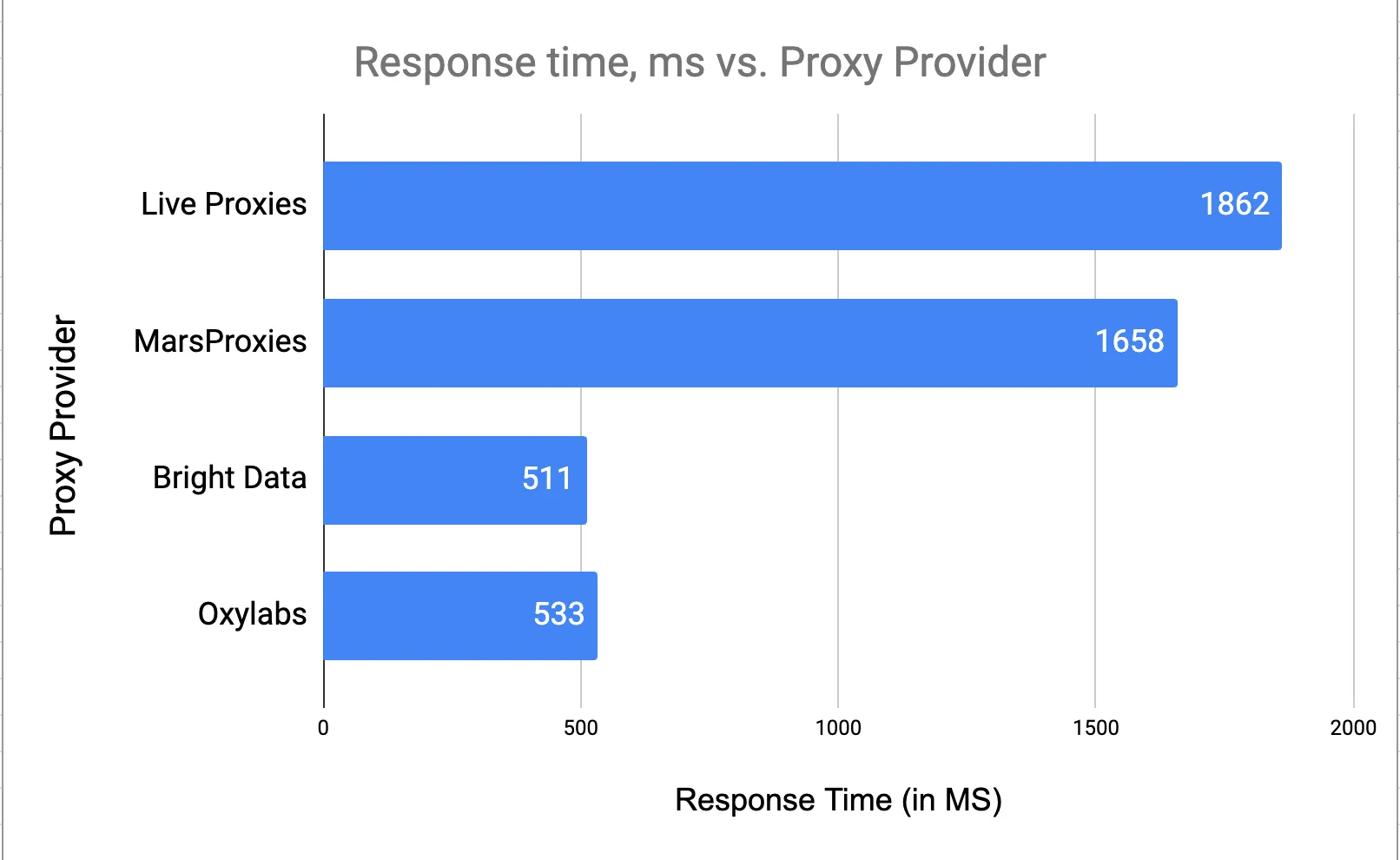
Legitimacy & Safety
- ✓ All ten providers in this list are legitimate commercial businesses with verifiable company registration — not fly-by-night proxy resellers
- ✓ Bright Data, Infatica, and Oxylabs carry ISO 27001 certification; NetNut’s parent (Alarum Technologies) is publicly listed on NASDAQ
- ✓ Proxyway independently benchmarks the top six providers — success rates, IP purity, and response times are third-party verified, not just self-reported
- ✓ Residential pools from Bright Data, Oxylabs, and Decodo use opt-in bandwidth sharing (users knowingly share bandwidth for payment) — not malware-harvested IPs
- ✓ GDPR and compliance requirements are explicitly addressed by enterprise providers — relevant if you’re processing European user data
Long-Term Reliability
Private proxy providers serving enterprise clients have strong incentives to maintain service continuity. Bright Data (founded 2014), Oxylabs (2015), and Decodo/Smartproxy (2018) have multi-year track records. The mid-market providers (IPRoyal founded 2020, Infatica 2019, LiveProxies 2020) are newer but have grown significantly. The one caution: smaller providers without enterprise client bases are more vulnerable to shutdown or service changes. Always check whether your provider offers SLA commitments and what happens if an IP is burned — do they replace it automatically?
Reality check: “Private” and “dedicated” mean different things to different providers. A “dedicated” residential proxy from some providers just means you get a longer session window on a rotating IP — the IP is still shared across accounts over time. Always confirm: “Is this IP assigned to my account exclusively for the duration of my subscription?” If the answer is vague, it’s probably not truly private. ISP proxies from providers like Bright Data, Oxylabs, and NetNut are the cleanest option for genuine exclusivity.
Worth It? Final Verdict
YES — Private Proxies Are Worth It If:
- You’re managing multiple social media or e-commerce accounts where one ban is costly
- You’re running a sneaker bot or any task where IP reputation directly determines success
- You need session stability across hours-long scraping runs
- You’re building an ad verification or brand protection workflow
- Your target site has aggressive shared-IP blocking
NO — Stick to Shared Proxies If:
- You’re doing bulk anonymous scraping of public data with no session requirements
- Your targets have minimal anti-bot protection
- You’re highly price-sensitive and can absorb occasional IP bans
- You need thousands of unique IPs rotating per request — rotating residential pools are better
Our recommendation: For most private proxy use cases, start with Decodo (Smartproxy) — 3-day free trial, 99.86% success rate, and competitive ISP proxy pricing. If you outgrow it or need enterprise compliance, upgrade to Bright Data or Oxylabs. If you need the cheapest dedicated datacenter IPs for testing, start with IPRoyal at $1.39/IP on the 90-day plan.
Private Proxy FAQs
What is a private proxy?
A private proxy — also called a dedicated proxy — is a proxy server with an IP address assigned exclusively to one paying customer. Unlike shared proxies where multiple users share the same IP simultaneously, a private proxy guarantees that no other user is touching your IP during your subscription period. This exclusivity protects the IP’s reputation and maintains stable session identity.
What’s the difference between a private proxy and a shared proxy?
The core difference is exclusivity. A private proxy gives you one IP that only you use. A shared proxy gives you access to a pool of IPs that many customers use simultaneously. Private proxies cost more per IP but offer better reputation, fewer bans, and stable sessions. Shared proxies are cheaper per GB but you inherit the behavior of other users — if someone else triggers a ban, your IP may suffer for it.
Can you get a dedicated residential proxy?
Not in the strict sense. Residential IPs come from real home user devices that rotate, go offline, and cannot be exclusively reserved for you. What providers sell as “dedicated residential” usually means either: (a) ISP proxies — static IPs issued by real ISPs but hosted on datacenter hardware, which can be dedicated to your account; or (b) longer sticky sessions on rotating residential pools. True ISP dedicated proxies (Bright Data, Oxylabs, NetNut, Decodo) are the closest you’ll get to a private residential IP.
Are private proxies good for sneaker bots?
Yes — dedicated datacenter IPs and ISP IPs are standard in the sneaker bot community. Fresh, never-used datacenter IPs are preferred for drops because they haven’t been flagged by Nike, Foot Locker, or Adidas bot protection. ISP proxies are the next tier up — they carry residential trust scores and are harder for anti-bot systems to detect as proxy traffic. MarsProxies, IPRoyal, and Bright Data are popular choices for sneaker use cases.
What’s the cheapest private proxy provider in 2026?
For dedicated datacenter IPs, IPRoyal is the cheapest at $1.39/IP on a 90-day plan. For dedicated ISP IPs, Smartproxy (Decodo) offers shared ISP proxies from $0.27/IP/month, and MarsProxies offers ISP proxies at €2.00/proxy. For residential PAYG (not truly private but flexible), Infatica starts at $4/GB and Decodo at $4/GB. The cheapest is not always the best — check success rates before committing to the lowest price.
How many private proxies do I need for account management?
The standard practice is one dedicated IP per account. If you’re managing 10 Instagram accounts, you want 10 private proxies — one assigned to each account permanently. Using the same IP across multiple accounts, or switching IPs for the same account, is what triggers platform suspicion. ISP proxies are preferred for account management because they carry residential trust scores and don’t change between sessions.
What’s the difference between an ISP proxy and a datacenter proxy?
Datacenter proxies are hosted on commercial server infrastructure. They’re fast and cheap but easily identified as server origin by platforms like Cloudflare, Amazon, and anti-bot systems. ISP proxies (also called static residential proxies) are IPs assigned by real internet service providers (like Comcast or BT) but physically hosted in data centers. They carry ISP assignment metadata that looks residential to bot detection systems, while offering the uptime and speed of datacenter hardware. ISP proxies cost more per IP but pass as residential on most targets.
Do private proxy providers offer refunds?
Refund policies vary by provider:
- Bright Data: No stated refund for proxy plans (7-day free trial instead)
- Oxylabs: 3-day refund policy on first purchase
- IPRoyal: 24-hour refund available on datacenter and ISP proxies
- Smartproxy (Decodo): 14-day money-back guarantee with conditions (less than 20% traffic used, no prior free trial)
- Shifter: 3-day refund policy
- NetNut: No stated refund; 7-day free trial available
How do I know if a proxy is truly private (dedicated to me only)?
Ask the provider directly: “Is this IP assigned exclusively to my account for the duration of my subscription?” For dedicated datacenter proxies, check that you receive a specific IP list (not just a gateway endpoint) and that those IPs are listed as “dedicated” not “rotating.” For ISP proxies, confirm the IPs are static — meaning they don’t change between sessions — and that they’re not re-used across customer accounts simultaneously. Providers like Bright Data and Oxylabs explicitly distinguish between “shared” and “dedicated” ISP IP tiers in their pricing.
Is Smartproxy still available or has it fully become Decodo?
Smartproxy rebranded to Decodo on April 22, 2025. The same company, team, and infrastructure are now operating under the Decodo name at decodo.com. Existing Smartproxy accounts were automatically migrated and old endpoints continue to work. New signups go through decodo.com. When this article refers to Smartproxy, it means the same provider now trading as Decodo.
Can I use private proxies for web scraping?
Yes — and they’re particularly useful for session-based scraping where you need to maintain a consistent identity across multiple pages, handle logins, or manage long-running crawls. However, if you need thousands of unique IPs rotating per request to bypass rate limits, a rotating residential proxy pool (not dedicated IPs) is usually more cost-effective. Private proxies shine when IP reputation and session continuity matter; rotating pools shine when raw IP diversity matters.
Which private proxy provider is best for enterprises?
Bright Data and Oxylabs are the two enterprise-first choices. Both carry ISO 27001 compliance (Bright Data), proxy insurance (Oxylabs), dedicated account managers, SLA guarantees, and the largest IP pools verified by Proxyway. Nimble is a strong option for teams that need a 100% success rate SLA and a fully managed proxy service rather than a self-serve pool. NetNut adds financial transparency as a NASDAQ-listed company. For enterprise teams, request a 7-day free trial from either Bright Data or Oxylabs before committing.
Final Verdict
The private proxy market in 2026 has more legitimate, high-performance options than ever — but the terminology is still messy enough to trap buyers into plans that don’t actually deliver dedicated IPs. Understanding the difference between rotating residential, ISP (static residential), and dedicated datacenter proxies is the foundation of any good purchase decision. Once you know what you actually need, the field narrows quickly.
Bright Data leads on raw scale and compliance. Oxylabs wins for enterprise precision targeting. Decodo (Smartproxy) is the best overall value. IPRoyal is the right choice for solo operators on a budget who need non-expiring PAYG traffic. NetNut offers the most technically distinct ISP proxy backbone. MarsProxies is purpose-built for speed-sensitive workloads. Infatica is the best-compliant mid-market option. And Nimble is worth the premium if a 100% success rate SLA is non-negotiable for your data pipeline.
✓ What We Love About Private Proxies
- Exclusive IP ownership eliminates reputation risk from other users
- ISP proxies now make dedicated residential-quality IPs genuinely achievable
- Enterprise providers offer Proxyway-verified success rates above 99.8%
- Multiple pricing models (PAYG, subscription, per-IP) fit diverse budgets
- Free trials from Bright Data, Oxylabs, and Decodo reduce commitment risk
✗ What Could Be Better
- Terminology is inconsistent — “private,” “dedicated,” and “static” mean different things to different providers
- Truly dedicated residential IPs still don’t exist — ISP proxies are the closest approximation
- Entry pricing for quality ISP proxies ($99–$300/month) is out of reach for individuals
- IP replacement policies vary widely — some providers don’t have a clear process
Ready to Get Your Own Private Proxy?
Start with Bright Data’s 7-day free trial for enterprise-grade dedicated IPs, or try Smartproxy (Decodo) with a 3-day / 100 MB trial for the best value private proxy on the market.