
10 Best SOCKS5 Proxy Providers in 2026
The best SOCKS5 proxies of 2026, ranked by UDP support, residential IP depth, authentication options, and real per-GB pricing across 10 top networks.
⚡ Quick Verdict
SOCKS5 is the most versatile proxy protocol available — but most providers treat it as an afterthought. Not every provider supports UDP (which is essential for VoIP, gaming, torrents, and Telegram bots). Not every residential SOCKS5 proxy handles non-HTTP traffic gracefully. After evaluating all ten providers below on UDP support, residential IP depth, protocol authenticity, SOCKS5-specific use cases (P2P, gaming, SSH tunneling, email clients, FTP), and per-GB pricing — Bright Data leads on raw capability, Decodo leads on speed and value, SOAX and Oxylabs both confirm UDP support, and GeoNode offers the most affordable SOCKS5 residential entry point. The best pick depends entirely on whether you need UDP, static IPs, or the cheapest per-GB rate.
Bright Data — 400M+ IPs, UDP via Proxy Manager, enterprise-grade SOCKS5 with full protocol stack, ISO 27001
SOAX — SOCKS5 with UDP on residential + mobile, 155M+ IPs, one plan covers all proxy types
Oxylabs — 175M+ IPs, SOCKS5 with UDP on residential and datacenter, Best Enterprise Provider 2025
GeoNode — from $0.79/GB residential SOCKS5, SOCKS4/5 supported, rollover traffic, no monthly lock-in
You configure your scraper to use a residential proxy, set the protocol to SOCKS5, and everything looks fine — until you realize the provider only supports TCP, not UDP. Your Telegram bot won’t route through it. Your VoIP traffic is leaking. Your P2P client can’t make the connection at all. The problem isn’t the proxy — it’s that most providers advertise SOCKS5 support while quietly limiting it to TCP only, stripping out the protocol’s most important capability.
SOCKS5 is not just another proxy format. It’s a protocol-agnostic transport layer that handles TCP and UDP traffic, supports IPv6, allows remote DNS resolution to prevent DNS leaks, and authenticates via username/password (unlike SOCKS4, which had no auth). This makes it the only proxy protocol that can handle VoIP calls, online gaming traffic, BitTorrent sessions, FTP transfers, SSH tunneling, email client routing, and Telegram bots — all the use cases that HTTP/HTTPS proxies simply cannot serve.
The challenge is that “SOCKS5 support” is listed as a feature by virtually every major proxy provider, but the quality varies enormously. Some only support SOCKS5 on datacenter proxies, not residential. Some support TCP only, no UDP. Some require you to enable UDP separately by contacting support. Some have SOCKS5 working on rotating proxies but not ISP/static ones. This guide cuts through that noise.
All ten providers in this list were evaluated on SOCKS5 protocol depth — UDP support, authentication options, concurrent connection limits, IP rotation behavior over SOCKS5, and compatibility with non-HTTP use cases. All pricing figures come from each provider’s brand knowledge file, verified May 2026. For context on proxy types more broadly, see our guides on cheap residential proxies, datacenter proxies, ISP proxy providers, and P2P proxy options.
What Is SOCKS5? (Protocol Explained)

SOCKS5 stands for Socket Secure version 5. It’s the fifth and most recent version of the SOCKS protocol, which operates at the session layer of the OSI model — below HTTP but above the transport layer. When you route traffic through a SOCKS5 proxy, the proxy server acts as a relay for your raw connection, forwarding any type of TCP or UDP packet to its destination without inspecting or modifying the content.
What separates SOCKS5 from its predecessors and from HTTP proxies comes down to four things:
- UDP support — Unlike SOCKS4 and HTTP proxies, SOCKS5 handles UDP packets. This is what makes it work for VoIP calls (SIP/RTP traffic), online gaming (UDP-based game protocols), BitTorrent (tracker communication uses UDP), and DNS over UDP.
- Username/password authentication — SOCKS4 had no authentication. SOCKS5 added credential-based auth (username:password), which is how every major proxy provider implements it today alongside IP whitelisting.
- Remote DNS resolution — SOCKS5 can resolve domain names at the proxy server level rather than on the client. This prevents DNS leaks that would reveal your actual IP address when using DNS-heavy applications.
- IPv6 support — SOCKS5 supports IPv6 addressing, while SOCKS4 was IPv4 only. Relevant for modern network environments and some ISP proxy use cases.
SOCKS5 vs HTTP proxies — the key difference: An HTTP proxy only understands HTTP and HTTPS traffic. It can read and modify headers, inject authentication, and cache responses. A SOCKS5 proxy server is a dumb relay — it forwards any TCP or UDP traffic without caring what protocol runs on top. For web scraping, SOCKS5 and HTTP proxies perform similarly. For gaming, VoIP, BitTorrent, FTP, SSH tunneling, or Telegram bots, only a SOCKS5 proxy server works.
SOCKS5 Proxy Types: Residential, ISP, Datacenter, Mobile
SOCKS5 is a protocol, not a proxy type. Any proxy type can expose a SOCKS5 interface — residential, ISP (static residential), datacenter, or mobile. The IP type determines how the destination server perceives you (home user, business ISP, cloud server, mobile carrier). The protocol determines what kinds of traffic you can send. For the use cases where SOCKS5 matters most — P2P, gaming, VoIP — you typically want either residential or ISP proxies with SOCKS5, since datacenter IPs get blocked by more platforms and UDP support varies by product type even within the same provider.
Who Needs SOCKS5 Proxies? Ideal Users & Use Cases
✓ Ideal Users for a SOCKS5 Proxy
- Telegram Bot Operators — Telegram’s MTProto protocol uses both TCP and UDP. Running Telegram bots through standard HTTP proxies causes connection failures. SOCKS5 with UDP is the standard solution for Telegram bot infrastructure, especially for accounts operating across multiple IPs. NodeMaven explicitly lists Telegram as a compatible platform.
- P2P and BitTorrent Users — BitTorrent tracker communication uses UDP. Client-to-client piece exchange uses TCP. A SOCKS5 proxy that supports both protocols is the correct tool for routing P2P traffic through a proxy. Only SOCKS5 (not HTTP/HTTPS proxies) can handle this use case correctly.
- Online Gamers and Game Bot Operators — Most game server protocols communicate over UDP for latency-sensitive traffic. If you’re operating game bots, managing multiple gaming accounts, or bypassing regional IP restrictions on game servers, SOCKS5 is the only proxy type that can relay game traffic without protocol limitations.
- VoIP and SIP Developers — Voice over IP uses SIP (Session Initiation Protocol) and RTP (Real-time Transport Protocol), both of which rely heavily on UDP. If you’re building or testing VoIP infrastructure, SOCKS5 proxies with confirmed UDP support (Bright Data, SOAX, Oxylabs, Decodo, IPRoyal) are the only viable option.
- Web Scrapers and Data Engineers — Most web scraping uses HTTP/HTTPS, so SOCKS5 and HTTP proxies are functionally equivalent here. But SOCKS5 offers one advantage: you can route scraping traffic through the same proxy infrastructure as your non-HTTP workflows without maintaining two separate proxy accounts. See also our guide on cheap residential proxies for budget options.
- SSH Tunnel and FTP Users — SSH tunneling uses TCP but requires a protocol-agnostic relay. FTP uses separate control (TCP 21) and data (passive/active TCP or UDP) channels. SOCKS5 handles both transparently where HTTP proxies cannot. Developers proxying SSH or FTP through a bastion or proxy server need SOCKS5.
- Multi-Account Managers — Platform automation for social media, sneaker sites, and ticket platforms pairs well with ISP SOCKS5 proxies that provide static, dedicated IPs. ISP proxies from Decodo, Proxy-Seller, NodeMaven, and Webshare all support SOCKS5 on static IPs for persistent multi-account sessions. See our guide on social media proxies for platform-specific recommendations.
✗ Not Ideal For
SOCKS5 proxies are NOT the right tool if you:
- Need encrypted traffic — SOCKS5 does not encrypt data. Use a VPN or TLS layer on top if you need encryption for sensitive information.
- Are processing payments or personal credentials through the proxy — SOCKS5 provides no transport-layer security by itself.
- Are relying on free SOCKS5 proxy lists — these are shared with thousands of users, frequently down, and often operated by parties logging your traffic for malicious purposes.
- Need HTTP-specific features like header injection, caching, or content filtering — use an HTTP/HTTPS proxy for those workflows.
10 Best SOCKS5 Proxy Providers in 2026 — Tested & Ranked
Here are the top SOCKS5 proxy providers evaluated on protocol depth (UDP support, auth methods, connection limits), IP network quality (residential purity, pool size), SOCKS5-specific use case performance, and pricing. Providers are ordered to balance enterprise capability with value options.
1. Bright Data — Best Overall SOCKS5 Proxy Provider

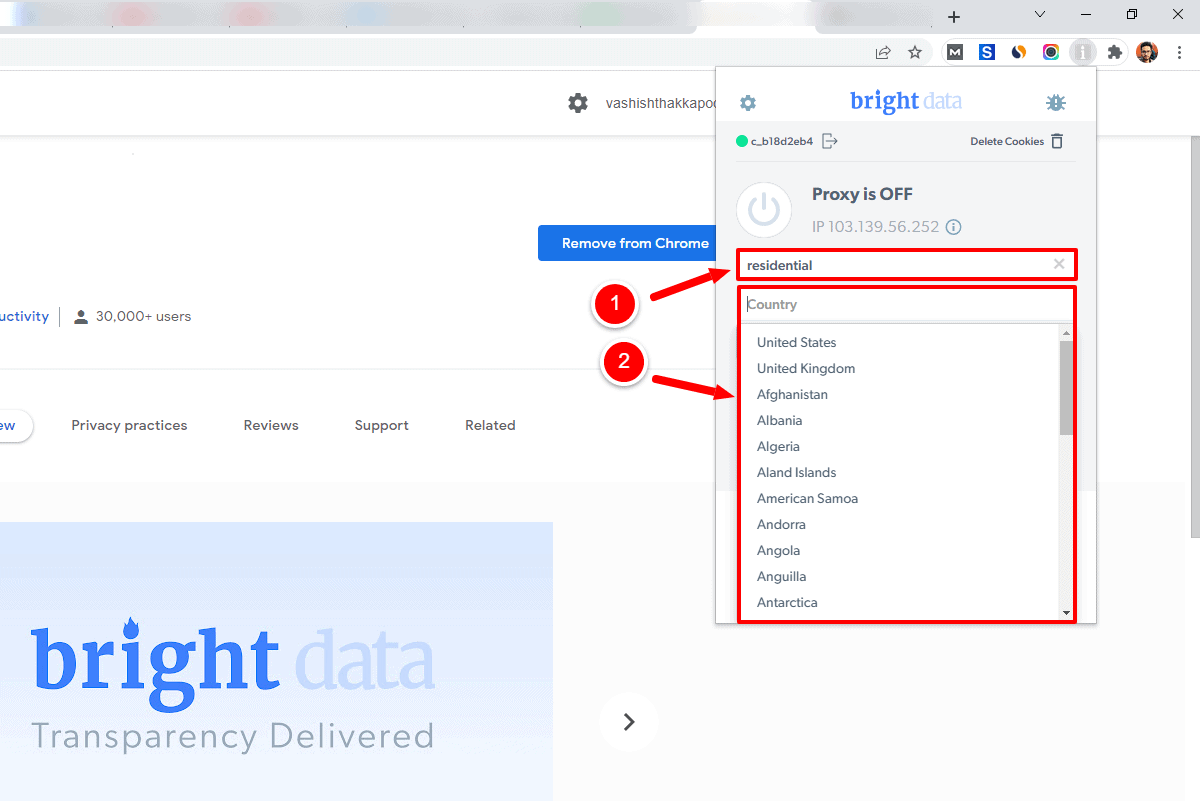
Bright Data runs the largest residential proxy network in the industry and provides the most complete SOCKS5 implementation of any provider in this list. SOCKS5 is supported across residential, ISP, and datacenter proxies, with UDP available via Bright Data’s open-source Proxy Manager — the only provider here that ships a dedicated proxy management layer with QUIC and HTTP/3 support. The 400M+ monthly residential IP pool (98.79% residential purity in EU testing) means deep coverage for any geography where you need SOCKS5 residential IPs. For Telegram infrastructure, VoIP routing, or any UDP-dependent workflow at enterprise scale, Bright Data is the benchmark.
SOCKS5 Details: SOCKS5 supported on residential, ISP, and datacenter proxies. UDP available via Proxy Manager (open-source, downloadable). QUIC (HTTP/3) support for faster response on latency-sensitive traffic. 400M+ monthly IPs, 1.3M+ ISP static IPs, 1.3M+ datacenter IPs. Unlimited concurrent connections. Username/password auth and IP whitelisting both supported. DNS resolution at proxy node or gateway level.
Pricing: Residential PAYG at $8/GB (drops to $4/GB with promo code RESIGB50 — 50% off for 3 months). Subscription from $499/mo ($7/GB). ISP shared from $1.80/IP/mo. Datacenter from $0.60/GB PAYG. 7-day free trial for verified companies. First-deposit match up to $500 for new signups.
Pros ✓
- 400M+ monthly IPs — largest residential pool in the industry
- UDP support via Proxy Manager — one of few providers with full UDP SOCKS5
- QUIC (HTTP/3) support for low-latency SOCKS5 connections
- Unlimited concurrent connections on all proxy types
- ISO 27001 certified, GDPR-ready — strongest compliance in this list
- Proxyway Most Innovative Provider 2023, Best Platform for Proxies 2024
- PAYG available on all products — no forced subscription commitment
Cons ✗
- Most expensive entry price — $8/GB PAYG before discounts
- Subscription minimum $499/mo — not accessible for small teams without promo
- KYC required — up to 3 business days; freelancers need a video call
- UDP requires installing the separate open-source Proxy Manager
Proxyway Rating: 9.3/10 (4.7/5 stars) — Most Innovative Provider 2023, Best Platform for Proxies 2024.
2. Decodo — Best Value SOCKS5 Proxy Provider

Decodo (formerly Smartproxy, rebranded April 2025) is Proxyway’s fastest residential proxy provider globally and has held the Best Value award for five consecutive years. For SOCKS5 specifically, Decodo confirms HTTP(S) and SOCKS5 with UDP on both residential and datacenter proxies — a cleaner implementation than many competitors who limit UDP to specific products or require support team enablement. With 115M+ residential IPs at 99.86% success rate and 0.44s EU response time, Decodo’s SOCKS5 residential proxies handle both scraping and non-HTTP traffic with the best performance-to-price ratio in this list. ISP proxies also include SOCKS5 support for static dedicated sessions.
SOCKS5 Details: SOCKS5 with UDP confirmed on residential, datacenter (rotating and dedicated), and ISP proxies. 115M+ residential IPs, 500K+ dedicated datacenter IPs. No concurrency limits — unlimited parallel SOCKS5 threads. Sticky sessions up to 24 hours over SOCKS5. Username/password and IP whitelist auth. Free 3-day / 100 MB trial lets you test SOCKS5 connectivity before buying.
Pricing: Residential from $3.00/GB (50 GB plan, $150/mo); PAYG at $4.00/GB. ISP from $1.30/GB (Pay/GB) or $2.00/IP (dedicated). Datacenter from $0.60/GB. Free 3-day / 100 MB trial. 14-day money-back guarantee on first purchase.
Pros ✓
- SOCKS5 with UDP on residential, datacenter, and ISP — confirmed across all proxy types
- Fastest residential globally — 0.44s EU response (Proxyway April 2025)
- 99.86% residential success rate — near-perfect reliability
- No concurrency limits — unlimited parallel SOCKS5 connections
- Best Value Proxyway award 5 consecutive years (2020–2025)
- Free 3-day / 100 MB trial — test SOCKS5 protocol before committing
- EWDCI member — ethically sourced IPs
Cons ✗
- PAYG and monthly subscription cannot run simultaneously on one account
- Crypto payments not accepted for ISP and dedicated datacenter plans
- Residential IP count by country not publicly disclosed
Proxyway Rating: 9.3/10 (4.7/5 stars) — Best Value Provider 5 consecutive years.
3. SOAX — Best SOCKS5 Proxy with UDP for Gaming & VoIP

SOAX is one of very few providers that explicitly confirms SOCKS5 with UDP on both residential and mobile proxies — not just datacenter. This matters for gaming and VoIP workflows where you specifically need residential or mobile IP trust levels combined with UDP transport. The Proxyway benchmark (April 2025) confirmed 752,416 unique global IPs at 97.04% residential purity and SOAX’s EU gateway hit 99.78% success rate at 0.49s. SOAX also supports QUIC protocol, making it one of the most advanced SOCKS5 implementations available. Its unified plan model — one subscription covering residential, mobile, ISP, and datacenter with interchangeable credits — means you can test SOCKS5 across all proxy types without separate accounts.
SOCKS5 Details: SOCKS5 with UDP confirmed on residential and mobile proxies. QUIC also supported. 155M+ residential IPs, 33M+ mobile IPs. City, state, ASN targeting. Sticky sessions with offline resilience. Advanced session controls: Browsing Optimizer (stability), MaxIP (pool breadth), Lookalike Rotation. Username/password auth.
Pricing: Unified plan from $90/mo (25 GB, $3.60/GB — covers all proxy types). Paid trial: $1.99 for 3 days and 400 MB. Code PROXYWAY35% gives 35% off. Drops to $2.00/GB at 800 GB/mo plan.
Pros ✓
- SOCKS5 with UDP on residential AND mobile — rare combination for UDP gaming/VoIP
- QUIC support — HTTP/3-level speed on SOCKS5 connections
- One plan covers all proxy types — residential, mobile, ISP, datacenter
- Advanced session controls (Browsing Optimizer, MaxIP, Lookalike Rotation)
- 99.78% EU success rate at 0.49s — strong performance
- Proxyway Contender of the Year 2025
Cons ✗
- No free trial — only paid $1.99 trial
- New dashboard still in beta — some features missing vs old dashboard
- Crypto payments require contacting support (not self-service)
Proxyway Rating: 9.0/10 (4.5/5 stars) — Proxyway Contender of the Year 2025.
4. Oxylabs — Best Enterprise SOCKS5 Proxy Provider

Oxylabs earned Proxyway’s Best Enterprise Provider award in 2025 and runs the largest tested residential proxy pool globally — 175M+ IPs, with 891,734 unique EU IPs confirmed in independent testing at 99.90% success rate. For SOCKS5, Oxylabs confirms UDP support on residential (in beta — needs account manager enablement) and on datacenter proxies. Its 2M+ datacenter IP pool is one of the largest in the market, and the rotating datacenter SOCKS5 endpoint handles UDP-dependent workflows reliably. SERP Scraper API, E-Commerce API, and Web Unblocker can layer on top for anti-bot targets while the proxy layer handles SOCKS5 protocol routing for other traffic.
SOCKS5 Details: SOCKS5 with UDP on datacenter proxies (rotating pool). SOCKS5 with UDP on residential (beta — contact account manager to enable). Mobile proxies: SOCKS5 supported, UDP not confirmed. ISP proxies: HTTP, HTTPS, SOCKS5. 175M+ residential IPs, 2M+ datacenter IPs. Unlimited concurrent connections. No PAYG — subscription only.
Pricing: Residential from $30/mo (5 GB, $6/GB); code proxyway35 gives 35% off first purchase. Datacenter rotating from $50/mo (77 GB, $0.65/GB). ISP from $16/mo (10 IPs, $1.60/IP). 7-day free trial for verified companies. 5 free datacenter IPs (no credit card).
Pros ✓
- 175M+ IPs — #1 pool size in Proxyway benchmarks globally
- 891K+ unique EU IPs at 99.90% success rate — deepest enterprise coverage
- UDP on datacenter SOCKS5 confirmed; residential UDP beta available
- 2M+ datacenter IPs — one of the largest DC pools with SOCKS5
- EWDCI member, ISO/IEC 27001:2022 certified
- Best Enterprise Provider 2025 (Proxyway); PCMag Best Proxy Service 2025
Cons ✗
- Residential SOCKS5 UDP in beta — requires account manager to enable
- No PAYG option — subscription required for all products
- KYC required before using services
Proxyway Rating: 9.3/10 (4.6/5 stars) — Best Enterprise Provider 2025.
5. IPRoyal — Best SOCKS5 Proxies with Non-Expiring Traffic

IPRoyal covers SOCKS5 across all four of its proxy product lines, with UDP confirmed on ISP and datacenter proxies specifically. Its residential proxies support SOCKS5 TCP only (like most residential providers), but for UDP use cases, IPRoyal’s 500K+ ISP proxy pool and datacenter IPs with SOCKS5+UDP fill the gap. The non-expiring PAYG residential traffic is the most flexible entry point in the market — buy 1 GB, route it through SOCKS5, and it stays in your account until you use it. The 7-day sticky sessions on residential SOCKS5 are the longest available for any provider in this list.
SOCKS5 Details: SOCKS5 confirmed on all product types. UDP confirmed on ISP proxies (500K+ IPs, 31+ countries) and datacenter proxies (63 locations). Residential: SOCKS5 TCP only. 7-day sticky sessions on residential SOCKS5 — longest in this list. Username/password and IP whitelist auth.
Pricing: Residential PAYG from $7.35/GB (non-expiring). ISP from $2.70/proxy/30 days (24-hour test option at $1.80/proxy). Datacenter from $1.57/proxy/30 days. Code PROXYWAY30 gives 30% off.
Pros ✓
- UDP confirmed on ISP and datacenter SOCKS5 — covers gaming and VoIP use cases
- Non-expiring PAYG residential traffic — buy once, test SOCKS5, use whenever
- 7-day sticky sessions on residential SOCKS5 — longest in this list
- 24-hour ISP proxy rental — test SOCKS5+UDP on real ISP IPs for $1.80
- 25+ cryptocurrencies accepted
- No monthly minimum — zero lock-in for SOCKS5 testing
Cons ✗
- Residential SOCKS5 is TCP only — no UDP on residential IPs
- 74.63% success rate on popular targets (Amazon/Google) — below enterprise options
- ISP and domain targeting features require $200–$2,000 minimum spend unlock
Proxyway Rating: 8.5/10 (4.3/5 stars).
6. GeoNode — Best Budget SOCKS5 Proxy Provider

GeoNode is the most affordable SOCKS5 proxy provider in this list by a significant margin. Residential proxies start at $0.79/GB PAYG — and the subscription tier at 100 GB brings that to $0.65/GB, roughly 80% below what enterprise providers charge. GeoNode explicitly supports HTTP, HTTPS, SOCKS4, and SOCKS5 protocols across both residential and rotating datacenter proxies, with SOCKS4 support being relatively uncommon among this group. Bandwidth rolls over until cancellation, so unused SOCKS5 residential traffic isn’t wasted month-to-month. The $5 trial (10 GB for 3 days) is the lowest-cost meaningful test of any provider here.
SOCKS5 Details: HTTP, HTTPS, SOCKS4, and SOCKS5 supported on residential and rotating datacenter proxies. City, state, ASN targeting. 190+ countries. Sticky sessions from 3 minutes to 24 hours. Rotating and sticky session management dashboard. Username/password and IP whitelist auth. Multiple gateway locations: Singapore, France, United States.
Pricing: Residential PAYG $0.79/GB; subscription from $7.92/mo (10 GB at $0.79/GB). Datacenter from $4.77/mo (10 GB, $0.48/GB). ISP from $17/mo (10 IPs, $1.70/IP). $5 trial includes 10 GB for 3 days. Permanent free Scraper API tier (1,500 requests/month).
Pros ✓
- Cheapest SOCKS5 residential proxy — from $0.79/GB, 80% below enterprise rates
- SOCKS4 and SOCKS5 both supported — broadest protocol options in this list
- Bandwidth rollover until cancellation — no month-end SOCKS5 traffic waste
- $5 trial (10 GB, 3 days) — substantial SOCKS5 testing for minimal cost
- Lowest price guarantee published on site
- City, ASN targeting on SOCKS5 residential
Cons ✗
- UDP support not confirmed — SOCKS4/5 noted but UDP capability not explicitly documented
- Performance stats less detailed than Proxyway-benchmarked providers
- ISP proxy dedicated pricing not publicly listed — requires sales contact
Rating: 8.0/10 — Best budget SOCKS5 residential option in this list.
7. NetNut — Best SOCKS5 ISP Proxy via Direct ISP Backbone

NetNut operates through DiViNetworks, a subsidiary that pays ISPs directly for unused bandwidth. This gives NetNut’s 1M+ static residential ISP IPs a unique property: they have real browsing history attached, connect in one hop from the ISP (no end-user device in the chain), and stay online 24/7. SOCKS5 is supported across residential, ISP, mobile, and datacenter proxies. For use cases requiring a stable, always-available SOCKS5 endpoint with an ISP-assigned IP — account management, SSH tunneling, persistent VoIP sessions — NetNut’s ISP backbone is the strongest option in this list. Proxyway confirmed it has the largest ISP proxy pool tested at 1M+ IPs.
SOCKS5 Details: HTTP/HTTPS/SOCKS5 on all four proxy types (residential, static ISP, mobile, datacenter). Note: Proxyway ref2 data shows NetNut as no UDP. TCP SOCKS5 confirmed. 1M+ static ISP IPs always online. 85M+ residential IPs. 150K+ datacenter IPs. ISP protocol supports credential or IP whitelist auth.
Pricing: Residential from $99/mo (28 GB, $3.53/GB); annual: $84/mo ($3.00/GB). ISP from $99/mo (7 GB, $14.40/GB). Datacenter from $100/mo (100 GB, $1.00/GB). 7-day free trial for verified companies. No PAYG, no top-up.
Pros ✓
- DiViNetworks ISP backbone — 1M+ always-online static IPs, one-hop connectivity
- Proxyway-confirmed largest ISP proxy pool (April 2025)
- Real browsing history on ISP IPs — highest trust level for SOCKS5 sessions
- SOCKS5 across all four product types
- NASDAQ-listed parent (ALAR) — financial stability rare in proxy industry
- G2 #1 Web Data Provider badges across multiple categories
Cons ✗
- No UDP support on SOCKS5 (TCP only) — limits gaming and VoIP use cases
- No PAYG — subscription only; no traffic top-up available
- ISP entry price ($99/7 GB at $14.40/GB) is expensive per-GB at entry tier
Proxyway Rating: 9.0/10 (4.5/5 stars).
8. Webshare — Best Self-Service SOCKS5 Proxy with Free Tier

Webshare is the most accessible SOCKS5 provider in this list: a permanent free tier with 10 datacenter proxies and 1 GB/month bandwidth — no credit card required, SOCKS5 included. The paid entry tier (100 shared datacenter IPs for $2.99/mo) is the cheapest datacenter SOCKS5 available from any reputable provider. Webshare (acquired by Oxylabs in 2022) operates independently with a fully self-service model and a powerful management API that covers proxy configuration, sub-users, IP replacement, and rotation — all accessible programmatically. Residential proxies at $3.50/GB start with country-level targeting only (no city/ASN), but ISP proxies cover ~11 countries with 23.77 MB/s download speeds in Proxyway testing.
SOCKS5 Details: HTTP and SOCKS5 supported on datacenter, ISP (static residential), and rotating residential proxies. TCP only — no UDP support. Free plan includes SOCKS5 on 10 datacenter IPs. Rotating residential: country-level targeting only; no city, ASN, or ZIP. ISP: ~11 countries. Full management API for SOCKS5 proxy configuration.
Pricing: Free: 10 datacenter IPs + 1 GB/mo (permanent, no credit card). Datacenter shared from $2.99/mo (100 IPs). Residential from $3.50/GB (promo pricing — 50% off active at time of research). ISP shared from $6/mo (20 IPs, $0.30/IP). Annual billing saves ~30%.
Pros ✓
- Permanent free SOCKS5 tier — 10 datacenter IPs + 1 GB, no credit card
- Cheapest paid datacenter SOCKS5 — 100 IPs for $2.99/mo
- Powerful management API — configure SOCKS5 proxies programmatically
- ISP download speed 23.77 MB/s avg (Proxyway 2025) — fast static SOCKS5
- 64,773+ customers; 8.8/10 Proxyway rating
- Granular IP replacement controls (same ASN, country, range locks)
Cons ✗
- No UDP support on any product — TCP SOCKS5 only
- Residential: country-level targeting only — no city, ASN, or ZIP on SOCKS5
- Cannot run datacenter + residential plans simultaneously (one active plan at a time)
- Customer support 24/5 only (not 24/7 for live agents)
Proxyway Rating: 8.8/10.
9. NodeMaven — Best SOCKS5 Proxy with IP Quality Filtering
NodeMaven takes an unusual approach to SOCKS5 proxy quality: every IP in its 30M+ residential pool is pre-filtered through a proprietary fraud-score system before assignment, producing a 95%+ IP clean rate versus the ~50% industry norm. For SOCKS5 use cases where IP reputation directly affects outcomes — Telegram bots, social platform automation, account management — that quality filtering makes a measurable difference. HTTP(S) and SOCKS5 are supported across residential and mobile proxies (shared traffic pool), with sticky sessions up to 7 days and traffic rollover. ISP proxies explicitly support UDP and TCP, covering SOCKS5 gaming and VoIP use cases on static dedicated IPs.
SOCKS5 Details: HTTP(S) and SOCKS5 on residential and mobile proxies. ISP proxies: SOCKS5 with both UDP and TCP (confirmed). 30M+ residential IPs, 295K+ mobile IPs, ISP proxies in 8 countries. Sticky sessions up to 7 days on SOCKS5. ZIP-level targeting (150+ locations). Traffic rollover — unused SOCKS5 bandwidth carries to next month.
Pricing: Residential from $8.50/mo (2 GB); $2.20/GB at high volume. ISP from $2.99/IP (30 days); code ISP40 for discount on 3+ IPs. Trial: $3.50 for 750 MB. Residential+mobile share the same traffic pool.
Pros ✓
- 95%+ IP clean rate on SOCKS5 residential — best pre-filtered quality in this list
- ISP SOCKS5 with UDP+TCP confirmed — covers gaming, VoIP, P2P on static IPs
- 7-day sticky SOCKS5 sessions — persistent identity for account management
- Traffic rollover — SOCKS5 bandwidth never expires on residential pool
- ZIP-level targeting (150+ locations) — granular geo on SOCKS5
- Proxy cashback program — earn credits from used bandwidth
Cons ✗
- Smaller pool (30M+ residential, 295K mobile) vs enterprise options
- Residential SOCKS5 pricing starts at $8.50/mo for 2 GB — higher entry than GeoNode
- ISP coverage limited to 8 countries (US, UK, DE, HK, BR, IT, FR, PL)
Rating: 8.3/10 — G2: 4.5–4.7/5; Trustpilot: 4.0/5.
10. Proxy-Seller — Best SOCKS5 Proxy for Flexible Rental Periods

Proxy-Seller has been in the proxy business for 10+ years and offers one of the most flexible SOCKS5 proxy lineups in the mid-market. Its core value for SOCKS5 users is the 3-day minimum rental on datacenter proxies — you can test SOCKS5 connectivity on a specific IP range without committing to a full month. Residential proxies cover 220+ countries at some of the lowest advertised per-GB rates in the market ($0.70/GB entry), with SOCKS5 supported across all product types. Proxy-Seller also offers Mix and ISP-Mix proxies — hybrid products that combine residential and datacenter pools under one SOCKS5 endpoint, useful for workflows that need varying trust levels without separate proxy accounts.
SOCKS5 Details: HTTP/HTTPS and SOCKS5 on all proxy types (residential, ISP, mobile, datacenter IPv4/IPv6, Mix, ISP-Mix). 220+ countries for residential. Datacenter rentals from 3 days. City and ASN targeting on residential SOCKS5. Up to 1 Gbps per dedicated channel. Username/password and IP whitelist auth.
Pricing: Residential from $0.70/GB (SERP advertised entry). ISP from $1/IP/mo. Mobile from $10/IP. IPv4 datacenter from $1.35–1.80/IP (US range, 5–750 IPs). Cryptocurrency accepted (BTC, USDT, USDC, BNB, TRX, TON). Trustpilot ~4.7/5.
Pros ✓
- 3-day minimum datacenter rental — test SOCKS5 on specific IPs without monthly lock-in
- Mix and ISP-Mix proxy types — hybrid SOCKS5 endpoints unique in the market
- 220+ country residential SOCKS5 — broadest geographic footprint in this list
- $0.70/GB residential entry — one of the lowest advertised rates
- Extensive crypto payment support (7+ currencies)
- 10+ years in business — strong track record
Cons ✗
- Pricing is JS-slider-rendered — exact tier breakdowns require live site verification
- UDP support not explicitly confirmed across all product types
- No free trial for residential proxies
Rating: 8.1/10 — Trustpilot ~4.7/5; Reviews.io 4.80/5.
Best SOCKS5 Proxy: How to Choose for Your Use Case
Every provider in this list supports SOCKS5 in some form. The differences that actually matter for your workflow come down to five decision points.
UDP Support — The Non-Negotiable for Gaming, VoIP, and P2P
If your use case involves gaming traffic, VoIP (SIP/RTP), BitTorrent, or Telegram bots, you need a provider that explicitly confirms UDP support — not just “SOCKS5 supported.” From this list: Bright Data (via Proxy Manager), Decodo, SOAX, Oxylabs (residential beta + datacenter), IPRoyal (ISP and datacenter), and NodeMaven (ISP proxies) all confirm UDP. Webshare and NetNut support SOCKS5 TCP only. GeoNode supports SOCKS4/5 but hasn’t explicitly confirmed UDP.
SOCKS5 Residential Proxy vs ISP vs Datacenter: Which IP Type?
For web scraping and most automation, any IP type works with SOCKS5. For gaming and social platform automation, a SOCKS5 residential proxy or ISP proxy carries higher trust scores on most platforms. For pure throughput and consistent uptime, datacenter SOCKS5 is fastest and cheapest. ISP SOCKS5 (static residential) is the right choice for any use case requiring a persistent, always-online proxy endpoint — account management, SSH tunneling, long-lived VoIP sessions. See our ISP proxy providers guide for a detailed comparison of static residential options.
Sticky Sessions — Critical for Non-HTTP SOCKS5 Workflows
HTTP scraping can often tolerate per-request IP rotation. Gaming, VoIP, P2P, and account management cannot — the target platform expects a consistent IP for the session duration. IPRoyal (7-day residential sticky sessions), NodeMaven (7-day residential), Decodo (24-hour sticky), and SOAX (offline-resilient sticky) are the best options for long-lived SOCKS5 session persistence.
Authentication — Credentials vs IP Whitelist
All providers in this list support username/password authentication on SOCKS5. Most also support IP whitelisting (adding your server’s IP to an allowlist instead of embedding credentials in the connection string). For server-side deployment of SOCKS5 (Telegram bots, VoIP infrastructure, game bots), IP whitelisting is usually simpler operationally. For local/desktop use, credentials work fine.
Cheap SOCKS5 Proxy: Per-GB vs Per-IP vs Trial Options
SOCKS5 traffic billing works identically to HTTP proxy billing — you’re charged for bandwidth consumed. GeoNode ($0.79/GB residential), Proxy-Seller (~$0.70/GB), and Decodo ($3.00/GB at 50 GB) are the best value per-GB options for anyone searching for a cheap SOCKS5 proxy. For ISP/static SOCKS5, Webshare ($0.30/IP shared, $6/mo for 20 IPs) and Decodo ($0.47/IP shared) are most affordable. All seven providers offering trials let you test SOCKS5 connectivity specifically before committing.
Bottom line: For UDP-required use cases (gaming, VoIP, Telegram bots, P2P), choose Bright Data, Decodo, SOAX, or Oxylabs — all confirm UDP. For the cheapest SOCKS5 residential traffic, GeoNode or Proxy-Seller. For static SOCKS5 ISP proxies with the most reliable always-on connectivity, NetNut. For the best free SOCKS5 entry point, Webshare’s permanent free tier. Before buying at scale, use our proxy testing guide to validate connectivity and speed.
SOCKS5 Proxy Pricing: Side-by-Side Comparison

The SOCKS5 proxy list below compares all ten providers on protocol support, entry pricing, and UDP availability. All data sourced from provider brand knowledge files, verified May 2026.
| Provider | SOCKS5 Products | UDP Support | Entry Price (Residential) | Free/Trial Option | Sticky Sessions |
|---|---|---|---|---|---|
| Bright Data | Residential, ISP, DC, Mobile | Yes (via Proxy Manager) | $8/GB PAYG ($4/GB w/ RESIGB50) | 7-day trial (companies) | Up to 30 min inactivity |
| Decodo | Residential, ISP, DC, Mobile | Yes (all products) | $3.00/GB (50 GB plan) | Free 3-day / 100 MB | Up to 24 hours |
| SOAX | Residential, Mobile, ISP, DC | Yes (residential + mobile) | $3.60/GB ($90/mo, 25 GB) | $1.99 for 3 days / 400 MB | Offline-resilient sticky |
| Oxylabs | Residential, ISP, DC, Mobile | Yes (DC confirmed; residential beta) | $6/GB ($30/mo, 5 GB) | 7-day trial (companies); 5 free DC IPs | Up to 24 hours |
| IPRoyal | Residential, ISP, DC, Mobile | Yes (ISP and DC only) | $7.35/GB PAYG (non-expiring) | None (PAYG no expiry) | Up to 7 days |
| GeoNode | Residential, DC, ISP | Unconfirmed (SOCKS4/5 supported) | $0.79/GB PAYG | $5 for 10 GB / 3 days | 3 min – 24 hours |
| NetNut | Residential, ISP, DC, Mobile | No (TCP only) | $3.53/GB ($99/mo, 28 GB) | 7-day trial (companies) | Up to 1 hour |
| Webshare | DC, ISP, Residential | No (TCP only) | $3.50/GB residential; $2.99 for 100 DC IPs | Permanent free tier (10 DC IPs) | Number-based sticky |
| NodeMaven | Residential, Mobile, ISP | Yes (ISP only: UDP+TCP) | $8.50/mo (2 GB, $4.25/GB entry) | $3.50 for 750 MB | Up to 7 days |
| Proxy-Seller | Residential, ISP, DC, Mobile, Mix | Unconfirmed | ~$0.70/GB residential (advertised) | 3-day DC rental option | Sticky + on-demand rotation |
Pricing note: Residential SOCKS5 rates drop significantly at scale — $6/GB at 5 GB often becomes $2–3/GB at 500 GB+. Always check the live pricing page before budgeting. Promo codes (RESIGB50, PROXYWAY35%, proxyway35, PROXYWAY30, ISP40) are time-limited — verify before purchasing. UDP support is not a static feature: Oxylabs residential UDP requires account manager enablement; Bright Data UDP requires the Proxy Manager tool. Confirm current UDP availability before purchasing for gaming or VoIP use cases.
SOCKS5 Proxy Pros & Cons
Understanding SOCKS5’s real strengths and limitations prevents you from over-spending on a protocol feature you don’t need — or buying an HTTP proxy when you actually need UDP transport.
Pros ✓
- Protocol-agnostic: Routes TCP and UDP traffic — the only proxy protocol that can handle gaming, VoIP, P2P, FTP, SSH tunneling, and Telegram bots without modification
- Remote DNS resolution: Resolves domain names at the proxy server, preventing DNS leaks that would expose your real IP on non-HTTP traffic
- Authentication built in: Username/password auth is native — no workaround needed for tools that require proxy credentials
- IPv6 support: Can handle IPv6 addresses, unlike SOCKS4 (IPv4 only)
- Universally supported: Compatible with virtually every programming language, scraping framework, automation tool, and application that supports proxies
- Same infrastructure as HTTP proxies: Most providers offer SOCKS5 at no additional cost over HTTP — same IP pool, same pricing, same session controls
Cons ✗
- No encryption: SOCKS5 does not encrypt traffic. Unlike a VPN, a SOCKS5 proxy transmits your data in plaintext unless you add a TLS layer on top
- UDP support varies: Not all providers support UDP, and some that claim SOCKS5 support only provide TCP. Always verify UDP capability explicitly
- Not all software supports SOCKS5: Some older enterprise software and firewalls only support HTTP proxies; SOCKS5 may require additional configuration
- Higher CPU overhead: SOCKS5 proxy servers require more processing than HTTP proxies for UDP traffic management
- Free SOCKS5 lists are dangerous: Freely available SOCKS5 proxy lists are compromised, shared, heavily abused, and frequently operated by threat actors logging your traffic
Bottom Line: For standard web scraping and data collection, SOCKS5 and HTTP/HTTPS proxies are functionally equivalent — choose based on price and IP quality, not protocol. SOCKS5 only becomes essential when your use case involves non-HTTP traffic (gaming, VoIP, P2P, Telegram bots, SSH, FTP). If you need UDP specifically, narrow your choices to Bright Data, Decodo, SOAX, Oxylabs, IPRoyal (ISP/DC), or NodeMaven (ISP).
SOCKS5 Providers Compared: Head-to-Head
Two direct match-ups that cover the most common SOCKS5 purchase decisions: value vs enterprise, and budget vs feature depth.
Decodo vs Bright Data — Value SOCKS5 vs Enterprise SOCKS5
| Feature | Decodo | Bright Data |
|---|---|---|
| SOCKS5 UDP Support | Yes — confirmed across residential, datacenter, and ISP proxies | Yes — via open-source Proxy Manager (downloadable) |
| IP Pool (Residential) | 115M+ IPs, 195 locations; 1.15M unique IPs in Proxyway testing | 400M+ monthly IPs, 195 countries; 885K+ unique IPs in global testing |
| Entry Pricing | $3.00/GB (50 GB plan, $150/mo); PAYG $4.00/GB; free 100 MB trial | $8/GB PAYG (drops to $4/GB with RESIGB50 promo); $499/mo subscription floor |
| Speed (Proxyway 2025) | Fastest globally — 0.44s EU, 99.86% success rate | 98.96% global; 0.80s EU; QUIC support for faster latency |
| Sticky Sessions | Up to 24 hours (credentials auth) | Session-based; expires after 1 minute inactivity without activity |
| Compliance / Certifications | EWDCI member — ethically sourced opt-in IPs | ISO 27001 certified, GDPR-ready, EWDCI member, SOC, WIPO Alert partner |
| Best For | High-volume scraping + UDP gaming/VoIP at the best per-GB rate; teams needing SOCKS5 across all proxy types without enterprise commitment | Enterprise SOCKS5 with maximum compliance documentation, QUIC for latency-sensitive UDP, largest residential pool for any geography |
Winner for Value & Speed: Decodo | Winner for Pool Depth & Compliance: Bright Data | Winner for Protocol Features: Bright Data (QUIC + UDP via Proxy Manager)
SOAX vs GeoNode — UDP Residential SOCKS5 vs Budget SOCKS5
| Feature | SOAX | GeoNode |
|---|---|---|
| SOCKS5 UDP Support | Yes — confirmed on residential AND mobile proxies | SOCKS4 and SOCKS5 supported; UDP not explicitly confirmed |
| IP Pool | 155M+ residential, 33M+ mobile; 752K unique IPs in Proxyway testing | Millions of residential IPs, 190+ countries; unlimited DC IPs on demand |
| Entry Pricing | $90/mo (25 GB, $3.60/GB) — one plan covers all proxy types | $7.92/mo (10 GB, $0.79/GB) — cheapest residential SOCKS5 entry in this list |
| Geo Targeting | Country, state, city, ASN — combinable filters | Country, city, state, ASN — full targeting on SOCKS5 |
| Protocol Extras | SOCKS5 with UDP + QUIC — most advanced protocol stack | SOCKS4 + SOCKS5 — broadest legacy protocol support |
| Best For | UDP gaming, VoIP, and Telegram bot infrastructure requiring residential IP trust with SOCKS5 UDP on real carrier IPs | Budget SOCKS5 web scraping, data collection, or testing SOCKS5 residential coverage at minimal cost |
Winner for UDP Gaming/VoIP: SOAX | Winner for Budget Scraping: GeoNode | Winner for Entry-Level Value: GeoNode
🏆 Choose Bright Data or Decodo When
- You need UDP on residential SOCKS5 — both providers confirm it
- Your use case demands the largest IP pool (Bright Data’s 400M+) or the fastest response times (Decodo 0.44s EU)
- You need enterprise compliance credentials alongside SOCKS5 (ISO 27001, EWDCI)
- You want to test before buying — Decodo’s free 100 MB trial is the easiest entry point
- You need unlimited concurrent SOCKS5 threads without concurrency caps
🔍 Choose SOAX or GeoNode When
- You need SOCKS5 with UDP specifically on mobile proxies — SOAX is the only provider here that confirms it
- Your budget is under $10/GB and you only need standard SOCKS5 TCP scraping — GeoNode at $0.79/GB is hard to beat
- You need one subscription that covers residential, mobile, ISP, and datacenter SOCKS5 without separate accounts — SOAX’s unified plan model
- You want rollover bandwidth for intermittent SOCKS5 use — both GeoNode (subscription) and IPRoyal (PAYG) offer non-expiring traffic
SOCKS5 Provider Ratings Breakdown
Ratings reflect protocol capability (UDP support, auth options), IP network quality (Proxyway benchmarks where available), pricing value, and SOCKS5-specific use case performance. Scores are between 3.5 and 4.9.
| Provider | SOCKS5 Protocol Depth | IP Quality / Pool | Pricing Value | Ease of Use | Support Quality | Overall Rating |
|---|---|---|---|---|---|---|
| Bright Data | 4.9/5 | 4.9/5 | 3.5/5 | 4.2/5 | 4.7/5 | 4.7/5 |
| Decodo | 4.8/5 | 4.8/5 | 4.7/5 | 4.8/5 | 4.5/5 | 4.7/5 |
| SOAX | 4.9/5 | 4.5/5 | 4.2/5 | 4.1/5 | 4.3/5 | 4.5/5 |
| Oxylabs | 4.7/5 | 4.9/5 | 3.6/5 | 4.5/5 | 4.7/5 | 4.6/5 |
| IPRoyal | 4.3/5 | 3.9/5 | 4.4/5 | 4.3/5 | 3.9/5 | 4.2/5 |
| GeoNode | 4.0/5 | 3.8/5 | 4.9/5 | 4.4/5 | 3.8/5 | 4.1/5 |
| NetNut | 4.0/5 | 4.5/5 | 3.8/5 | 4.0/5 | 4.3/5 | 4.2/5 |
| Webshare | 3.8/5 | 4.0/5 | 4.7/5 | 4.6/5 | 3.9/5 | 4.1/5 |
| NodeMaven | 4.2/5 | 4.1/5 | 4.0/5 | 4.2/5 | 4.1/5 | 4.1/5 |
| Proxy-Seller | 3.9/5 | 3.8/5 | 4.5/5 | 4.1/5 | 3.9/5 | 4.0/5 |
| Overall Category Best | SOAX / Bright Data | Bright Data / Oxylabs | GeoNode | Decodo | Bright Data / Oxylabs | Bright Data / Decodo |
Rating Summary: Bright Data and Decodo tie at 4.7/5 overall — Bright Data leads on protocol depth and pool size while Decodo leads on price and ease of use. SOAX scores highest on SOCKS5 protocol depth (4.9/5) due to UDP on both residential and mobile. GeoNode scores highest on pricing value (4.9/5) with its $0.79/GB residential entry. For teams that need UDP-enabled SOCKS5 at the best price, Decodo is the practical choice. For maximum protocol capability regardless of cost, Bright Data with Proxy Manager.
Are SOCKS5 Proxies Legit, Safe & Worth It?
Legitimacy & Safety
- ✓ Legal commercial use: Purchasing SOCKS5 proxies from a reputable commercial provider is legal in most jurisdictions. SOCKS5 is a standard network protocol used in corporate firewalls, load balancers, and commercial proxy infrastructure worldwide. The legality of what you do with the proxy depends on your use case, not the protocol itself.
- ✓ Ethically sourced residential pools: Bright Data, Decodo, Oxylabs, and SOAX are EWDCI members with documented opt-in residential networks. NodeMaven’s IP Quality Filter and fraud-score screening provide an additional layer of ethical sourcing assurance for residential SOCKS5 IPs.
- ✓ Enterprise-grade providers are verified: Bright Data (ISO 27001, GDPR-ready), Oxylabs (EWDCI, ISO/IEC 27001:2022, product insurance), and NetNut (NASDAQ-listed parent ALAR, ISO certified) meet corporate procurement standards and can be used in regulated industry contexts.
- ✓ SOCKS5 is not a VPN — understand the difference: SOCKS5 proxies route your traffic through a different IP but do not encrypt it. If you need encryption, use a VPN or add TLS/SSL at the application layer. SOCKS5 is the right tool for IP rotation, geo-targeting, and protocol versatility — not for end-to-end encrypted tunneling.
Long-Term Reliability
All ten providers in this list have been operating for multiple years with established infrastructure. Bright Data (founded 2014), Decodo (2018 as Smartproxy), Oxylabs (2015), and NetNut (2017) have decade-or-near-decade track records. Webshare (2018) is backed by Oxylabs infrastructure. Proxyway’s independent benchmarks give you an objective third-party measure of uptime and success rates that marketing materials cannot fabricate. For UDP-dependent SOCKS5 use cases, verify UDP capability with a trial before scaling — provider documentation sometimes lags behind actual implementation.
Reality check: “SOCKS5 supported” in a provider’s documentation does not guarantee UDP support. It often means TCP-only SOCKS5, which is functionally similar to an HTTP proxy for most scraping tasks. If you’re buying specifically for gaming, VoIP, or P2P traffic and UDP is essential, contact the provider’s sales team to confirm UDP support on your specific proxy type before purchasing. SOAX and Decodo are the two providers that most clearly document UDP availability upfront across their product pages.
Worth It? Final Verdict
YES — Use SOCKS5 Proxies If
- Your use case involves UDP traffic — gaming, VoIP (SIP/RTP), BitTorrent, or Telegram bots require SOCKS5 with UDP
- You’re routing non-HTTP application traffic (FTP, SSH, custom protocols) through a proxy and HTTP proxies aren’t compatible
- You need a single proxy infrastructure that handles both web scraping (TCP) and non-HTTP automation (UDP) without separate setups
- You want remote DNS resolution to prevent DNS leaks on privacy-sensitive non-HTTP traffic
- You’re already using HTTP proxies and need the same IPs accessible over SOCKS5 at no extra cost — most premium providers include both protocols
NO — Skip SOCKS5 If
- Your only use case is standard HTTPS web scraping — HTTP and SOCKS5 proxies are functionally equivalent; don’t pay extra for UDP you won’t use
- You need encrypted traffic — SOCKS5 does not encrypt; use a VPN for that requirement
- Your tools only support HTTP/HTTPS proxy configuration — check software compatibility before committing to a SOCKS5-specific setup
- You’re considering free SOCKS5 proxy lists — these are unreliable, abused, and frequently operated by threat actors logging all traffic through them
Our Recommendation: If you genuinely need SOCKS5 for UDP-dependent use cases, start with Decodo’s free 100 MB trial or SOAX’s $1.99 paid trial. Test your actual application (Telegram bot, game client, VoIP softphone) over SOCKS5 against the provider’s proxy endpoint before purchasing a plan. Decodo and SOAX document UDP support upfront and their trial volume is sufficient for a meaningful connectivity test. If you only need SOCKS5 for web scraping, GeoNode’s $5 trial (10 GB) or Webshare’s permanent free tier are the most cost-effective ways to get started.
SOCKS5 Proxy FAQ: Your Top Questions Answered
What is a SOCKS5 proxy?
A SOCKS5 proxy is a type of proxy server that operates at the session layer of the network stack. Unlike HTTP proxies (which only handle web traffic), SOCKS5 is protocol-agnostic — it can relay any TCP or UDP traffic regardless of what application-layer protocol runs on top. This makes SOCKS5 the only proxy type that works for gaming, VoIP, BitTorrent, FTP, SSH tunneling, Telegram bots, and email clients. SOCKS5 also supports username/password authentication and remote DNS resolution, which prevents DNS leaks. The “5” refers to version 5 of the Socket Secure protocol.
What is the difference between SOCKS5 and HTTP proxies?
HTTP proxies understand and operate on HTTP/HTTPS traffic only — they can read headers, inject authentication, cache responses, and intercept HTTPS connections (with certificate installation). They cannot handle UDP, FTP, gaming protocols, or any non-HTTP application traffic. SOCKS5 is a dumb relay — it forwards any TCP or UDP packet without caring what’s in it. For standard web scraping, both work identically. For anything involving UDP (gaming, VoIP, BitTorrent, Telegram bots) or non-HTTP protocols (FTP, SSH), only SOCKS5 works. SOCKS5 does not encrypt traffic; neither does a plain HTTP proxy.
Does SOCKS5 support UDP?
SOCKS5 the protocol supports UDP — but not every proxy provider implements UDP on their SOCKS5 endpoints. Many providers offer TCP-only SOCKS5, which handles web scraping but cannot route gaming traffic, VoIP calls, or BitTorrent trackers. From this list, providers with confirmed UDP support include: Bright Data (via Proxy Manager), Decodo, SOAX (residential and mobile), Oxylabs (datacenter confirmed; residential beta), IPRoyal (ISP and datacenter), and NodeMaven (ISP proxies). Webshare and NetNut are TCP-only. Always verify UDP availability before purchasing for gaming or VoIP use cases.
Can I use SOCKS5 proxies for Telegram bots?
Yes — SOCKS5 is the standard proxy protocol for Telegram bot infrastructure. Telegram’s MTProto protocol uses both TCP and UDP; HTTP proxies cannot handle the UDP portion reliably. For Telegram bots, you want a SOCKS5 proxy with UDP support (Decodo, SOAX, Bright Data via Proxy Manager) or at minimum reliable TCP SOCKS5. ISP proxies with static IPs (Decodo ISP, NodeMaven ISP, NetNut ISP) work particularly well for Telegram bots that need a consistent, non-rotating IP for account verification. NodeMaven explicitly lists Telegram as a compatible platform.
Is SOCKS5 encrypted?
No. SOCKS5 does not encrypt traffic. It routes your connection through a different IP address but transmits your data in plaintext between the client and proxy server. If you need encrypted traffic, use a VPN (which adds encryption at the tunnel level) or ensure the application protocol itself uses TLS/SSL (HTTPS, SFTP, etc.). SOCKS5 proxies are the right tool for IP masking, geo-targeting, and protocol versatility — not for end-to-end encryption of sensitive data.
Can I use SOCKS5 proxies for gaming?
Yes, but only if the provider supports UDP on their SOCKS5 endpoint. Most online game servers communicate over UDP for latency-sensitive gameplay traffic. Game bots, game account managers, and geo-bypass for game servers all require SOCKS5 with UDP. Providers with confirmed UDP support (Bright Data, Decodo, SOAX) are the right choice. Note that residential or ISP SOCKS5 proxies are preferable over datacenter IPs for gaming platforms, since many game anti-cheat systems detect and ban datacenter IP ranges.
What is the cheapest SOCKS5 proxy in 2026?
GeoNode offers the cheapest residential SOCKS5 proxies at $0.79/GB PAYG, dropping to $0.65/GB at the 100 GB subscription tier. Proxy-Seller advertises residential from $0.70/GB as its SERP-facing entry price, though exact volume tiers require visiting the live site. Webshare’s permanent free plan (10 datacenter IPs + 1 GB/mo, SOCKS5 included) is the cheapest possible entry at $0. For residential SOCKS5 with confirmed UDP, Decodo’s $3.00/GB (50 GB plan) is the best value among providers that document UDP capability upfront.
Do SOCKS5 proxies work for BitTorrent and P2P?
SOCKS5 proxies with UDP support work for BitTorrent — tracker communication (UDP) and peer-to-peer piece exchange (TCP) can both be routed through SOCKS5. Configure your torrent client (qBittorrent, Deluge, µTorrent) to use the SOCKS5 proxy in its connection settings; most modern clients support this natively. However, verify your torrent client supports remote DNS resolution through SOCKS5 to prevent DNS leaks. From this list, providers with UDP support (Bright Data, Decodo, SOAX) are appropriate for P2P routing. Note that some providers explicitly prohibit P2P use — check the acceptable use policy before using any proxy for BitTorrent. For a deeper look at P2P-specific proxy options, see our P2P proxy guide.
How do I configure SOCKS5 proxies in my application?
Configuration varies by tool, but the standard connection format is: socks5://username:password@proxy-host:port or as separate fields in the application’s proxy settings dialog (host, port, username, password, type = SOCKS5). Most scraping libraries (Python requests with PySocks, curl with –proxy, Selenium WebDriver via proxy options), torrent clients, game launchers, and Telegram clients all support this format. For remote DNS resolution (to prevent DNS leaks), use SOCKS5h instead of SOCKS5 as the scheme in URLs or enable the “resolve hostnames through proxy” option in your client. All providers in this list offer integration guides for major languages and tools.
Which SOCKS5 proxy provider is best for web scraping?
For pure web scraping where SOCKS5 and HTTP proxies are functionally equivalent, the best choice is the provider with the best residential IP quality and price for your use case. Decodo (99.86% success rate, $3.00/GB) leads on value and speed. Bright Data and Oxylabs lead on enterprise pool depth and target success rates (93.28% on Google/Amazon/Instagram for Oxylabs). GeoNode ($0.79/GB) is the budget choice. See our guide on cheap residential proxies for a full comparison across budget options, or our backconnect proxies guide if you need auto-rotating residential IPs for high-volume scraping.
Are free SOCKS5 proxies safe to use?
No. Free SOCKS5 proxy lists are shared with thousands of users, heavily abused, extremely slow, and frequently taken offline. More importantly, many free SOCKS5 proxy servers are operated by unknown parties who log all traffic passing through them — including your requests, credentials you send (if not using TLS), and connection patterns. Using a free SOCKS5 proxy for anything sensitive is a security risk. The cheapest legitimate paid option (Webshare’s permanent free plan with 10 proxies, or GeoNode’s $5 trial) provides far better security, reliability, and performance than any free proxy list.
Can SOCKS5 proxies prevent DNS leaks?
Yes, when configured correctly. SOCKS5 supports remote DNS resolution — the proxy server resolves domain names on your behalf rather than your local DNS resolver. This prevents DNS leaks where your real IP address would be revealed to DNS servers even when your traffic uses a proxy. To enable remote DNS resolution, configure your application to use SOCKS5h (not SOCKS5) if using a URL scheme, or enable the “resolve hostnames through proxy” setting in your client. This is particularly important for Telegram bots, VoIP clients, and torrent clients that may bypass proxy settings for DNS by default.
Final Verdict
SOCKS5 is the right protocol when your use case goes beyond HTTP — but “SOCKS5 support” means very different things across providers. The ten providers in this list all support SOCKS5, but only six confirm UDP (essential for gaming, VoIP, P2P, and Telegram bots). Pool depth, pricing, and session control vary widely. If UDP doesn’t matter for your workflow, Decodo offers the best combination of speed, reliability, and value for residential SOCKS5. If you need the most complete SOCKS5 implementation available — UDP via Proxy Manager, QUIC support, and the largest residential pool — Bright Data is the benchmark. For the cheapest SOCKS5 residential traffic, GeoNode’s $0.79/GB is unmatched in this group.
✓ What We Love
- SOAX — Only provider confirming SOCKS5 + UDP on both residential AND mobile proxies; ideal for gaming/VoIP requiring residential IP trust
- Decodo — Best value SOCKS5 with UDP across all proxy types; fastest residential globally; free 100 MB trial
- Bright Data — Most complete SOCKS5 implementation (UDP via Proxy Manager, QUIC, 400M+ IPs); enterprise gold standard
- GeoNode — Cheapest residential SOCKS5 at $0.79/GB; rollover bandwidth; SOCKS4 + SOCKS5 both supported
- Webshare — Permanent free SOCKS5 tier (10 datacenter IPs + 1 GB/mo) — unique among all providers here
- NodeMaven — Best IP quality filtering (95%+ clean rate) and traffic rollover for SOCKS5 use cases
✗ What Could Be Better
- UDP support documentation is inconsistent across the industry — providers should disclose TCP vs UDP capability clearly on pricing pages
- Several providers (Webshare, NetNut) only offer TCP SOCKS5, limiting utility for gaming and VoIP despite advertising SOCKS5 support
- GeoNode and Proxy-Seller have not explicitly confirmed UDP — a gap for buyers needing that assurance
- Oxylabs residential SOCKS5 UDP requires account manager enablement — not discoverable through self-service
Ready to Get Started with SOCKS5 Proxies?
Bright Data offers the most complete SOCKS5 implementation in 2026 — UDP via Proxy Manager, QUIC support, 400M+ residential IPs, and a 7-day free trial for verified companies. Use code RESIGB50 for 50% off for 3 months.
Try Bright Data — Best SOCKS5 Proxy Network →