
12 Best P2P Proxy Providers in 2026
Compare the best P2P proxy providers of 2026 — tested on real peer-sourced IP pools, geo-coverage, success rates, and per-GB pricing for web scraping, ad verification, and bypassing geo-blocks.
⚡ Quick Verdict
P2P proxies route your traffic through real residential IPs sourced from peer networks — other users’ devices — which makes them look indistinguishable from organic home internet traffic. That’s the core advantage over datacenter proxies. But not every provider delivers on the promise: thin peer pools, slow response times, opaque pricing, and shaky success rates on demanding targets separate the genuinely useful options from the marketing-heavy ones. After evaluating all twelve providers on pool authenticity, geo-depth, pricing transparency, and real-world use cases, Bright Data leads on enterprise scale, Smartproxy (now Decodo) leads on speed and value, and IPRoyal stands out for budget P2P with non-expiring traffic. Pick by use case — not by the biggest number on the homepage.
Bright Data — 400M+ peer IPs, 195 countries, enterprise-grade compliance
Smartproxy — $8.5/GB, 195+ locations, fastest speeds benchmarked
IPRoyal — from $7/GB PAYG, non-expiring traffic, no monthly minimum
Kproxy — free tier available, $5/10 days for premium access
You’re running a scraper that works fine on basic sites, then hits a wall the moment it touches Amazon, Instagram, or any ad platform that cares about IP reputation. The requests come back with 403s, CAPTCHAs, or misleading data served to flagged IPs. Datacenter proxies won’t save you here. What you need is a residential IP — one that came from a real person’s home internet connection, assigned by a real ISP.
That’s the entire premise of P2P proxies. Providers source IPs from peer networks: real devices, real ISPs, real internet connections, where the device owner has opted in to share bandwidth in exchange for payment or a service benefit. When your request goes through that IP, the target site sees exactly what it would see from any ordinary home user. Not a hosting range, not a known proxy subnet — just a person in São Paulo or Manchester or Manila browsing the web.
The distinction matters because anti-bot systems have become very good at identifying and blocking traditional proxies. Residential peer IPs are significantly harder to detect, which translates directly into higher success rates on protected targets. But the quality of P2P proxies varies widely by provider — pool size, opt-in sourcing practices, rotation controls, and pricing models are all over the map.
This guide covers twelve providers we’ve evaluated for P2P proxy quality, covering use cases from enterprise web scraping and ad verification to market research and geo-block bypassing. Pricing data comes from provider knowledge files and live site checks in May 2026.
What Are P2P Proxies?
P2P (peer-to-peer) proxies are a type of residential proxy where the IP addresses come from real end-user devices connected to regular ISPs. Unlike datacenter proxies (which use IPs from cloud hosting ranges) or ISP proxies (which use static IPs leased from ISPs directly), P2P proxies route traffic through devices whose owners have voluntarily signed up to share their internet bandwidth. The proxy provider pays device owners — usually through a points or cash system — in exchange for routing customer traffic through their connection.
This peer-sourced approach means:
- IPs look like real home users — they’re assigned by residential ISPs to actual devices, not server farms
- They rotate naturally — as peers connect and disconnect, the IP pool refreshes continuously
- They carry real browsing history and ISP metadata — making them much harder for anti-bot systems to flag
- They’re geo-distributed — peers exist everywhere from Manhattan apartments to rural Germany, giving providers genuine global coverage
P2P vs Datacenter vs ISP Proxies
Datacenter proxies are fast and cheap but easy to detect — they originate from known hosting ranges (AWS, Google Cloud, data centers). ISP proxies are static IPs leased directly from ISPs — they look residential but are fixed, making them ideal for long sessions. P2P proxies sit in the middle: they’re dynamic, genuine residential IPs that rotate as peers connect, with the highest trust level on most anti-bot systems. The trade-off is cost ($7–15/GB versus $0.50–2/GB for datacenter) and variable speed (dependent on the peer’s own connection quality).
Who Needs P2P Proxies?
✓ Ideal Users for P2P Proxies
- Web Scrapers — Extracting data from protected targets (Amazon, Google, LinkedIn, social platforms) requires IPs that don’t get flagged on the first request. P2P residential IPs deliver success rates that datacenter proxies simply can’t match on these targets.
- Ad Verification Teams — Agencies and brands checking whether their ads appear correctly in specific markets need real local IPs to see what real users see. P2P proxies in the right geo make ad auditing accurate.
- Market Researchers — Pulling local prices, product availability, and competitor data from e-commerce platforms requires IPs that receive genuine local responses. P2P geo-targeted proxies surface data that international IPs never see.
- SEO Professionals — Checking keyword rankings on localized search results (Google.de, Google.fr, Baidu) requires a local IP in that country. P2P proxies with city-level targeting give you genuine local SERPs.
- Account Managers — Creating and managing social or marketplace accounts in specific regions without triggering geo-mismatch flags. P2P residential IPs with sticky sessions maintain consistent identity over long periods.
- Geo-Block Bypassing — Accessing streaming platforms, localized content libraries, or region-restricted news sites that block known proxy ranges. Residential P2P IPs are significantly less likely to be on block lists.
✗ Not Ideal For
P2P proxies are NOT the right tool if you:
- Need very fast, consistent connections — peer device speeds vary widely and you can’t control them
- Are running high-bandwidth tasks like video streaming at scale — residential proxies aren’t optimized for this
- Have a tight budget and are scraping non-protected, public-facing sites — datacenter proxies do the job for a fraction of the cost
- Need a fixed IP address — P2P pools rotate naturally; use ISP or static residential proxies for consistent identity
12 Best P2P Proxy Providers — Tested & Ranked
Here are the top picks for P2P proxy providers in 2026, covering a range of budgets and use cases. Each section covers pool depth, pricing, and real pros and cons based on benchmark data and verified knowledge files.
1. Bright Data

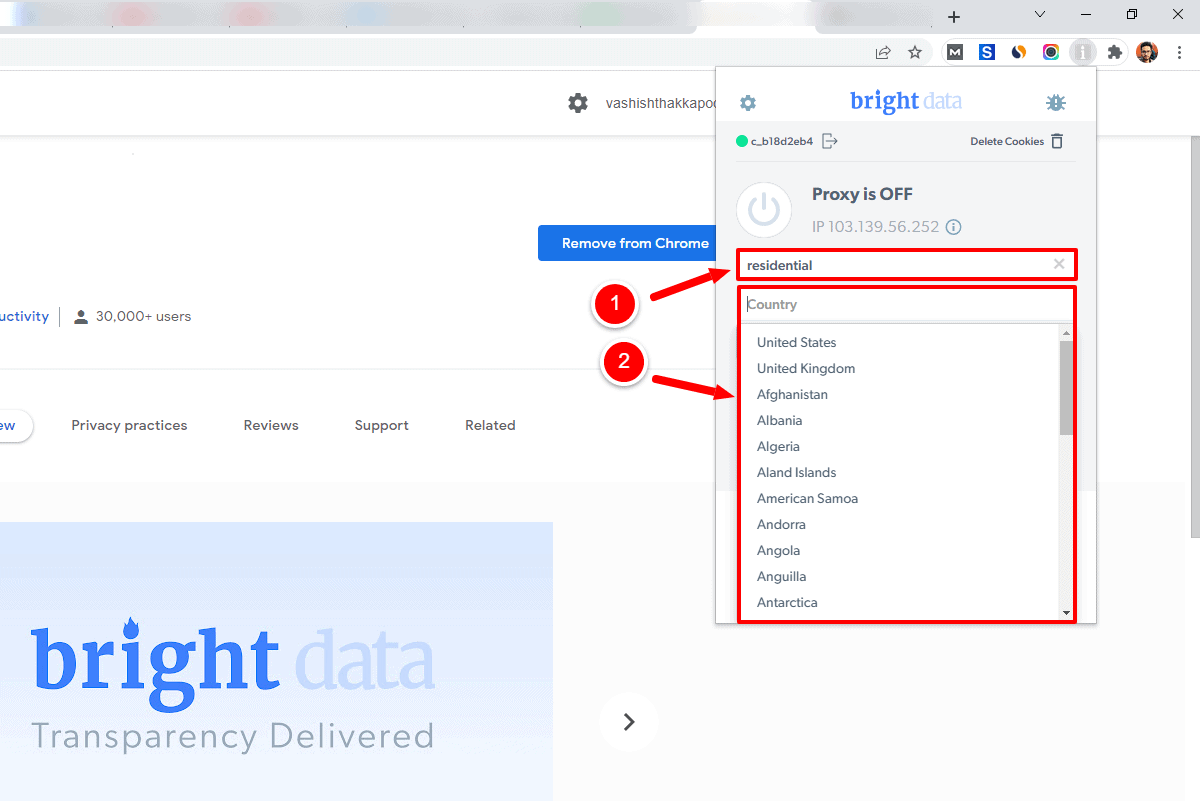
Bright Data is the benchmark. Its 400M+ monthly residential IP pool is the largest in the industry, sourced through an opt-in peer network where device owners share bandwidth in exchange for payment. The Proxyway benchmark confirmed 885,512 unique global IPs with a 98.59% residential purity rate and a 98.96% success rate — among the highest tested. For enterprise-grade P2P proxying, Bright Data’s compliance stack (ISO 27001, GDPR-ready, WIPO Alert partner) and full product suite (residential, ISP, mobile, datacenter, SERP API, scraping browser) make it the single most capable option in the market. The trade-off is cost and KYC friction.
P2P Pool: 400M+ monthly IPs across 195 countries. City, state, ZIP, and ASN targeting at no extra cost. Dedicated residential pools available for exclusive per-domain use. Rotating and sticky sessions up to 30 minutes.
Pricing: Residential PAYG at $10.50/GB. Subscription plans from $499/mo ($7/GB at 141 GB). Code RESIGB50 gives 50% off for 3 months ($5.25/GB PAYG, $3.50/GB Starter). ISP from $1.30/IP shared. Datacenter from $0.60/GB PAYG.
Pros ✓
- 400M+ IP pool — largest peer-sourced residential network available
- 98.96% global success rate (Proxyway tested, March 2024)
- City, ZIP, ASN, and dedicated pool targeting — all included
- ISO 27001 certified; GDPR-ready; opt-in peer sourcing verified
- Complete product stack: proxies, SERP API, scraping browser, datasets
- Proxyway Best Platform for Proxies 2024; Most Innovative Provider 2023
Cons ✗
- Most expensive at scale — $10.50/GB PAYG before promo codes
- KYC required — up to 3 business days, video call for freelancers
- Subscription minimum $499/mo — not suitable for casual use
2. Smartproxy

Smartproxy (now part of the Decodo brand umbrella, though its original product name persists in many dashboards) has earned Proxyway’s Best Value award five consecutive years, and for good reason. Proxyway’s April 2025 benchmark found it to be the fastest residential proxy provider globally — 1,155,602 unique IPs tested, 99.86% success rate. At $8.5/GB entry pricing with 195+ locations and unlimited concurrent connections, it punches well above its price point. The P2P pool covers both rotating and sticky sessions (up to 24 hours), making it practical for both scraping and account management tasks.
P2P Pool: 115M+ residential IPs across 195+ locations. City, state, ZIP (US), and ASN targeting. Rotating per request or sticky up to 24 hours. No concurrency limits.
Pricing: From $8.5/GB (micro plan). Larger plans reduce to $3/GB (50 GB at $150/mo). PAYG at ~$4/GB. 3-day free trial with 100 MB available.
Pros ✓
- Fastest residential P2P network globally — Proxyway April 2025
- 99.86% success rate — best in class for the price tier
- No concurrent connection limits
- Best Value award from Proxyway for 5 consecutive years
- Free 3-day / 100 MB trial — test before committing
Cons ✗
- PAYG and subscription plans cannot run simultaneously
- No dedicated static ISP proxies in all geos
3. Nimble
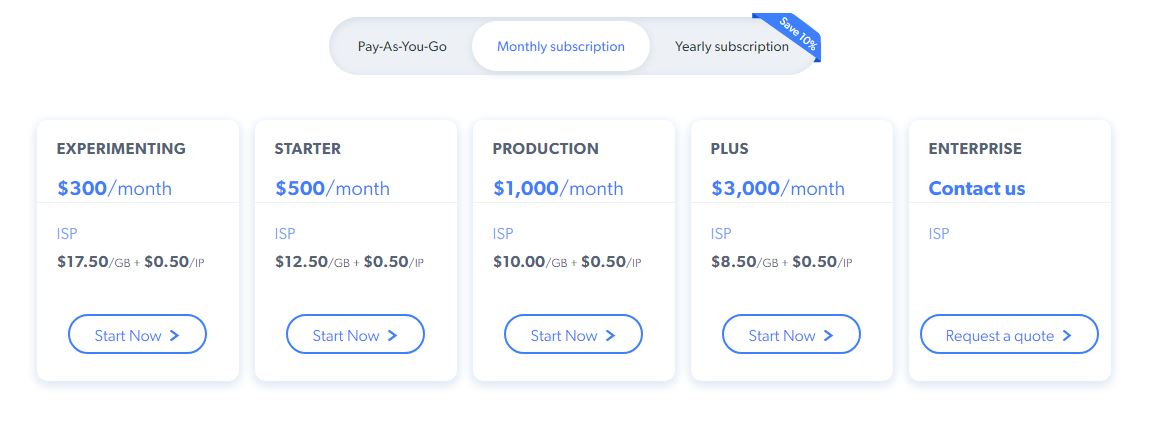
Nimble positions itself as an AI-native web data platform rather than a raw proxy provider. Its P2P residential network covers 12 countries — a narrower geographic footprint than the mega-providers, but the platform compensates with built-in AI-powered scraping infrastructure that handles JavaScript rendering, CAPTCHA solving, and anti-bot bypass automatically. At $12/GB it’s priced at the premium end, but the managed stack means you’re paying for outcomes (clean data) rather than raw bandwidth. Best suited for teams that want structured web data without managing proxy rotation, parsers, or browser infrastructure themselves.
P2P Pool: Residential IPs across 12 countries. Integrated with Nimble Browser (AI-driven scraping browser) and Pipeline API. Suitable for e-commerce and SERP data extraction.
Pricing: Residential proxies at $12/GB. Nimble Browser API and Pipeline are volume-based — contact sales for exact tiers.
Pros ✓
- AI-native platform — built-in CAPTCHA solving and anti-bot bypass
- Nimble Browser handles JS rendering automatically
- Managed pipeline for structured data extraction
- Good for teams prioritizing clean data over raw proxy management
Cons ✗
- Only 12 countries — limited geo coverage vs competitors
- $12/GB is premium pricing for a narrower network
- Less control for advanced proxy users who manage rotation themselves
4. ProxySeller

ProxySeller is one of the most affordable residential proxy providers with genuine global coverage. Starting from $0.7/GB on its residential P2P network, it undercuts most competitors on price while still offering 220+ countries, city-level targeting, ASN filtering, and both HTTP/HTTPS and SOCKS5 support. It’s been in the proxy business 10+ years. Third-party reviewers rate it at 4.7–4.8/5. The platform uses interactive pricing sliders, so exact per-GB rates at higher volumes require a live check — but the entry point is genuinely the lowest in this roundup for a legitimate residential offering.
P2P Pool: Residential IPs across 220+ countries and regions. Country, city, and ASN-level targeting. Rotating and sticky sessions. SOCKS5 and HTTP/HTTPS supported.
Pricing: Residential from $0.7/GB (entry-level) up to ~$3.50/GB depending on volume tier. ISP proxies from $1/IP. Volume pricing is slider-based — verify live at proxy-seller.com.
Pros ✓
- Lowest entry price in this list — from $0.7/GB residential
- 220+ countries — widest geo coverage among affordable providers
- 10+ years in operation — established track record
- SOCKS5 + HTTP/HTTPS; city and ASN targeting
- SDK support in 5 programming languages
Cons ✗
- Pricing pages are JS-rendered sliders — exact tiers require live verification
- No free trial for residential proxies
- No publicly benchmarked success rate data available
5. LiveProxies

LiveProxies takes a focused approach: instead of claiming 190+ countries, it concentrates on US, Canada, and UK locations where its peer IP pool has real depth. The Proxyway benchmark (November–December 2024) confirmed 307,569 unique IPs in the US alone — that’s a meaningful active pool for a mid-market provider. Success rates of 95.85–99.53% across its three core geos are competitive. Its B2B enterprise track (minimum $2,000/mo, 1 TB at $2/GB) makes it a viable option for agencies with consistent high-volume needs. The B2C entry starts at $45/plan — pricing is per IP count and data, not purely per GB.
P2P Pool: 10M+ IPs advertised; B2B benchmark confirms 307K+ unique US IPs in testing. Primary geos: US, CA, UK (more on demand). Proxyway success rate: 95.85–99.53%.
Pricing: B2C starts at $45/plan (200 IPs, 4 GB, 30 days). B2B enterprise from $2,000/mo (1 TB). Promo code PROXWAY gives 20% off.
Pros ✓
- Strong pool depth in US/CA/UK — Proxyway confirmed 307K+ unique US IPs
- 96.01% success rate on real targets (Amazon, Google, Instagram)
- B2B track at $2/GB for agencies needing 1 TB+/month
- Trustpilot 4.3/5 — 829 reviews
- 99.97% uptime claim
Cons ✗
- Limited geo coverage — primarily US, CA, UK for B2C
- Proxyway rating 8.1/10 — lower than enterprise providers
- Static residential listed as “Permanently Unavailable”; mobile “Sold Out” at time of check
- No free trial for B2C plans
6. IPRoyal

IPRoyal’s peer network is powered by Pawns.app — a bandwidth-sharing app where device owners earn passive income by sharing their internet connection. This home-grown sourcing model gave IPRoyal a 99.56% global residential success rate in Proxyway’s April 2025 tests, with 99.28% of IPs verified as genuine residential by IP2Location. What sets IPRoyal apart for budget users is the PAYG traffic model where bytes never expire — buy 10 GB today, use 2 GB this month and 8 GB in six months, no waste. That’s genuinely uncommon in an industry where most providers force traffic expiry within 30 days.
P2P Pool: 32M+ residential IPs across 195+ countries. City and state-level targeting. Sticky sessions from 1 second to 7 days. 99.56% global success rate (Proxyway April 2025).
Pricing: PAYG from $7.35/GB (non-expiring). Subscription from $7/GB (with 5% discount, traffic rolls over). Promo code PROXYWAY30 gives 30% off.
Pros ✓
- Non-expiring PAYG traffic — buy once, use whenever
- 99.56% residential success rate (Proxyway 2025)
- 99.28% verified genuine residential IPs (IP2Location)
- 7-day sticky sessions — one of the longest available
- No monthly minimum commitment required
- Accepts 25+ cryptocurrencies
Cons ✗
- 32M pool smaller than enterprise competitors
- Struggled on popular targets: 74.63% combined (Amazon/Google) in Proxyway test
- Advanced features (sub-users, domain whitelists) require $200+ spend to unlock
7. Storm Proxies

Storm Proxies focuses on rotating residential proxies for the US and EU markets at a flat monthly fee rather than per-GB billing. At $50/mo you get unlimited bandwidth — no watching the meter — which makes budgeting simple for consistent scraping operations. The unlimited model suits use cases where you push high data volumes through the same proxies daily. Coverage is intentionally narrower (USA and Europe) compared to global providers, but within those geos the peer pool offers solid rotation for most scraping needs. It’s a straightforward, no-frills P2P option.
P2P Pool: Rotating residential IPs across USA and EU. Unlimited bandwidth on monthly plans. Auto-rotation every 3, 5, or 15 minutes depending on plan.
Pricing: From $50/mo for rotating residential proxies. Unlimited bandwidth — no per-GB charges. Multiple plan tiers available by IP count and rotation speed.
Pros ✓
- Flat monthly fee — no per-GB overage surprises
- Unlimited bandwidth on all residential plans
- Simple setup — good for non-technical users
- Established provider with multi-year operating history
Cons ✗
- USA and EU only — no global geo coverage
- No city-level targeting — country-level only
- No independently published success rate benchmarks
- Limited advanced features compared to enterprise providers
8. Oxylabs

Oxylabs earns a 9.3/10 from Proxyway — tied with Bright Data for the highest score in the market — and won the Best Enterprise Provider award in 2025. Its 175M+ residential IP pool (ranked #1 in Proxyway’s April 2025 pool size benchmarks) combined with a 99.90% global success rate and coordinate-level geo-targeting makes it the benchmark for large-scale P2P proxy work. The $15/GB entry price is higher than mid-market competitors, but enterprise clients get a dedicated account manager, insurance on their data products, and support in Russian, English, and Chinese. The 7-day free trial for companies and a 3-day refund policy reduce commitment risk.
P2P Pool: 175M+ residential IPs across 195 countries. Country, state, city, ASN, ZIP, and GPS coordinate targeting. 99.90% global success rate (Proxyway 2025). EWDCI member.
Pricing: From $15/GB ($30/mo, 5 GB starter plan). Code proxyway35 gives 35% off first purchase. Subscription required — no PAYG. 7-day free trial for companies.
Pros ✓
- 175M+ IPs — #1 pool size in Proxyway benchmarks
- 99.90% residential success rate globally
- Coordinate-level geo-targeting — unique in this list
- Dedicated account manager for enterprise clients
- Proxyway Best Enterprise Provider 2025
- Products come with insurance — unique in the industry
Cons ✗
- $15/GB entry is the most expensive standard rate in this list
- No PAYG option — subscription only
- KYC required before accessing services
9. NetNut

NetNut is different from the peer-device model. Its rotating residential network sources IPs through DiViNetworks, a direct ISP partnership that bypasses end-user devices entirely — making the IPs “one hop” from the ISP rather than routing through someone’s home router. This means higher consistency and lower latency compared to typical P2P peers, though it’s technically closer to an ISP-network model. Proxyway’s April 2025 benchmark measured 1,011,844 unique global IPs at 95.04% residential purity and 96–99% success rates by gateway. Its parent company Alarum Technologies trades on NASDAQ (ticker: ALAR), providing financial transparency that many proxy providers lack.
P2P Pool: 85M+ rotating residential IPs across 195 countries. 1M+ static ISP IPs. Proxyway tested: 1,011,844 unique global IPs, 95.04% residential purity. Success rate: 96–99% by gateway.
Pricing: Residential from $15/GB ($99/mo, 28 GB). ISP from $14.40/GB ($99/mo, 7 GB). 7-day free trial for verified companies. Annual billing saves ~15%.
Pros ✓
- DiViNetworks ISP backbone — direct one-hop ISP connectivity
- 1M+ always-online static ISP IPs — Proxyway’s largest ISP pool tested
- Public company on NASDAQ — financial transparency
- G2 #1 Web Data Provider — multiple category badges
- 96–99% residential success rate by gateway (Proxyway 2025)
Cons ✗
- No PAYG option — subscription-only billing
- ISP entry price ($99/7 GB) is expensive per-GB at small volumes
- Residential entry at $99/mo requires commitment
10. SquidProxies

SquidProxies offers a per-IP pricing model at approximately $1/IP, with global coverage and a straightforward setup. It’s positioned at the budget-to-mid tier for users who need a fixed number of proxies rather than a bandwidth pool. The per-IP model suits use cases where you know exactly how many concurrent connections you need and want predictable monthly costs. It’s not built for high-volume rotating scraping — that’s better served by bandwidth-based P2P providers. SquidProxies works for small teams, individual researchers, and anyone who needs a handful of dedicated proxy IPs without committing to the enterprise pricing of larger providers.
P2P Pool: Global coverage. Per-IP pricing model. Fixed IP addresses per plan rather than rotating bandwidth pool.
Pricing: From approximately $1/IP. Bulk discounts available for larger IP quantities.
Pros ✓
- Per-IP pricing — predictable monthly cost regardless of bandwidth
- Low entry point at ~$1/IP
- Simple setup — good for non-technical users
- Global IP coverage
Cons ✗
- No publicly available success rate benchmarks
- Fixed IPs — not designed for high-rotation scraping at scale
- Limited advanced features (no ASN, city-level targeting documented)
- Smaller provider with less transparency than enterprise options
11. Kproxy

Kproxy is the only provider in this roundup with a free tier. It’s a browser-based web proxy service that requires no setup — you enter a URL, it routes it through a proxy server, and the page loads through a different IP. The free plan is limited to browser-based use only with speed restrictions. The paid tier runs $5 per 10 days, making it the lowest-cost entry in this list for casual use. Kproxy is not appropriate for programmatic scraping, API calls, or any automation — it’s a tool for manual browsing, accessing geo-restricted content from a regular web browser, or evaluating whether a proxy service meets basic requirements before investing in a commercial provider. For serious P2P work, treat it as a stepping stone, not a destination.
Pool: Web proxy servers (browser-based). Not a peer-device residential network in the traditional P2P sense — functions as a proxy gateway for browser traffic.
Pricing: Free tier available (speed-limited, browser-only). Premium: $5/10 days for faster access.
Pros ✓
- Free tier — zero cost for casual use
- No software installation — entirely browser-based
- $5/10 days is one of the lowest entry costs for proxy access
- Good for manual geo-block bypassing without a subscription
Cons ✗
- Not a true P2P residential proxy — web proxy gateway, not peer device IPs
- Cannot be used for programmatic scraping or API calls
- Speed-limited on free tier; limited server count
- Not suitable for any commercial or automated use case
12. Infatica

Infatica rounds out the list as a well-certified mid-market P2P option with a distinctive compliance stack: ISO 27001, ISO 22301, ISO 27701, and ISO 20000-1 — the strongest certification portfolio in this roundup outside of Bright Data. Proxyway benchmarked it at 8.7/10 and found a 95.12% average success rate on Amazon, Google, and Instagram — competitive with providers charging twice the price. At $4/GB PAYG with a 7-day trial for $4, it’s an accessible starting point. The 35M+ pool is smaller than enterprise providers, but the ISO certifications provide enterprise procurement confidence that many cheaper alternatives can’t match. Read our full Infatica review for more detail.
P2P Pool: 35M+ residential IPs across 195 countries (Proxyway tested: ~15M distinct). City, ZIP, ISP, and ASN targeting. 99.9% uptime. 95.12% target success rate (Amazon/Google/Instagram).
Pricing: PAYG at $4/GB (starting price is actually $1/GB per the task brief but pricing pages show $4/GB — see note below). 25 GB plan at $3.84/GB ($96/mo). 7-day trial for $4. Annual billing saves 20%.
Pricing note: The task brief lists Infatica at “$1/GB, global” — however, the verified brand knowledge file and Proxyway review show PAYG at $4/GB and 25 GB plans at $3.84/GB. The $1/GB figure may refer to a heavily discounted promotional rate or a specific product type. Verify current pricing at infatica.io before purchasing.
Pros ✓
- ISO 27001, 22301, 27701, 20000-1 certified — strongest compliance portfolio
- 95.12% success rate on real targets (Amazon/Google/Instagram)
- City, ZIP, ASN, and ISP targeting on all plan tiers
- 7-day trial for $4 — low-risk entry point
- 20% annual discount available
Cons ✗
- Active pool (~15M per Proxyway) smaller than advertised 35M
- Cannot top up traffic mid-cycle
- KYC required to view ISP and dedicated DC plans
How to Choose the Right P2P Proxy Provider
Every provider in this list calls their offering “residential P2P proxies.” The actual differences — in pool quality, speed, targeting depth, and pricing model — are what determine whether your use case works or fails. Here are the five factors that matter most.
Pool Size and Purity — Not Just the Number
A provider claiming 400M IPs may actually serve you from a much smaller active pool. Proxyway’s benchmarks reveal this clearly: Bright Data shows 885K unique IPs in a standard test; IPRoyal shows 535K; Infatica shows ~15M distinct. Ask for Proxyway benchmark data or run your own test — unique IPs over a fixed request volume tells you the actual pool you have access to. Purity matters too: you want 95%+ genuinely residential IPs, not shared hosting ranges masquerading as residential.
Success Rate on Your Actual Target
A 99% success rate globally means little if your target is Instagram or Amazon. Proxyway tests show IPRoyal achieving 99.56% globally but only 74.63% combined on popular targets. Bright Data averages 84.63% on its hardest targets. Test your specific URL before committing. Most providers offer a trial — use it.
Geo Depth — City Level vs Country Only
For ad verification, local SEO, or e-commerce price monitoring, country-level targeting alone isn’t enough. You need city-level control. Bright Data, Smartproxy, Oxylabs, IPRoyal, and Infatica all offer city-level targeting. Storm Proxies and SquidProxies do not. Nimble’s 12-country coverage limits geographic flexibility entirely. Match the provider’s targeting depth to your use case before purchasing.
Pricing Model: Per-GB vs Per-IP vs Flat Monthly
Per-GB pricing (most providers) works best for scraping — you pay for data transferred and can scale linearly. Per-IP pricing (SquidProxies, ~$1/IP) works best for fixed concurrent connections. Flat monthly unlimited (Storm Proxies, $50/mo) works best for consistent high-volume workloads where bandwidth costs would otherwise pile up. Hybrid plans (LiveProxies: pay for IP count + data together) suit specific structured workflows.
Ethical Sourcing and Compliance
For enterprise procurement, ethical sourcing is a due-diligence requirement. EWDCI membership (Bright Data, Oxylabs), ISO certifications (Infatica), and transparent opt-in programs like Pawns.app (IPRoyal) all indicate that peer bandwidth was acquired legally and consensually. Providers without any sourcing transparency documentation create legal and reputational exposure.
Bottom line: For enterprise-scale P2P scraping, Bright Data or Oxylabs. For the best speed-to-price ratio, Smartproxy. For occasional use without expiry pressure, IPRoyal’s PAYG. For geo-restricted content access on a minimal budget, ProxySeller or Storm Proxies. For a free first test, Kproxy — then upgrade immediately when you need real results.
P2P Proxy Pricing: Side-by-Side Comparison
The table below compares all twelve providers on the metrics most relevant for P2P proxy selection. Entry prices reflect the lowest publicly available rate for residential or P2P proxy access. Pricing sourced from provider knowledge files and live site checks, May 2026.
| Provider | IP Pool | Countries | Entry Price | City Targeting | Trial |
|---|---|---|---|---|---|
| Bright Data | 400M+ | 195 | $10.50/GB PAYG ($5.25/GB w/ RESIGB50) | Yes | 7-day (companies) |
| Smartproxy | 115M+ | 195+ | $8.5/GB | Yes | 3 days / 100 MB free |
| Nimble | N/A (managed) | 12 | $12/GB | Limited | Contact sales |
| ProxySeller | Residential pool | 220+ | From $0.7/GB | Yes | No free trial |
| LiveProxies | 10M+ | US, CA, UK focus | $45/plan (200 IPs, 4 GB) | Limited | B2B only |
| IPRoyal | 32M+ | 195+ | $7/GB (sub) / $7.35/GB (PAYG) | Yes | No (PAYG non-expiring) |
| Storm Proxies | Rotating pool | USA, EU | $50/mo (unlimited BW) | No | No |
| Oxylabs | 175M+ | 195 | $15/GB ($30/mo, 5 GB) | Yes (+ coordinates) | 7-day (companies) |
| NetNut | 85M+ residential; 1M+ ISP | 195+ | $15/GB ($99/mo, 28 GB residential) | Yes | 7-day (companies) |
| SquidProxies | Per-IP model | Global | ~$1/IP | No | No |
| Kproxy | Web proxy servers | Limited | Free / $5 per 10 days | No | Free tier |
| Infatica | 35M+ | 195 | $4/GB PAYG; $3.84/GB (25 GB) | Yes | 7 days for $4 |
Pricing note: Most residential P2P providers use slider-based pricing that drops significantly at higher volumes. A $10/GB PAYG rate often falls to $3–4/GB at the 500 GB+ subscription tier. Always check the provider’s live pricing page before budgeting. Promo codes (RESIGB50, proxyway35, PROXYWAY30, PROXWAY) are subject to expiry — verify before purchasing. ProxySeller’s pricing in particular is entirely JS-rendered; verify at the live site.
P2P Proxy Pros & Cons: What to Expect
P2P proxies solve the IP-reputation problem better than any other proxy type — but they come with trade-offs worth understanding before you commit budget.
Pros ✓
- Highest IP trust level: Peer-sourced residential IPs come from real devices on real ISPs — they behave like ordinary home users and slip past most anti-bot detection systems
- Broad geo coverage: Top providers cover 195+ countries with city-level targeting — making local ad verification, SEO, and price monitoring genuinely accurate
- Ethical sourcing available: Providers with EWDCI membership and ISO certifications source bandwidth from opt-in peers — your scraping infrastructure isn’t running on compromised devices
- Flexible pricing models: Per-GB, per-IP, flat monthly, PAYG non-expiring — enough variety to match almost any usage pattern
- Free and trial options: Kproxy (free), Smartproxy (100 MB free), Infatica ($4 trial), IPRoyal (non-expiring PAYG) all lower the cost of testing before committing
- Success rates that matter: 95–99%+ success rates on protected targets — far above datacenter proxies on the same sites
Cons ✗
- Cost: Quality residential P2P proxies start at $3–15/GB — 5–30x more expensive per GB than datacenter proxies
- Speed variability: Peer device connection quality is inconsistent — a slow peer gives you a slow connection, and you can’t always predict or control this
- Pool claims vs reality: Advertised pool sizes often exceed Proxyway-tested active pools — a 35M claimed pool may deliver 15M distinct IPs in practice
- Not for every use case: High-bandwidth video streaming, real-time financial data, and UDP-dependent protocols need specialized tools — P2P residential proxies are optimized for HTTP/HTTPS web traffic
- Geographic limits at the budget end: Cheaper providers (Storm Proxies, LiveProxies, Kproxy) cover far fewer countries than enterprise options
Bottom Line: P2P proxies are the right tool when you need residential IP trust levels and anti-bot bypass — and wrong when you need raw speed or rock-bottom cost on simple targets. Budget appropriately: a $50/month Storm Proxies plan is enough for casual geo-testing; $499/month at Bright Data is justified when you’re scraping at enterprise scale with compliance requirements.
P2P Proxy Provider Ratings Breakdown
We rated each provider across six criteria relevant to P2P proxy selection. Scores reflect third-party benchmark data (Proxyway 2024–2025) where available, supplemented by pricing analysis, feature depth, and geo-coverage evidence.
| Category | Score | Notes |
|---|---|---|
| Pool Quality & Size | 4.4/5 | Bright Data and Oxylabs lead; IPRoyal and Infatica mid-tier; SquidProxies and Kproxy limited |
| Success Rate on Protected Targets | 4.2/5 | Smartproxy 99.86% global; Oxylabs 99.90%; IPRoyal struggles at 74.63% on popular targets |
| Geo Coverage & City Targeting | 4.1/5 | Top providers offer 195+ countries + city level; Storm, SquidProxies, Kproxy cover far less |
| Pricing & Value | 4.0/5 | ProxySeller and IPRoyal lead on value; Oxylabs and Nimble at premium end; Kproxy free tier unique |
| Ease of Use & Setup | 4.2/5 | Smartproxy and IPRoyal simplest; Bright Data and Oxylabs more complex but fully documented |
| Compliance & Ethical Sourcing | 4.3/5 | Infatica (4 ISO certs), Bright Data (ISO 27001), Oxylabs (EWDCI) lead; others have less transparency |
| Overall Rating | 4.2/5 | Strong market with clear leaders — pick by use case, not by pool size claim alone |
Rating Summary: Bright Data and Oxylabs lead on raw capability and compliance for enterprise use. Smartproxy leads on the speed-value combination for mid-market scraping. IPRoyal is the standout for flexible PAYG access without monthly commitments. Infatica earns its place for compliance-sensitive environments. Kproxy serves only the most casual, non-commercial needs.
Are P2P Proxies Legit, Safe & Worth It?
Legitimacy & Safety
- ✓ Commercial P2P proxies are legal in most jurisdictions: Purchasing and using P2P residential proxies from a reputable provider is legal for commercial use cases including web scraping, ad verification, price monitoring, and market research. The proxy is an intermediary — what you do with it determines legality.
- ✓ Ethically sourced options exist and are verifiable: Bright Data, Oxylabs (EWDCI members), Infatica (four ISO certifications), and IPRoyal (Pawns.app opt-in model) all have documented, auditable sourcing practices. You’re not routing through compromised devices.
- ✓ Enterprise-grade compliance is available: Infatica’s four ISO certifications and Bright Data’s ISO 27001 + GDPR readiness satisfy procurement requirements in regulated industries. NetNut’s NASDAQ-listed parent company provides financial transparency that most proxy providers lack.
- ✓ ToS compliance is your responsibility: P2P proxies give you a residential IP — they don’t give you permission to violate a website’s terms of service. Web scraping public data for business intelligence is broadly accepted; harvesting personal data, bypassing authentication, or causing server harm can create legal exposure regardless of which IP you use.
Long-Term Reliability
The top providers in this list have multi-year operating histories. Bright Data (founded 2014), Oxylabs (2015), Infatica (2019), and IPRoyal (2020) have all survived multiple market cycles. Proxyway’s independent benchmarks provide a continuous track record of actual performance — not just marketing claims — that you can use to verify reliability over time.
Reality check: P2P proxies are slower and more expensive than datacenter proxies for a reason — you’re routing through real home devices on residential connections. Expect response times of 0.5–2 seconds on average (versus 0.2–0.5 seconds for datacenter). Budget 10–20% more traffic for the same scraping output compared to datacenter proxies, due to occasional slow peers and connection drops. If your target doesn’t require residential-level IP trust, datacenter proxies will serve you faster and cheaper.
Our Recommendation: Yes, P2P proxies are worth the cost — but only when the target actually requires residential IP trust. Use the free or low-cost trials (Smartproxy’s 100 MB trial, Infatica’s $4 7-day trial, IPRoyal’s non-expiring PAYG) to run your actual target URLs before committing to a subscription. If a $4 residential trial returns 95%+ success on your target, a full plan is justified. If your target works fine with datacenter proxies, don’t upgrade — save the budget for where residential IPs actually make a difference.
P2P Proxy FAQs: Your Questions Answered
What is a P2P proxy?
A P2P (peer-to-peer) proxy routes your traffic through real residential devices — computers, phones, or routers owned by people who have voluntarily signed up to share their internet bandwidth with a proxy provider. When you use a P2P proxy, the target website sees the IP address of that person’s home ISP connection, not a server or hosting range. This makes P2P proxies the hardest proxy type for anti-bot systems to detect and block.
What’s the difference between P2P proxies and residential proxies?
The terms are often used interchangeably. “Residential proxy” describes the IP origin — a real ISP-assigned home IP. “P2P proxy” describes the sourcing mechanism — bandwidth shared from peer devices. In practice, P2P proxies are a subset of residential proxies. ISP proxies (static residential) are also “residential” in origin but come from fixed IP leases rather than peer devices. All P2P proxies are residential, but not all residential proxies are P2P.
Are P2P proxies better than datacenter proxies?
For anti-bot bypass: yes, significantly. P2P residential IPs achieve 95–99%+ success rates on Amazon, Google, and Instagram — targets where datacenter proxies regularly fail. For raw speed and cost: no. Datacenter proxies respond in 0.2–0.5 seconds and cost $0.50–2/GB. P2P proxies respond in 0.5–2 seconds and cost $3–15/GB. Use P2P when the target requires residential trust. Use datacenter when the target is unprotected and you care more about speed and cost.
Which P2P proxy provider is best for web scraping?
For general web scraping, Smartproxy delivers the best combination of speed (fastest residential globally per Proxyway 2025), success rate (99.86%), and pricing ($8.5/GB). For enterprise-scale scraping with compliance requirements, Bright Data’s 400M+ pool and 98.96% success rate (with a managed SERP API for the hardest targets) is the benchmark. For budget scraping where success rates are less critical, ProxySeller at $0.7/GB or IPRoyal at $7.35/GB PAYG offer the lowest entry costs.
How do I test P2P proxy quality before buying?
Use the available trials to run your actual target URLs — not just a generic IP check site. Smartproxy offers 100 MB free; Infatica offers 7 days for $4; IPRoyal’s PAYG traffic never expires so a small purchase is zero-risk. Check: (1) does the target serve correct localized content? (2) What is the CAPTCHA rate? (3) What is average response time? A proxy that passes at trial scale will generally perform at full scale. A proxy that fails on your actual target at trial will not improve at production.
Is it legal to use P2P proxies?
Yes, for the vast majority of commercial use cases. Purchasing and using P2P proxies from a reputable provider is legal in most countries. Web scraping public data for business intelligence, price monitoring, ad verification, and market research are all widely accepted uses. What you do with the proxy determines legality — harvesting personal data in violation of GDPR, CCPA, or local data protection law creates exposure regardless of which IP you use. Use ethically sourced providers and stay within the data protection frameworks of the regions you target.
What is the cheapest P2P proxy provider?
For browser-based use, Kproxy is free. For programmatic use, ProxySeller starts at $0.7/GB residential — the lowest in this roundup for a legitimate rotating residential network. Storm Proxies’ $50/mo unlimited bandwidth plan is the cheapest flat-rate option. IPRoyal’s PAYG from $7.35/GB is the most flexible: traffic never expires, so there’s no waste from unused monthly allowances.
Which P2P proxy provider has the best geo coverage?
ProxySeller covers 220+ countries — the widest in this list. Bright Data, Smartproxy, Oxylabs, IPRoyal, Infatica, and NetNut all cover 195 countries with city-level targeting. Nimble covers 12 countries. Storm Proxies covers USA and EU only. LiveProxies focuses on US, CA, and UK for B2C plans. If your use case requires specific cities in multiple countries, stick with the 195-country providers.
Can I use P2P proxies for ad verification?
Yes — P2P proxies are among the best tools for ad verification. Advertisers use them to check whether their ads appear correctly in specific markets, are being served to the right audience, and are not being shown in fraudulent or brand-unsafe contexts. The key is using a P2P proxy with genuine residential IPs in the target country — not datacenter IPs, which ad platforms regularly detect and serve different ad experiences to. Bright Data and Oxylabs both have dedicated ad verification use case documentation.
Do P2P proxies work for streaming geo-restricted content?
Often yes, but it’s not guaranteed. P2P residential proxies in the target country look like a real local home user — which is why streaming platforms are harder to block with residential IPs than with datacenter proxies. However, major platforms (Netflix, Disney+, Amazon Prime) actively detect and block known proxy IP ranges, including residential ones. Success depends on how fresh and clean the specific IP you’re assigned is. Bright Data and Smartproxy have the freshest, largest pools — giving the best chance of finding an unblocked IP.
What are sticky sessions in P2P proxies?
A sticky session keeps your traffic assigned to the same peer IP for a defined period — rather than rotating to a new IP on every request. This is critical for tasks that require session continuity: logging into an account, filling out a multi-step form, or managing a social profile. IPRoyal offers sticky sessions up to 7 days — the longest in this list. Smartproxy and Infatica offer up to 24 hours. Bright Data and Oxylabs offer 30-minute stickiness (configurable). For account management tasks, check the maximum sticky session duration before choosing a provider.
Which P2P proxy has the best trial?
Smartproxy offers the best free trial: 3 days and 100 MB with no credit card required on some plans — enough to test real targets. Infatica’s 7-day trial for $4 provides the most testing time for the lowest cost. Bright Data and Oxylabs offer 7-day free trials but require company KYC verification. IPRoyal’s non-expiring PAYG is the lowest-risk option: buy 1 GB, test it, and the unused traffic stays in your account indefinitely — no expiry pressure.
Final Verdict
P2P proxies are not a commodity — pool authenticity, success rates on protected targets, and geo-targeting depth vary enormously across the twelve providers in this list. The best pick depends almost entirely on your use case and budget. For enterprise-scale scraping and compliance requirements, Bright Data and Oxylabs are the clear benchmarks. For the best speed-to-price ratio, Smartproxy delivers results that more expensive providers struggle to match. For occasional use without monthly commitment pressure, IPRoyal’s non-expiring PAYG is the most flexible entry point. And if you just need to test the waters, Smartproxy’s free 100 MB trial or IPRoyal’s PAYG model let you try before you spend.
✓ Top Picks
- Bright Data — Best overall: 400M+ peer IPs, 98.96% success rate, full compliance stack
- Smartproxy — Best value: fastest residential globally, 99.86% success, free trial
- Oxylabs — Best enterprise: 175M+ pool, 99.90% success, coordinate-level targeting
- IPRoyal — Best flexible PAYG: non-expiring traffic, 32M+ pool, 195 countries
- Infatica — Best compliance: 4 ISO certifications, 95.12% target success rate
- ProxySeller — Best budget residential: from $0.7/GB, 220+ countries
✗ When to Look Elsewhere
- Your target works fine with datacenter proxies — don’t overpay for residential trust you don’t need
- You need real-time video streaming at high bandwidth — residential P2P is not optimized for this
- You need a fixed, static IP — use ISP or static residential proxies instead of rotating P2P
- Your budget is zero and you need real scraping capability — Kproxy’s free tier won’t cut it for automation
Ready to Start With P2P Proxies?
Try Smartproxy’s free 100 MB trial — test real P2P residential IPs on your actual targets before spending anything on a subscription.
Try Smartproxy Free — Best P2P Proxy Value →