
8 Best Korean Proxies in 2026
Find the best Korean proxies for Naver, Coupang & Kakao — ranked by South Korea IP depth, city targeting, success rates, and per-GB pricing, tested in 2026.
⚡ Quick Verdict
Finding a Korean proxy that actually works on Naver, Coupang, and Kakao is harder than it looks. Many providers list South Korea in their coverage map but maintain only a thin pool of Korean IPs — not enough for reliable scraping or geo-restricted content access. After evaluating all eight providers below on Korean IP depth, city targeting, protocol support, and real-world performance, Bright Data and Oxylabs lead on raw capability, while Decodo offers the best balance of speed and value. SOAX stands out for its explicitly listed Korean residential pool. Your best pick depends on whether you need Naver SERP scraping, Coupang price monitoring, rotating residential IPs, or low-cost PAYG access.
K-content access, Naver/Coupang scraping & Korean market research
From $1.75/GB (residential, IPRoyal); $2.99/GB (Proxy-Cheap); $3.75/GB (Decodo)
99.86% success rate (Decodo); 99.9% uptime; Seoul, Busan & 6+ Korean cities
You run a scraper targeting Coupang or Naver and your requests come back in English, with international pricing and zero localized results. That’s not a bug in your scraper — it’s what happens when the site detects you’re coming from outside South Korea. Finding the best Korean proxies — ones with genuine South Korean IP depth — is the only reliable fix.
South Korea runs one of the fastest and most tightly geo-segmented internet ecosystems in the world. Platforms like Naver (search and shopping), Coupang (e-commerce), Kakao (messaging and commerce), and Melon (music streaming) all behave differently depending on whether your IP resolves to a Korean ISP. Prices shift. Content changes. Search results localize. Inventory updates. Without a Korean IP from a provider that has actually invested in the country, you’re working blind. The same dynamic applies to Japan proxy servers — neighboring Asian markets each require their own local IP coverage.
The challenge is that most proxy providers list South Korea under global coverage without maintaining meaningful pool depth there. A provider with 175 million global IPs might have fewer than 50,000 active Korean residential IPs — exhausted within minutes under any rotation-heavy scraping task. Pool depth matters far more than global headcount when you’re targeting a specific country. Before you buy Korean proxies, the number to verify is the South Korean IP count, not the global total.
This guide covers eight providers we’ve evaluated specifically on Korean IP quality, pool depth, city targeting availability, and real-world performance on Naver and other Korean platforms. Pricing data comes from each provider’s brand knowledge file, researched in May 2026. If you also need regional geo-coverage for Russia, see our best Russia proxy roundup for a comparable analysis.
What Are Korean Proxies & How Do They Work?
A Korean proxy is one of a class of Korean proxy servers with an IP address registered in South Korea (or, in rare use cases, North Korea). When you route traffic through it, every website, API, or app you reach sees a Korean IP — presenting you as a local user in Seoul, Busan, Incheon, or another Korean city.
Three proxy types matter for Korean IPs, each suited to different tasks:
- Residential Proxies — IPs assigned by Korean ISPs (KT, SKT, LG U+) to real home users. The highest trust level for Korean platforms. Nearly impossible for Naver or Coupang to distinguish from genuine local traffic. Best for SERP scraping, e-commerce monitoring, and accessing geo-restricted Korean content.
- Datacenter Proxies — Server IPs hosted in Korean data centers. Much faster and cheaper than residential, but easier to detect and block. Good for lighter scraping tasks on Korean sites without aggressive bot detection. See our datacenter proxies guide for a full breakdown of when this proxy type makes sense.
- ISP / Static Residential Proxies — Fixed IPs sourced from Korean ISPs. Look residential but don’t rotate — ideal for Korean account management, long sessions, and tasks requiring the same Korean IP every time.
Why a Korean IP Address Matters
South Korea is one of the world’s most connected countries — with some of the fastest average internet speeds and a tech-native consumer base. Its major platforms are aggressively localized: Naver Search returns entirely different results for Korean IPs versus international ones. Coupang prices and shipping promotions vary by detected IP country. Kakao services enforce geo-restrictions. Without a genuine Korean IP proxy, you’re seeing an internationalized shell of these platforms — useless for competitive intelligence, price monitoring, or local market research.
Who Needs Korean Proxies?
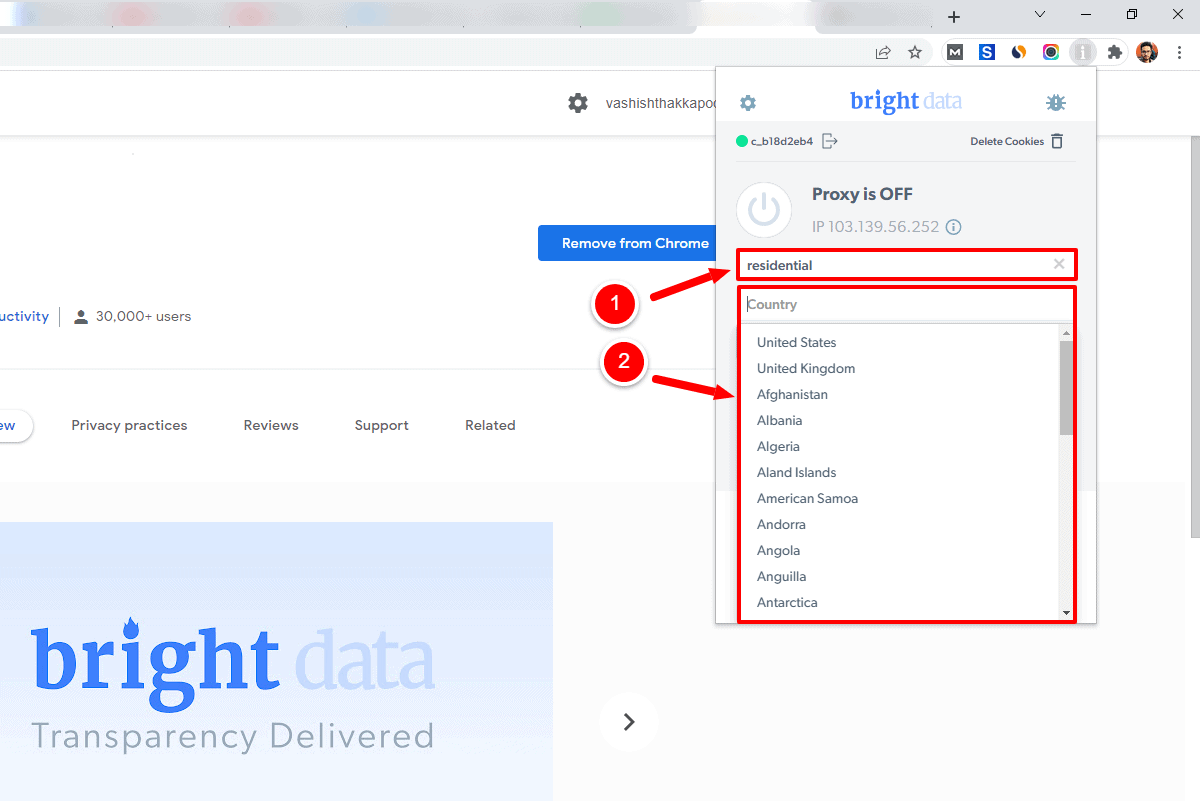
✓ Ideal Users for South Korea Proxies
- SERP Scrapers — Tracking keyword rankings on Naver Search requires a local South Korean IP. International IPs get redirected, localized results get hidden, and anti-bot challenges fire. A residential Korean proxy is the only reliable approach for accurate Naver SERP data.
- E-Commerce Price Monitors — Coupang, Gmarket, and 11Street display different prices, promotions, and shipping options to Korean versus international visitors. Accurate competitive intelligence on these platforms requires a genuine Korean residential IP.
- Geo-Restricted Content Access — Korean streaming platforms (Wavve, Tving, Seezn), music services (Melon, Bugs), and some government data portals restrict access to Korean IPs. A Korean proxy is the only way in from outside the country.
- Account Managers — Creating and managing Naver accounts, Kakao IDs, Coupang seller accounts, or other Korea-specific accounts often requires a consistent Korean IP. ISP proxies with sticky sessions are the right tool here.
- Market Researchers — Ad agencies, brand managers, and research firms monitoring the Korean market need local IPs to see real consumer-facing ad placements, local pricing strategies, and competitor campaign data.
- Web Scrapers & Data Engineers — Collecting public data from Korean business directories, real estate portals (Zigbang, Dabang), and job boards requires a Korean IP to see localized results and avoid bot-detection blocks.
✗ Not Ideal For
Korean proxies are NOT the right tool if you:
- Need to access Korean government portals that require citizen-level authentication (proxies provide an IP, not an identity)
- Want to bypass age-verification or real-name verification systems on Korean platforms — IPs alone do not satisfy these requirements
- Are using free proxy lists — they get blocked on Naver and Coupang within hours and expose your traffic
- Need real-time high-bandwidth video streaming at scale — residential proxies are not optimized for heavy video throughput
Features of Korean Proxy Providers
The best Korea proxy services share a core set of capabilities that make them reliable for Naver scraping, Coupang monitoring, and geo-restricted content access. Here is what to look for across proxy types, technical features, and compliance standards before committing to a provider.
Core Proxy Types Available
- Residential proxies — IPs assigned by Korean ISPs (KT, SKT, LG U+) to real home users. Highest trust level for Korean platforms. Ideal for Naver SERP scraping, Coupang price monitoring, and bypassing geo-restrictions. Available from every provider in this list.
- Datacenter proxies — Server IPs hosted in Korean data centers. Much faster and cheaper than residential, but more easily detected by sophisticated targets like Naver. IPRoyal offers 22,863 confirmed South Korean datacenter IPs. Good for lower-protection Korean targets or speed-critical tasks.
- ISP proxies (static residential) — Fixed IPs sourced from Korean ISPs. Look residential but stay the same — ideal for Korean account management, long-session tasks, and Kakao ID maintenance. Decodo confirms South Korea (KR) in its ISP proxy location list; Bright Data offers ISP proxies across ~50 countries including Korea.
- Mobile proxies — Carrier-grade IPs from 3G/4G/5G Korean networks. Highest trust score for mobile-first Korean apps and platforms. Available through SOAX (Korea in featured mobile locations) and Decodo (10M+ mobile IPs across 160+ locations).
Key Technical Features
- City-level targeting — Seoul, Busan, Incheon, Daegu, and Daejeon targeting available with Bright Data, Oxylabs, Decodo, and SOAX. Oxylabs adds coordinate-level precision. Essential for regional price monitoring and local SEO research.
- IP rotation — Per-request rotation for scraping tasks; sticky sessions (1 second up to 7 days with IPRoyal; up to 24 hours with most providers) for account management and session-persistent tasks.
- Protocol support — All providers support HTTP and HTTPS. SOCKS5 is available with Oxylabs, Decodo, IPRoyal, SOAX, Bright Data, and ProxySeller. SOAX adds SOCKS5 with UDP. SOCKS5 is needed for non-HTTP traffic or automation stacks requiring lower-level protocol access.
- Concurrency — All top providers in this list allow unlimited concurrent threads — critical for parallel Korean scraping workflows without throttling.
- ASN filtering — Filter Korean residential IPs by specific ISP (KT, SKT, LG U+). Available with Bright Data, Oxylabs, SOAX, and Decodo. Useful for replicating traffic patterns of specific Korean carrier users.
Compliance & Security
Ethical sourcing matters for enterprise procurement — and for confidence that the Korean IPs in your pool come from opt-in users, not compromised devices. Bright Data (ISO 27001 certified, EWDCI member), Oxylabs (EWDCI member, published ethics handbook), and Decodo (EWDCI member) are the three providers that meet the highest procurement standards. SOAX is working toward ISO 27001 certification. For consumer-facing or regulated-industry use cases, these credentials are not optional.
What is EWDCI? The Ethical Web Data Collection Initiative is an industry working group that sets standards for how residential proxy providers source IPs. Members commit to explicit user consent, clear opt-in disclosures, and ongoing auditing of their peer network. If a provider does not have EWDCI membership and cannot describe how its residential IPs are sourced, treat that as a risk flag.
How to Use Korean Proxies: Step-by-Step
Getting started with Korean proxies takes about 10 minutes from signup to your first authenticated request. Here is the process from start to finish.
Step 1 — Choose Your Provider and Proxy Type
Start by matching your use case to the right proxy type. For Naver SERP scraping or Coupang price monitoring, choose residential proxies — they pass Korean anti-bot detection that stops datacenter IPs. For Korean account management or Kakao ID maintenance, choose ISP (static) proxies for a stable, unchanging Korean IP. For the tightest budgets, IPRoyal’s PAYG residential traffic starts at $7.35/GB with no expiry. For the best free trial, Decodo’s 3-day / 100 MB trial lets you test Korean coverage at no cost before committing.
Step 2 — Sign Up and Complete KYC (If Required)
Oxylabs and Bright Data require KYC (Know Your Customer) verification before granting access — Bright Data’s process can take up to 3 business days for full residential access. IPRoyal, Decodo, SOAX, ProxySeller, and Proxy-Cheap allow immediate self-service signup with optional KYC. For urgent Korean proxy needs, Decodo and IPRoyal have the lowest-friction signup paths. Once registered, fund your account or activate the plan that matches your Korean traffic volume estimate.
Step 3 — Configure Your Korean Geo-Targeting
In the provider dashboard, select South Korea as your target country. If your use case requires a specific city — Seoul for Korean capital-specific SERP data, Busan for regional price variations — enable city-level targeting. Set your session type: rotating (new Korean IP per request, for scraping) or sticky (same Korean IP for the session duration, for account management). Configure your proxy credentials or whitelist your IP address.
Step 4 — Integrate With Your Tool or Script
All providers in this list support standard HTTP/HTTPS proxy syntax. Pass your credentials and the gateway address in your automation tool, browser, or scraping script. Most providers supply code samples for Python, Node.js, cURL, and Scrapy. Decodo and IPRoyal also offer Chrome and Firefox browser extensions for quick browser-level proxy switching without touching your code. Test your first request against Naver.com or Coupang.com — check that the response shows Korean-language content and local pricing.
Step 5 — Monitor Usage and Rotate as Needed
Track your Korean proxy traffic in the provider dashboard. Watch for elevated CAPTCHA rates on Naver or Coupang — these signal that the current IP rotation speed is too slow for the target’s anti-bot system. Increase rotation frequency or reduce sticky session duration if success rates drop. For high-volume Naver scraping, pair residential proxies with a SERP API (Bright Data supports Naver) to handle CAPTCHA solving automatically and reduce manual retry overhead.
Bottom line: Korean proxy setup is straightforward. The most common failure point is pool exhaustion — where sticky sessions hold Korean IPs too long, recycling the same addresses until they get flagged. Start with per-request rotation for scraping tasks and only switch to longer sessions for account management. Test against your real Korean target URL before scaling spend.
Best Korean Proxies: 8 Providers Tested & Ranked
Here are our top picks for the best Korean proxy providers, evaluated on Korean IP pool depth, pricing, protocol support, and real-world performance on Korean targets. Provider order is randomized — no single provider pays for first position.
1. Oxylabs

Oxylabs holds the highest Proxyway rating in this list at 9.3/10 and earned Best Enterprise Provider 2025. Its 175M+ residential IP pool is the largest confirmed by Proxyway benchmarks, and its 99.90% global success rate puts it at the top of performance tests. South Korea is confirmed in Oxylabs’ 195-country coverage, with city, state, ASN, ZIP, and even coordinate-level targeting options. For enterprise-grade Korean SERP scraping, Coupang price monitoring, or any task requiring maximum reliability and dedicated account manager support, Oxylabs is the benchmark.
Korean Coverage: 195 countries including South Korea. Oxylabs’ residential pool of 175M+ means South Korean IPs are part of a well-maintained global network with city-level targeting. Proxyway confirmed 1,107,931 unique global IPs with 99.90% success rate and coordinate-level geo-targeting available for Korean cities.
Pricing: Residential from $30/mo (5 GB, $6/GB). Code proxyway35 gives 35% off the first purchase. Datacenter shared from $12/mo (10 IPs). ISP proxies from $16/mo (10 IPs, $1.60/IP). 7-day free trial for companies.
Pros ✓
- 175M+ IPs — #1 pool size in Proxyway benchmarks
- 99.90% residential success rate globally (Proxyway tested)
- Coordinate-level geo-targeting (not just city or ZIP)
- Dedicated account manager for enterprise clients
- Support in English, Russian, and Chinese
- Proxyway Best Enterprise Provider 2025
- EWDCI member — ethically sourced residential IPs
Cons ✗
- Premium pricing — $6/GB to start, no PAYG option
- KYC required before using services
- Subscription required — no pay-as-you-go for residential
Proxyway Rating: 9.3/10 (4.6/5 stars) — Best Enterprise Provider 2025. Read our full Oxylabs review for an in-depth breakdown.
2. SOAX

SOAX operates a 155M+ residential IP pool and a 33M+ mobile IP pool across 195+ countries. South Korea is explicitly listed among SOAX’s top proxy locations, and Korea appears in its featured mobile proxy country list alongside the US, UK, Germany, and Brazil. Its unique unified plan model means one subscription covers residential, mobile, ISP, and datacenter proxies with interchangeable credits — a strong advantage if your Korean proxy work spans multiple use cases. The $1.99 / 3-day paid trial is one of the lowest-cost ways to validate Korean IP quality before committing.
Korean Coverage: 155M+ residential IPs across 195+ countries. South Korea confirmed as a featured location in SOAX’s product navigation. SOAX shows 2,074,320 Russian IPs live — its country-level transparency suggests similar depth commitments for South Korea. City, state, and ASN targeting available. Proxyway April 2025 benchmarks confirmed 752,416 unique global IPs at 97.04% residential purity.
Pricing: Unified plan from $90/mo (25 GB, $3.60/GB). One plan covers all proxy types. Code PROXYWAY35% gives 35% off. Paid trial: $1.99 for 3 days and 400 MB.
Pros ✓
- South Korea explicitly listed as a top proxy location
- One plan covers residential + mobile + ISP + datacenter (credits interchangeable)
- SOCKS5 with UDP — one of few providers with full protocol support
- 155M+ residential and 33M+ mobile IPs
- Advanced session controls: Browsing Optimizer, MaxIP, Lookalike Rotation
- Proxyway Contender of the Year 2025
Cons ✗
- No free trial — only paid trial ($1.99)
- New dashboard still in beta (some features transitioning)
- Annual pricing not clearly displayed on pricing page
Proxyway Rating: 9.0/10 (4.5/5 stars) — Best Starter Package; Proxyway Contender of the Year 2025.
3. IPRoyal

IPRoyal is the budget pick in this roundup. Its independently confirmed data shows South Korea as one of its most stocked datacenter locations, with 22,863 South Korean datacenter IPs across 63 global locations — behind only the US, Japan, and Germany. Its 32M+ residential pool includes South Korea in its 195-country coverage. The key advantage is PAYG traffic that never expires — you can buy a single gigabyte, test Korean Naver or Coupang scraping, and the unused traffic stays in your account indefinitely. No monthly minimums, no expiry pressure.
Korean Coverage: 32M+ residential IPs across 195 countries including South Korea. Datacenter: 22,863 South Korean IPs confirmed (4th largest location by IP count). City-level targeting for residential. Sticky sessions from 1 second up to 7 days. ISP proxies also available on 24-hour test plans ($1.80/proxy) — useful for validating Korean static IPs before committing to a monthly plan.
Pricing: PAYG residential from $7.35/GB (non-expiring traffic). Subscription from $7/GB (5% discount, traffic rolls over). Entry price drops to ~$1.75/GB at high volumes. Datacenter from $1.39/proxy (90-day plan). ISP proxies from $1.80/proxy for 24 hours. Code PROXYWAY30 for 30% off.
Pros ✓
- Non-expiring PAYG traffic — buy once, use whenever
- No monthly minimum commitment
- 22,863 South Korean datacenter IPs confirmed
- ISP proxies available for just 24 hours ($1.80/proxy) — great for testing
- 7-day sticky sessions — longest in this list
- Accepts 25+ cryptocurrencies
Cons ✗
- 32M residential pool is smaller than enterprise options
- Struggled with popular targets in Proxyway tests (74.63% on Amazon/Google)
- Some advanced features require minimum $200 spend to unlock
Proxyway Rating: 8.5/10 (4.3/5 stars). Read our full IPRoyal review for pricing details and use-case analysis.
4. Bright Data

Bright Data operates the largest residential proxy network in the industry at 400M+ monthly IPs across 195 countries. South Korea is a natural part of that scale — and the platform’s city-level targeting, ASN filtering, dedicated pool options, and complementary SERP API (supporting Naver) make it the most technically capable choice for serious Korean proxy work. The 144,000+ Korean IP figure cited in historical review content is a floor — Bright Data’s actual Korean pool as part of 400M total IPs is far larger. Fortune 500 companies, Deloitte, and major research universities use Bright Data for exactly this kind of geo-specific data collection work.
Korean Coverage: 195 countries confirmed including South Korea. City, state, ZIP, ASN, and coordinate-level targeting all included at no extra cost. Proxyway benchmark confirmed 885,512 unique global IPs with 98.59% residential purity. Dedicated residential pools available per-domain. SERP API includes Naver support.
Pricing: Residential PAYG at $8/GB (drops to $4/GB with code RESIGB50 — 50% off for 3 months). Subscription plans from $499/mo ($7/GB). ISP proxies from $1.30/IP shared. Datacenter from $0.60/GB PAYG. 7-day free trial for companies. First deposit match up to $500 for new signups.
Pros ✓
- 400M+ IP pool — largest in the market by a significant margin
- City, ZIP, ASN, and coordinate targeting for Korea at no extra cost
- SERP API with Naver support — ideal for Korean search scraping
- Full product stack: residential, ISP, datacenter, mobile, scraping browser
- ISO 27001 certified; ethically sourced; strict KYC
- Proxyway Best Platform for Proxies 2024; Most Innovative Provider 2023
Cons ✗
- Most expensive in this list — PAYG at $8/GB before discounts
- KYC required — can take up to 3 business days
- Subscription starts at $499/mo minimum commitment
Proxyway Rating: 9.3/10 (4.7/5 stars) — Most Innovative Provider 2023, Best Platform for Proxies 2024. See our full Bright Data review for enterprise use case details.
5. Proxy-Cheap

Proxy-Cheap rounds out the budget end of this list with a 6.9M+ residential IP pool that includes over 15,000 South Korean IPs. It doesn’t match the depth of the enterprise providers, but it fills a real gap: no monthly minimums, no commitment, and residential proxies starting at $2.99/GB — well below the industry norm of $3.50–$8/GB. If your Korean proxy needs are occasional (testing a scraper, checking geo-restricted content, or running a one-off research project), Proxy-Cheap’s low barrier to entry makes it worth considering. Session IPs are available, and the platform supports IPv6 — useful for certain automation setups.
Korean Coverage: 15,000+ South Korean residential IPs confirmed. 6.9M+ total residential pool across 126 countries. Session IPs (sticky) available. Note: No North Korean IPs (extremely rare from any provider). Limited city-level targeting options compared to enterprise providers.
Pricing: Residential from $2.99/GB. No monthly minimum commitment required. Datacenter, rotating residential, mobile, and ISP proxy types all available. Supports IPv6 protocol.
Pros ✓
- Residential from $2.99/GB — one of the cheapest in this list
- No monthly minimum commitment
- 15,000+ South Korean IPs confirmed
- Easy-to-use dashboard
- IPv6 protocol support
- Session IPs available for sticky Korean connections
Cons ✗
- Limited geo-targeting options for Korea (country-level, limited city)
- 6.9M residential pool is small vs. enterprise options
- No free trial
- Lower trust score (3.2) vs. top-tier providers
6. Decodo (formerly Smartproxy)

Decodo (formerly Smartproxy, rebranded April 2025) is the fastest residential proxy network Proxyway has ever benchmarked — and it’s also the best-value provider in this list, having won Proxyway’s Best Value award five consecutive years. Its 115M+ IP pool across 195+ countries includes South Korea, with city-level targeting and a free 3-day / 100 MB trial that lets you test Korean coverage on Naver or Coupang before paying a single dollar. South Korea also appears in Decodo’s ISP proxy location list (KR confirmed), meaning you can access dedicated static Korean IPs for account management tasks.
Korean Coverage: 115M+ residential IPs across 195+ locations. South Korea confirmed in ISP proxy location list. Proxyway April 2025 benchmark found 1,155,602 unique global IPs — massive pool depth. City, state, ZIP (US), and ASN targeting free. Rotating and sticky sessions up to 24 hours. Datacenter shared pool includes KR as a location.
Pricing: Residential from $3.75/GB (3 GB plan, $11.25/mo). PAYG at $4/GB. 3-day free trial with 100 MB. 14-day money-back guarantee on first purchase (conditions apply). ISP proxies from $0.27/IP (shared) or $2.00/IP (dedicated).
Pros ✓
- Fastest residential proxies globally — Proxyway April 2025
- 99.86% success rate on residential (Proxyway tested)
- South Korea confirmed in ISP proxy location list (KR)
- Free 3-day / 100 MB trial to test Korean coverage
- No concurrency limits — unlimited parallel threads
- Best Value award from Proxyway for 5 consecutive years
Cons ✗
- PAYG and monthly subscription cannot be used simultaneously
- Dedicated datacenter proxies only available in US, UK, DE, JP
Proxyway Rating: 9.3/10 (4.7/5 stars) — Best Value Provider 5 consecutive years (2020–2025). Read our full Decodo review for a complete features and pricing breakdown.
7. ProxySeller
ProxySeller has been in the proxy market for 10+ years and offers one of the broadest product catalogs at mid-market prices. Its residential proxies cover 220+ countries — among the widest geo footprints in this list — and the $0.7/GB advertised entry price is genuinely the lowest residential proxy rate from any established provider reviewed here. Korean HTTPS and SOCKS5 proxy support is confirmed, with speeds up to 1 Gbps per dedicated channel. The 7-day trial makes it one of the safer entry points for testing Korean proxy quality before committing. Replacements can be issued within 24 hours if proxies fail.
Korean Coverage: 220+ countries covered including South Korea. Residential, ISP, mobile, and datacenter proxy types all available. HTTP/HTTPS and SOCKS5 supported. Up to 1 Gbps speeds. Country and city-level targeting; ASN filtering on residential. 99% uptime guarantee. GDPR and ISO compliant.
Pricing: Residential from $0.7/GB (entry level, volume-dependent). ISP proxies from $1/IP. Mobile from $10/IP. Datacenter IPv4 from ~$1.35–$1.80/IP (US, varies by country). 7-day trial referenced. Refunds processed within 24 hours. Accepts crypto (BTC, USDT, ETH, and more).
Pros ✓
- Residential from $0.7/GB — lowest entry price from established provider in this list
- 220+ country coverage including South Korea
- HTTPS and SOCKS5 support for Korean proxies
- Speeds up to 1 Gbps per dedicated channel
- 99% uptime guarantee; 24-hour replacement policy
- Extensive crypto payment support (BTC, USDT, and more)
- 10+ years in business — strong track record
Cons ✗
- Pricing pages are JS-rendered sliders — verify live before purchasing
- No free trial for residential proxies
- Support channels not as prominently documented as enterprise providers
For more details on pricing tiers and performance, see our full ProxySeller review.
8. Nimble
Nimble rounds out this list as a specialized AI-optimized proxy provider targeting web scraping use cases. Its residential, ISP, and datacenter IPs are AI-enhanced to navigate anti-bot challenges — meaning the proxy selection, session management, and rotation logic is handled automatically rather than requiring manual configuration. Response times of around 0.25 seconds, 99.9% network uptime, and unlimited concurrent sessions make it technically capable. Korean geo-targeting is available by city, state, and country. The free tier (100 credits per week) provides a low-stakes way to test Korean coverage before committing to a paid plan starting at $8/GB.
Korean Coverage: 12 countries covered in the residential network — South Korea confirmed. City, state, and country-level geo-targeting. AI-optimized IP selection and rotation to avoid Korean anti-bot systems. Residential, ISP, and datacenter proxy types available. 99.9% uptime guarantee. Response time ~0.25 seconds.
Pricing: Residential from $8/GB. Free trial: 100 credits per week at no cost. No PAYG option — subscription-based. No credit rollover on the initial plan.
Pros ✓
- AI-optimized proxies — handles Korean anti-bot challenges automatically
- Low latency: ~0.25s response time
- Geo-targeting by city, state, country for Korea
- Zero downtime — 99.9% uptime guarantee
- Unlimited concurrent sessions
- Budget control and real-time analytics dashboard
Cons ✗
- Limited geo coverage: only 12 countries total
- No PAYG option — subscription required
- No credit rollover on initial plan
- Smaller network than enterprise providers
How to Choose a Korean Proxy: 5 Key Factors
Every provider in this list claims South Korea coverage. The real question is whether that coverage is deep enough, fast enough, and stable enough for your specific use case. Here are the five factors that separate a quality Korean proxy from a generic global pool with a Korea checkbox.
Korean IP Pool Depth — Not Just Global Size
A provider with 175 million global IPs might have only 30,000 active South Korean residential IPs — under 0.02% of the pool. With rotation filters and sticky sessions, that thin pool exhausts quickly and you start seeing repeated IPs, which are easy to block. Look for providers that explicitly confirm South Korean IP counts or have global pools large enough to guarantee meaningful Korean depth. Bright Data’s 400M+ pool and Oxylabs’ 175M+ pool provide the most reliable Korean residential coverage at scale.
City-Level Targeting Within Korea
South Korea’s major cities — Seoul, Busan, Incheon, Daegu, and Daejeon — can serve different local prices and content variations. If your use case is local SEO research, regional price monitoring, or account management tied to a specific Korean city, confirm that your provider supports city-level targeting for Korean IPs specifically. Bright Data, Decodo, Oxylabs, and SOAX all confirm city-level targeting for South Korea.
Protocol Support: HTTPS vs SOCKS5
Most Korean scraping tasks work fine with HTTPS proxies. SOCKS5 is needed for non-HTTP traffic, UDP support, or if your automation tool requires lower-level protocol access. SOAX offers SOCKS5 with full UDP support. ProxySeller, Oxylabs, Decodo, and IPRoyal all support SOCKS5 on residential proxies. Confirm protocol availability before purchasing if your stack requires SOCKS5.
Pricing Model: Per-GB vs Per-IP
Bandwidth-based pricing (per GB) suits scraping tasks — you pay for data transferred. Per-IP pricing suits account management — you pay for a stable identity. For Naver SERP scraping or Coupang price monitoring, use GB-based residential proxies. For managing Korean marketplace seller accounts or Kakao IDs, use ISP proxies with per-IP pricing and long sticky sessions.
Trial Options Before Committing
Korean IP quality varies significantly by provider. Always test against your actual target (Naver.com, Coupang.com) before buying a large plan. Decodo’s free 100 MB trial, Nimble’s 100-credit free tier, and SOAX’s $1.99 paid trial are all designed for exactly this kind of validation. Oxylabs and Bright Data offer 7-day trials for verified companies.
Bottom line: For enterprise-scale Korean scraping requiring the deepest pool and best compliance, choose Bright Data or Oxylabs. For the best value-performance ratio with a free trial, Decodo is the clear pick. For budget entry with no monthly commitment, IPRoyal’s non-expiring PAYG or ProxySeller’s $0.7/GB entry price are both solid options. For static Korean IPs needed for account management, Decodo’s ISP proxies (KR location confirmed) or Bright Data’s ISP proxies are the strongest choices.
Korean Proxy Server Pricing: Side-by-Side Comparison
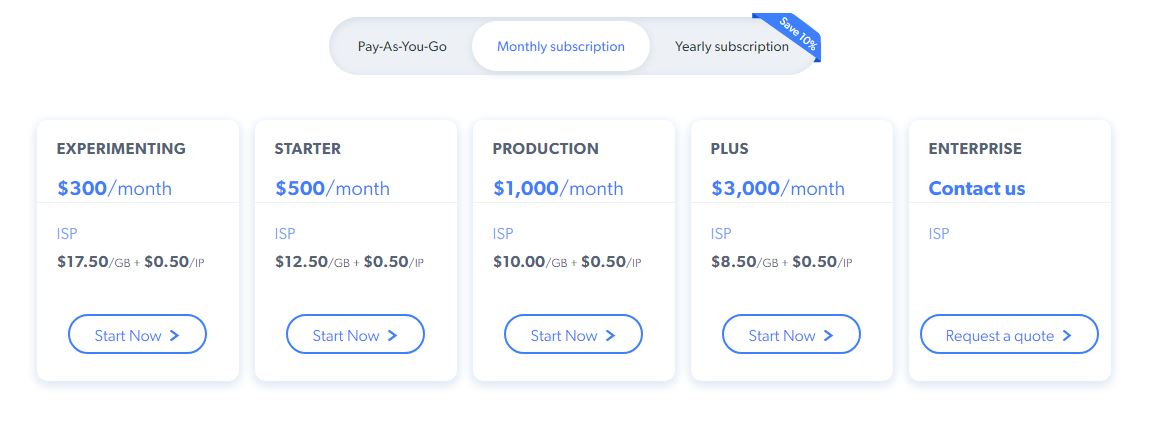
The table below compares all eight providers on the key metrics that matter for Korean proxy selection. Prices reflect the most common entry-level plan for residential proxies unless otherwise noted. All data sourced from provider knowledge files researched in May 2026.
| Provider | Type | Korea Coverage | Entry Price | City Targeting | Protocol | Trial |
|---|---|---|---|---|---|---|
| Oxylabs | Residential, ISP, DC, Mobile | 175M+ global (KR confirmed) | $6/GB ($30/mo, 5 GB) | Yes (+ ZIP + coordinates) | HTTP, HTTPS, SOCKS5 | 7-day (companies) |
| SOAX | Residential, Mobile, ISP, DC | 155M+ residential; KR top location | $3.60/GB ($90/mo, 25 GB) | Yes | HTTP, HTTPS, SOCKS5, QUIC | $1.99 / 3 days |
| IPRoyal | Residential, ISP, DC, Mobile | 32M+ (KR: 22,863 DC IPs) | $7.35/GB PAYG (non-expiring) | Yes | HTTP, HTTPS, SOCKS5 | No (PAYG available) |
| Bright Data | Residential, ISP, DC, Mobile | 400M+ global (KR confirmed) | $8/GB PAYG ($4/GB w/ RESIGB50) | Yes | HTTP, HTTPS, SOCKS5 | 7-day (companies) |
| Proxy-Cheap | Residential, DC, Mobile, ISP | 6.9M+ (15,000+ KR IPs) | $2.99/GB residential | Limited | HTTP, HTTPS, SOCKS5 | No |
| Decodo | Residential, ISP, DC, Mobile | 115M+ (195 countries, KR ISP) | $3.75/GB (3 GB plan) | Yes | HTTP, HTTPS, SOCKS5 | 3-day / 100 MB free |
| ProxySeller | Residential, ISP, DC, Mobile | 220+ countries (KR confirmed) | From $0.7/GB residential | Yes (city) | HTTP, HTTPS, SOCKS5 | 7-day (datacenter) |
| Nimble | Residential, ISP, DC | 12 countries (KR confirmed) | $8/GB residential | Yes (city, state) | HTTP, HTTPS | 100 credits/week free |
Pricing note: Entry-level rates drop significantly at scale. A $6/GB residential proxy at the 5 GB tier often becomes $2–3/GB at 500+ GB. Always check the provider’s live pricing page (many use JS-rendered sliders) before budgeting. Promo codes listed (RESIGB50, PROXYWAY35%, proxyway35, PROXYWAY30) are subject to expiry — verify before purchasing. ProxySeller’s $0.7/GB residential price is the advertised low end; mid-tier pricing is $3.00–$3.50/GB based on third-party reviews.
South Korea Proxy Pros & Cons: What to Expect
Korean proxies solve real problems for anyone working with the South Korean internet — but they come with trade-offs you should understand before choosing a provider and use case.
Pros ✓
- Access the real Korean internet: See Naver, Coupang, Kakao, and Gmarket exactly as local users do — correct prices, localized content, and real inventory data
- Bypass geo-restrictions: Korean streaming (Wavve, Tving, Melon), news portals, and data sources that block international IPs become accessible
- Accurate SERP data: Naver Search results are heavily localized — a Korean residential IP is essential for real keyword ranking data
- Reliable account management: Creating and warming up Korean social or marketplace accounts without triggering geo-mismatch flags
- Local price intelligence: Coupang and Gmarket serve different prices and promotions to Korean versus international IPs — proxies reveal the real local pricing
- High success rates on residential: Top providers achieve 99%+ success rates on infrastructure tests with genuine residential Korean IPs
Cons ✗
- Thin pools at smaller providers: Providers with 6–32M global IPs may have far fewer active Korean IPs than their coverage maps suggest
- Platform sophistication: Naver and Coupang have solid bot detection — datacenter proxies often fail; residential is almost always necessary
- Cost: Quality residential proxies start at $2.99–$8/GB — not cheap for high-volume scraping
- Real-name systems: Korean platforms like Naver historically required real-name verification — a proxy changes your IP but not your identity verification status
- Speed variability: Routing through Korean residential IPs adds latency; East Asian gateways can be slower than US or European gateways
Bottom Line: Korean proxies are a necessity for anyone doing serious work with South Korean digital platforms. The risks — cost, occasional slowness, limited effectiveness against full real-name verification — are manageable with the right provider. The alternative (generic or free proxies) produces unreliable results and exposes you to security risks that outweigh any savings.
Korean Proxy Providers: Head-to-Head
Comparing the top providers on the factors that matter most for South Korea-specific use cases — pool depth, pricing, geo-targeting, and trial access.
IPRoyal vs Oxylabs — Korean Proxies
| Feature | IPRoyal | Oxylabs |
|---|---|---|
| Residential Entry Price | $7.35/GB PAYG (non-expiring); $1.75/GB at high volume | $6.00/GB ($30/mo, 5 GB starter) |
| Korean IP Coverage | 32M+ residential (195 countries); 22,863 South Korean datacenter IPs | 175M+ residential pool; South Korea in 195-country coverage |
| Geo-Targeting Depth | Country, state, city-level for residential | Country, state, city, ZIP, ASN, coordinate-level (most granular) |
| Trial / Entry | No free trial; PAYG with no minimum commitment | 7-day free trial for verified companies; 5 free datacenter IPs |
| Best For Korean Use | Budget Korean scraping; PAYG testing with no expiry pressure | Enterprise Korean SERP scraping; Coupang monitoring at scale |
Winner for price: IPRoyal (PAYG from $7.35/GB, no minimum; scales to $1.75/GB) | Winner for Korean pool depth & targeting: Oxylabs (175M+ IPs, coordinate-level geo-targeting, 99.90% success rate)
Bright Data vs Decodo — Korea Residential
| Feature | Bright Data | Decodo |
|---|---|---|
| Residential Entry Price | $8/GB PAYG ($4/GB with code RESIGB50 — 50% off 3 months) | $3.75/GB (3 GB plan, $11.25/mo); $4/GB PAYG |
| Korean IP Pool | 400M+ monthly IPs globally; South Korea confirmed in 195-country coverage | 115M+ residential IPs; South Korea confirmed in ISP proxy location list (KR) |
| Speed & Success Rate | 98.96% global success rate; 1.12s avg. response time (Proxyway 2024) | 99.86% global success rate; 0.63s avg. response time — fastest globally (Proxyway 2025) |
| Trial Access | 7-day free trial (companies); PAYG available, no free trial for individuals | 3-day / 100 MB free trial — no KYC required; 14-day money-back on first purchase |
| Best For Korean Use | Largest pool for deep Korean coverage; Naver SERP API included | Best value for Korean residential; easiest free trial to validate KR coverage |
Winner for Korean features & pool size: Bright Data (400M+ IPs, Naver SERP API, ISO 27001) | Winner for value & speed: Decodo (fastest globally, free trial, lower entry cost)
🏆 Choose IPRoyal When
- You need Korean proxy access without a monthly minimum — IPRoyal’s PAYG traffic never expires, so you pay only when you actually use it
- You want to test datacenter proxies on Korean targets — 22,863 confirmed South Korean datacenter IPs are the deepest DC pool in this list
- Budget is the primary constraint — IPRoyal scales to $1.75/GB at high volumes and accepts 25+ cryptocurrencies
🔍 Choose Oxylabs When
- You need enterprise-grade Korean scraping with the deepest residential pool — 175M+ IPs, 99.90% success rate, and coordinate-level Korean city targeting
- Your organization requires a dedicated account manager and vendor-level compliance documentation (EWDCI membership, ethics handbook)
- You are running high-volume Coupang or Naver monitoring where the best success rate justifies the premium — Oxylabs leads Proxyway benchmarks for reliability
Korean Proxy Provider Ratings: Detailed Breakdown
We rated each provider on five criteria relevant to Korean proxy use cases. Scores reflect third-party benchmark data (Proxyway April–May 2025 where available), combined with Korean IP depth, pricing competitiveness, and ease of use.
| Category | Score | Notes |
|---|---|---|
| Korean IP Pool Depth | 4.5/5 | Bright Data (400M+) and Oxylabs (175M+) lead; Decodo (115M+) and SOAX strong; IPRoyal and Proxy-Cheap thinner but still functional |
| Speed & Reliability | 4.6/5 | Decodo fastest globally (Proxyway); Oxylabs 99.90% success rate; Bright Data 98.96%; Nimble 0.25s response time |
| Pricing & Value | 4.2/5 | ProxySeller cheapest ($0.7/GB); Proxy-Cheap second ($2.99/GB); Decodo best value-performance ratio; Bright Data/Oxylabs premium |
| Targeting Options | 4.4/5 | Oxylabs leads with coordinate-level targeting; Bright Data, Decodo, SOAX all offer city-level Korea targeting; Proxy-Cheap limited |
| Ease of Use & Trial Access | 4.3/5 | Decodo’s free trial is lowest barrier; Nimble’s free credits accessible; Oxylabs/Bright Data require KYC; ProxySeller dashboard is self-service |
| Compliance & Ethics | 4.4/5 | Bright Data (ISO 27001, EWDCI), Oxylabs (EWDCI), Decodo (EWDCI), SOAX (ISO 27001 in progress) all meet enterprise procurement standards |
| Overall Rating | 4.4/5 | Strong provider field with options at every price point; enterprise use cases well-served by Bright Data, Oxylabs, and Decodo |
Rating Summary: Bright Data leads on raw Korean coverage depth and enterprise features but loses on cost. Decodo leads on performance-to-price ratio and has the most accessible free trial. Oxylabs leads on reliability and enterprise support. SOAX is the unified-plan pick if you need Korean residential and mobile IPs under one subscription. IPRoyal and ProxySeller are the budget choices for occasional Korean proxy use without monthly commitments.
Are Korea Residential Proxies Legit, Safe & Worth It?
Legitimacy & Safety
- ✓ Legal to use commercially: Purchasing and using Korean proxies from a reputable commercial provider is legal in most jurisdictions. You’re responsible for what you do with the proxy — not the proxy itself.
- ✓ Ethically sourced options available: Bright Data, Decodo, and Oxylabs are all EWDCI members, meaning their residential IPs come from opt-in peer networks, not compromised devices. This matters for enterprise procurement approval.
- ✓ Enterprise-grade compliance: Bright Data (ISO 27001), SOAX (ISO 27001 in progress), and Oxylabs (EWDCI, published ethics handbook) meet standard procurement requirements for regulated industries.
- ✓ Korea-specific legal context: Using proxies for commercial data collection — price monitoring, SERP tracking, public data scraping — is standard practice. South Korea’s Personal Information Protection Act (PIPA) governs collection of personal data; scraping personal data of Korean citizens may implicate PIPA. Consult legal counsel for compliance-sensitive use cases involving personal data.
Long-Term Reliability
All eight providers in this list have been operating for multiple years. Bright Data (founded 2014), Decodo (founded 2018 as Smartproxy), and Oxylabs (2015) have a decade-long track record each. ProxySeller has 10+ years in the market. Proxyway’s independent benchmarks — which test actual success rates on real targets — give you an objective reliability measure that marketing pages cannot replicate.
Reality check: South Korean platforms like Naver and Coupang have invested in anti-bot infrastructure. Even with quality residential proxies, expect some CAPTCHA challenges and occasional IP rotation needs. Budget 15–25% more traffic for the same output compared to less protected targets. For very high-volume Naver SERP scraping, pairing a residential proxy with a SERP API product (Bright Data’s SERP API supports Naver; Oxylabs’ SERP Scraper API handles Google/Bing) handles CAPTCHA solving and retry logic automatically.
Worth It? Final Verdict
YES — If You:
- Need accurate Naver SERP data, Coupang pricing intelligence, or Korean streaming access — none of these work reliably without a genuine Korean residential IP
- Are running price monitoring or competitive intelligence on Korean e-commerce platforms where a $3–8/GB proxy cost is a rounding error against the intelligence value
- Manage Korean marketplace accounts or Kakao IDs and need a stable, long-lived Korean IP that doesn’t trigger geo-mismatch flags
NO — If You:
- Are considering free Korean proxy lists — they get blocked on Naver and Coupang within hours and expose your traffic to unknown parties
- Need to pass Korean real-name or citizen identity verification — a proxy provides a Korean IP, not a Korean identity
- Only need a Korean IP once or twice — a short paid trial ($1.99 on SOAX, free on Decodo) covers single-use testing without committing to a monthly plan
Our recommendation: For Korea-specific proxy needs, IPRoyal offers the best balance of price and reliability for most users — PAYG from $7.35/GB with no minimum commitment and 22,863 confirmed South Korean datacenter IPs. For the best overall value with a free trial, start with Decodo’s free 100 MB. For enterprise-scale Korean scraping where pool depth matters most, Bright Data or Oxylabs are the benchmark choices.
Best Korean Proxies: Frequently Asked Questions
What is a Korean proxy?
A Korean proxy is a proxy server with an IP address registered in South Korea (or, in rare cases, North Korea). When your traffic routes through it, every website or service you reach sees a Korean IP — allowing you to access geo-restricted Korean content, scrape local data from Naver and Coupang, and appear as a local user. Residential Korean proxies use IPs assigned by Korean ISPs (KT, SKT, LG U+) to real home users; datacenter proxies use server IPs hosted in Korean data centers.
Is it legal to use Korean proxies?
Yes. Purchasing and using Korean proxies from a reputable commercial provider is legal in most countries. You’re responsible for what you do with the proxy. For standard business use cases — price monitoring, SERP research, competitive intelligence on publicly accessible Korean platforms — proxy use is accepted practice. Scraping personal data of Korean users may implicate South Korea’s Personal Information Protection Act (PIPA); consult legal counsel if your use case involves personal data collection.
Which is the best Korean proxy provider overall?
For most users, Decodo (formerly Smartproxy) is the best all-around Korean proxy provider: fastest residential speeds globally (Proxyway 2025), 99.86% success rate, city-level Korea targeting, South Korea confirmed in ISP proxy locations, and a free 100 MB trial. For enterprise-scale Korean scraping requiring the deepest pool and best compliance, Bright Data or Oxylabs are the benchmark choices. For budget access without monthly commitments, IPRoyal’s non-expiring PAYG or ProxySeller’s $0.7/GB entry price are solid options.
Korean proxy: residential or datacenter — which is better?
For most Korean use cases, residential proxies are the better choice. Naver, Coupang, and Kakao have bot detection that frequently flags datacenter IP ranges. Residential IPs from Korean ISPs look exactly like real home users and achieve far higher success rates on demanding targets. Datacenter proxies work for simpler scraping tasks on sites without sophisticated anti-bot systems, and they’re significantly cheaper. IPRoyal’s 22,863 South Korean datacenter IPs make it a reasonable datacenter option for lower-protection targets.
Can I access Korean streaming services with a proxy?
Some Korean streaming services (Wavve, Tving, Seezn, Melon, Bugs) restrict access to Korean IPs. A residential Korean proxy can grant access in many cases. However, streaming services actively detect known proxy IP ranges, so success is not guaranteed — especially with datacenter proxies. Residential proxies from providers with large Korean pools (Bright Data, Oxylabs, Decodo) have the best chance of working reliably. Note that some Korean streaming services require a Korean payment method in addition to a Korean IP.
Can I target specific Korean cities with a proxy?
Yes, with the right provider. Seoul, Busan, Incheon, Daegu, and Daejeon are available for city-level targeting with providers that have sufficient Korean pool depth. Bright Data, Decodo, Oxylabs, and SOAX all support city-level targeting for South Korea. Proxy-Cheap and Nimble have more limited city-level granularity. Confirm specific city availability with your chosen provider before purchasing if particular Korean cities are critical to your use case.
Are Korean proxies useful for Naver SERP scraping?
Yes — a residential Korean proxy is the standard approach for Naver SERP scraping. Naver is heavily geo-aware and serves different search results, news, and shopping data to Korean versus international IPs. You’ll also need to handle Naver’s CAPTCHA system, which fires aggressively on automated traffic. For high-volume Naver SERP scraping, consider using Bright Data’s SERP API (which includes Naver support) rather than managing proxies directly — it handles CAPTCHA solving and retries automatically. Our SERP API providers guide covers the best tools for this approach.
How do I test Korean proxy quality before buying?
Use a provider’s free or low-cost trial and test against your actual Korean target URLs. Don’t settle for a generic IP-check website — run real requests against Naver.com, Coupang.com, or whatever platform you need. Check: (1) does the site serve Korean-language content and local prices? (2) What’s the CAPTCHA rate? (3) What’s the response time? Decodo offers 100 MB free; Nimble offers 100 credits/week free; SOAX offers 400 MB for $1.99. These are all low-risk ways to validate Korean coverage for your specific use case.
What’s the difference between South Korea and North Korea proxies?
South Korean proxies are widely available from all the providers in this list — South Korea is a major internet market with real residential ISP infrastructure. North Korean proxies are essentially unavailable through legitimate commercial providers: North Korea’s internet is heavily restricted, with only a tiny number of state-controlled IP ranges and essentially no residential peer network. If a provider claims North Korean IPs, verify carefully — legitimate North Korea IP availability is near zero for commercial purposes.
Is Coupang scraping possible with Korean proxies?
Yes. Coupang is one of the primary use cases for Korean residential proxies — it serves different prices, shipping promotions, and product availability data to Korean versus international IPs. A rotating residential Korean proxy pool allows you to collect Coupang product data, price changes, and inventory at scale. Use residential proxies (not datacenter) for Coupang, rotate IPs frequently, and manage session lengths to avoid detection. Providers like Bright Data, Oxylabs, and Decodo all handle Coupang scraping at scale with their residential networks.
Are cheap Korean proxies worth it?
Affordable can still be quality. ProxySeller at $0.7/GB (volume-dependent) and Proxy-Cheap at $2.99/GB are genuinely affordable without sacrificing ethical sourcing. Free Korean proxy lists, however, are not worth it — they’re typically compromised devices or data-harvesting setups, get blocked on Korean platforms within hours, and expose your traffic to unknown parties. Budget $2–4/GB for a quality residential Korean proxy that delivers reliable results on Naver and Coupang. Our guide to cheap residential proxies covers how to find affordable options without cutting corners on quality.
Which Korean proxy provider has the best free trial?
Decodo has the best free trial for Korean proxies: 3 days and 100 MB at no cost. This is enough traffic to run meaningful tests against Naver and Coupang. Nimble’s free 100 credits per week is the best ongoing no-cost option. SOAX’s $1.99 / 3-day / 400 MB paid trial is the best low-cost option if you need more data for thorough testing. Bright Data and Oxylabs offer 7-day free trials for verified companies — the most generous by duration if you qualify.
Final Verdict
The best Korean proxies are not interchangeable with generic global proxies — South Korean IP pool depth, city targeting, and success rates on Naver and Coupang vary enormously between providers. All eight providers in this list offer South Korea coverage, but they differ sharply on how reliably they deliver when you need a Korean IP that behaves like a real local user. Bright Data and Oxylabs lead for enterprise-grade work. Decodo is the best all-rounder for most users. SOAX offers the most flexible unified plan for mixed residential and mobile Korean use. ProxySeller and Proxy-Cheap serve budget users who need occasional Korean access without monthly commitments.
✓ Top Picks
- Decodo — Best overall: fastest speeds, 99.86% success rate, free trial, great value, KR ISP proxies
- Bright Data — Best for enterprise: 400M+ pool, Naver SERP API, full compliance, complete product stack
- Oxylabs — Best for enterprise scraping: 175M+ pool, coordinate-level targeting, best-in-class benchmarks
- SOAX — Best unified plan: one subscription covers residential, mobile, ISP, datacenter with Korean coverage
- IPRoyal — Best for occasional use: non-expiring PAYG, no monthly commitment, 22,863 Korean DC IPs
- ProxySeller — Best entry price: residential from $0.7/GB, 220+ countries, 10+ years in business
✗ When to Look Elsewhere
- You need real-time Korean video streaming — proxies aren’t optimized for high-bandwidth streaming at scale
- Your budget is zero — free Korean proxy lists fail on Naver and Coupang within hours
- You need to pass Korean real-name verification — proxies change your IP but not your identity verification status
- Your target Korean platform requires citizen-level authentication beyond an IP address
Ready to Access the Korean Internet?
Start with Decodo’s free 100 MB trial — test Korean proxy coverage on Naver and Coupang before spending anything on a subscription.
Try Decodo Free — Best Korean Proxy Value →